
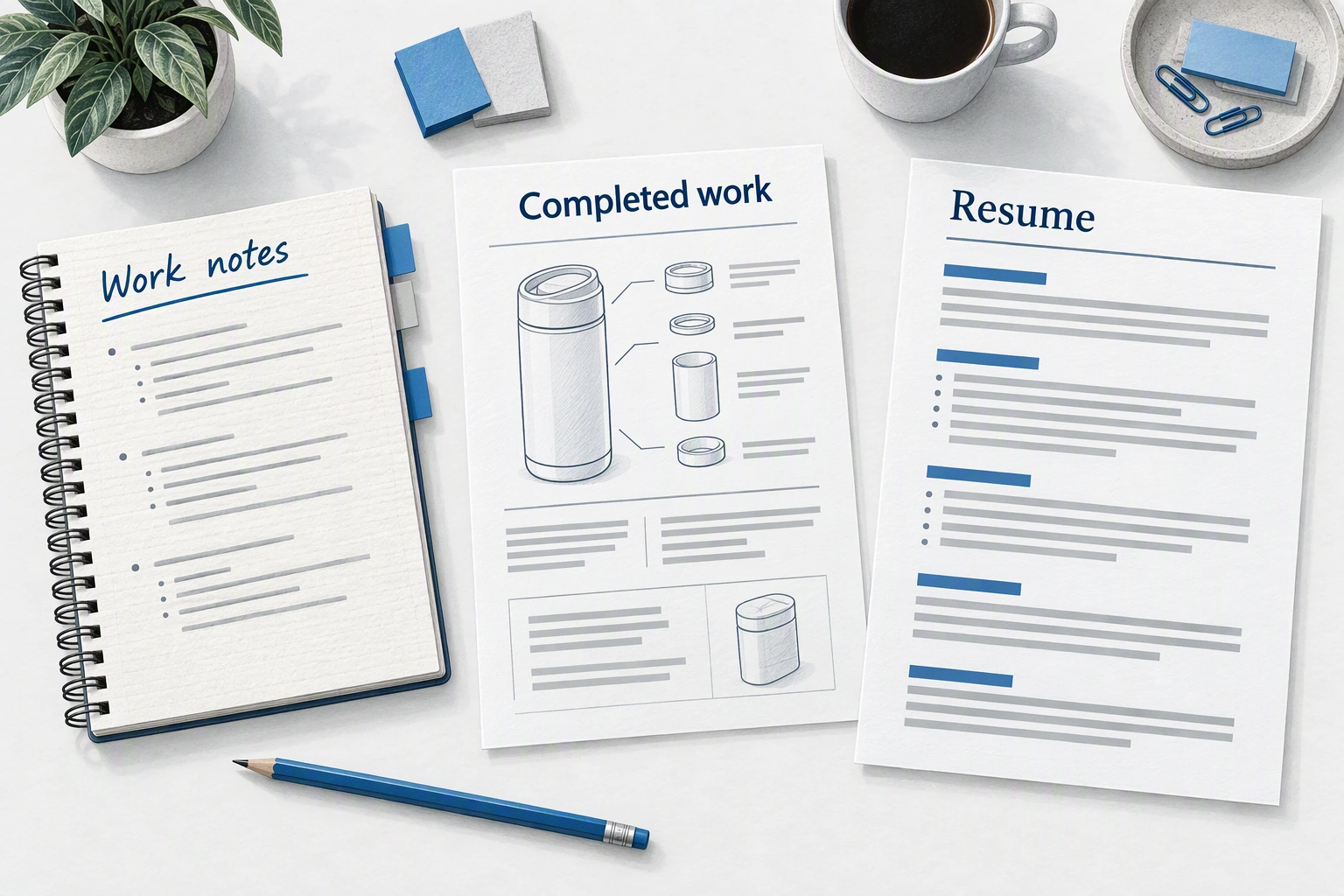

You can write resume achievements without numbers by explaining what you completed, fixed or changed. Describe your own contribution and include a result only when you know it happened. If you do not know the result, explain the work without inventing a benefit.
Maybe your team used a checklist you wrote. You corrected a booking error, finished a difficult repair or created training material for new staff. These details can show useful work without a sales figure or percentage.
Start with the examples below, then follow the steps to write a statement based on your own experience.
You do not need to turn every task into an achievement. Your resume can include both results and clear descriptions of relevant responsibilities. The important thing is to explain what you actually did.
Resume Achievement Examples Without Numbers
Choose the job category closest to yours. Each example starts with a broad duty, then adds details about work the person completed or a result they knew about.
These are illustrative examples. The extra details are not facts you can assume from the original duty. Use a sentence only if you can change it to describe work you actually did.
Office and administration examples
Broad duty: Helped train new staff.
More specific example
Wrote a closing checklist that the team used to train new starters.
Check: you wrote the checklist, and the team actually used it. Writing it alone does not prove that training became faster.
Broad duty: Checked invoices.
More specific example
Identified a duplicate invoice and arranged its correction before it was sent for payment approval.
Check: the invoice was corrected at that stage. Do not add a saving unless you know the amount and can explain it.
Customer service and retail examples
Broad duty: Handled delivery complaints.
More specific example
Arranged a replacement for a missing delivery and followed up with the customer to confirm it arrived.
Check: you handled the replacement and confirmed delivery. That does not establish that the customer stayed with the company.
Broad duty: Explained the returns policy.
More specific example
Created a returns guide that the supervisor approved for use at the service counter.
Check: the guide was approved. Do not claim that it reduced complaints unless you know that happened.
Teaching and education examples
Broad duty: Prepared teaching materials.
More specific example
Developed visual fraction exercises that the grade-level team adopted for small-group lessons.
Check: other teachers adopted the exercises. Improved test scores would be a separate claim needing support.
Broad duty: Supported reading lessons.
More specific example
Prepared reading practice sheets based on the teacher’s lesson plan and used them during small-group sessions.
Check: this describes completed work and how it was used. It does not claim that reading ability improved.
Technology and IT support examples
Broad duty: Helped fix bugs.
More specific example
Reproduced a checkout error, documented the steps for the developer and tested the fix before release.
Check: this makes the testing work clear without claiming you wrote the fix.
Broad duty: Wrote IT instructions.
More specific example
Wrote a laptop setup guide that the IT team used when preparing devices for new staff.
Check: the team used the guide. Leave out claims about time saved if you do not have that information.
Marketing and content examples
Broad duty: Updated website content.
More specific example
Rewrote pricing FAQs using questions from the sales team, with the revised answers published on the company website.
Check: the answers were published. Publication does not prove that sales or traffic increased.
Broad duty: Checked newsletters.
More specific example
Found and corrected broken links in a newsletter before its scheduled send.
Check: you made the corrections before sending. Do not add an increase in clicks without evidence.
Trades and maintenance examples
Broad duty: Completed repairs.
More specific example
Replaced a worn door hinge and adjusted the frame so the door closed properly.
Check: you completed the repair and checked the result. The finished repair is enough; you do not need to invent a cost saving.
Broad duty: Organized tools.
More specific example
Created a labeled tool-storage layout that the workshop team adopted.
Check: the team adopted the layout. Do not claim fewer lost tools unless you know that was the result.
How to Write Resume Achievements Without Numbers
Start with one piece of work you can explain clearly. Write down what you did before trying to make the sentence sound polished.
A simple starting point:
What you did + a useful detail + what happened, if known.
Choose work that matters for the job
Look at the role you want. Pick an example that shows a skill or responsibility the employer needs. It does not have to be your biggest achievement.
Say what you personally did
Did you write, repair, check, organize or explain something? Start there.
Choose a word that matches your part in the work. Our guide to resume action verbs gives examples. If you supported the work, do not change that into a claim that you led it.
Add a detail that explains the work
Name what you worked on, who it was for or how you did it. For example, “updated a contact list” becomes clearer when you explain that it contained supplier details checked with the finance team.
Add the result only when you know it
Was the work approved, published, repaired or used? Did you correct a specific problem? Include that if it happened.
If you do not know what happened afterward, stop at the work you completed. Do not add “saved time” or “improved efficiency” just to give it a result.
Read it once and cut extra words
Keep the action and details that help the reader. Remove praise such as “highly successful” when the sentence does not explain what made it successful.
Ask yourself whether you could explain the statement in an interview without changing the story.
Example: turning your notes into a sentence
Illustrative notes: the supplier contact list had outdated details. You checked the changes with finance, updated the list and know that office staff used it for supplier inquiries.
What if you only know that you updated the list? Describe that update and how you checked the details. Leave out the claim that staff used it until you can confirm it. Change the example to match your own work.
How to Find Achievements in Your Everyday Work
If your first thought is “I just did my job,” choose one task and look more closely. What did you finish? Did you fix a problem? Did someone use your work?
Start with a specific example rather than trying to describe your whole job at once.
| Ask yourself | What to look for |
|---|---|
| What problem did I fix? | A booking mistake, broken feature, missing document, customer issue or equipment fault you helped resolve. |
| What did I create or finish? | A report, guide, repair, event, project or piece of work you completed. |
| Did someone use my work? | A checklist the team adopted, instructions used in training or research used in a decision. |
| What made the task difficult? | Missing information, a change in plans or a problem you had to work through. Explain how you handled it. |
| Was I recognized for something specific? | An award, written feedback or praise that identifies the work you did well. Keep the wording accurate. |
Is it a duty or an achievement?
A duty describes your regular responsibility. Answering customer questions is a duty.
An achievement describes something you accomplished. Writing a guide that your team adopted to answer common questions gives you a specific completed result to discuss.
Your resume can include both. You do not have to make every regular task sound like a major improvement.
Check the details you remember
A performance review, project note or finished piece of work may help you remember what happened. Use only records you are allowed to access, and do not copy confidential files for your job search.
If you cannot confirm a result, describe the part you know. Completing a report does not prove that it changed a decision or saved money.
Choose examples that fit the job
Put the job description beside your notes. Which examples show the skills or responsibilities the employer asks for? Keep those, even if another achievement sounds more impressive.
Our guide explains how to tailor your resume to a job description without changing your job history or adding skills you do not have.
Make future updates easier: keep a short note when you finish useful work. Record what you did, your part and what happened afterward. Leave out private or confidential details.
Resume Achievements Without Work Experience
You can include useful work from school, volunteering or personal projects. Explain what you completed and make clear where the experience came from.
These examples are illustrative. Replace the activities, tools and results with your own. A completed project can show your skills even if it did not win an award.
Class project example
Use a project to show a skill you practiced and something you completed.
What it shows: the student used Excel, completed a budget and corrected it after feedback.
Keep it accurate: this was a class task. It does not establish that the student managed a real event budget or saved money.
Volunteer experience example
Describe your own contribution, even when you worked as part of a larger group.
What it shows: the volunteer created something that other people used.
Keep it accurate: creating the sheet does not mean the volunteer organized the whole workshop.
Personal project example
A project you completed on your own can show how you applied a skill.
What it shows: the applicant built, tested and corrected their own work.
Keep it accurate: label it as a personal project. Do not present it as client work or claim business results it did not produce.
Our guide to listing projects on a resume explains how to include the project name, your role and the work you completed.
You can also mention a relevant activity in your opening. These resume summary examples with no experience show how to do that.
Have not finished the project yet? Mark it as in progress and describe only the work you have completed. Do not present a planned result as something that has already happened.
When You Can Still Use Numbers on Your Resume
You may not know how much money your work saved or how much sales increased. But you might know how often you did a task or how many locations you supported.
Include those details when they help explain your work. Just be clear about what they show.
| Detail you know | What it tells the reader | What it does not prove |
|---|---|---|
| You prepared a report every week. | How often you completed the task. | That the report improved a business result. |
| You supported three office locations. | How widely your responsibility extended. | That you managed those offices. |
| You completed four training guides. | How much work you finished. | That the guides were used or made training faster. |
Can you use an estimate?
Use an estimate only when you have a reasonable basis for it, such as records of the requests you handled. Make it clear that the figure is approximate.
Check that the period is fair too. A particularly busy week should not become your claimed average for an entire year. Adding “about” does not make a guess reliable.
Do not turn a count into a result
Writing training guides and improving training are different claims. You may know you finished the guides without knowing whether they changed the training process.
The same applies to time and money. Removing a manual step does not tell you the amount of time saved. Saving time does not automatically mean company spending fell.
If you do not have a reliable figure, leave it out. A clear description of the work you completed is more useful than a number you cannot explain.
Where to Put Achievements on Your Resume
Put each achievement close to the work it came from. If you fixed a problem in a previous job, include it under that job. If you completed a class project, keep the class setting clear.
You do not need a separate section just because an achievement has no numbers.
| Where it came from | Where to put it | What to include |
|---|---|---|
| A paid job | Under that job in Work Experience. | Your action, useful details and the result you know happened. |
| A class or personal project | In Projects, or under Education when it fits naturally there. | The project name, its setting and your own contribution. |
| Volunteer work | Under Volunteer Experience, or Relevant Experience with the volunteer role clearly labeled. | The organization, your role and what you completed or helped achieve. |
| An award or formal recognition | Under the related job, Education or a short Awards section. | The award name, who gave it and the date. Explain the reason if the name is unclear. |
Keep job achievements under the right role
This helps the reader see where and when you did the work. Put the most relevant examples first within that job, while keeping the dates and title accurate.
Our guide to the work experience section explains how to arrange your role, employer, dates and work descriptions.
Use the summary for a short highlight
You can mention a relevant achievement in your summary, then explain it under the job or project where it happened. Keep the summary brief rather than copying the whole statement into both places.
When does a separate achievements section help?
Consider one when you have relevant awards or achievements that would otherwise be hard to find. Skip it if it would mainly repeat the experience section.
If you are also listing credentials, our guide to certifications and achievements on a resume explains when to keep them together or separate.
Keep each entry in context. The reader should be able to tell what you did, where you did it and which result belongs to you or your team.
Use ChatGPT to Improve Your Achievement Statements
If you know what you did but struggle to describe it, give ChatGPT your notes and ask for a clearer sentence. Do not ask it to create achievements you cannot support.
Include your part in the work and what happened afterward, if you know. Leave out confidential information.
A prompt you can copy
Check the sentence against your notes
Illustrative notes: you checked the links in an email campaign, found broken links and corrected them before sending. You do not know whether the changes affected clicks.
A sentence that stays within those facts would be:
What to reject: a claim that you increased clicks or improved campaign performance. The notes do not establish either result.
This example shows how to check an edit. It is not a recorded ChatGPT response. Change the details to match your own work.
For help with other sections, use our ChatGPT resume prompts.
You still need to review the answer. Asking ChatGPT to keep the facts does not guarantee that it will. Check every added detail before using the sentence.
Mistakes to Avoid When Writing Resume Achievements
Before you keep a statement, check that it explains your work clearly and says no more than you know. Watch for these common mistakes.
1. Leaving the work too vague
“Responsible for documents” does not tell the reader whether you wrote, checked, filed or updated them. Name the action and the documents involved.
These alternatives to “responsible for” can help you choose wording that describes the task.
2. Making your contribution sound bigger
If you supported a project, explain the part you handled. Do not change that into a claim that you managed the whole project.
Our guide to better ways to say “helped” shows how to be more specific without overstating your responsibility.
3. Adding a benefit you cannot support
“Improved customer satisfaction” still claims a result, even without a percentage. If you only know that you resolved a complaint, describe the complaint and what you did.
4. Guessing a number to make the sentence stronger
Do not add a saving, percentage or work volume because it sounds reasonable. Use a figure only when you can explain where it came from.
5. Trying to make every task a major achievement
Some responsibilities belong on your resume because they show relevant experience. Describe them clearly rather than adding “highly successful” or inventing an improvement.
Give more detail to the examples that best show what you can do for the job you want.
Check each statement before applying
- Does it say what I actually did?
- Is my part different from the team’s part?
- Can I explain the result or number?
- Have I left out private or confidential details?
- Does this example matter for the job?
Resume Achievements Without Numbers: FAQs
Here are answers to common questions about describing your work when you do not have figures.
Does every resume achievement need a number?
No. A completed repair, a corrected error or a guide your team adopted can show useful work without a percentage or money figure.
Explain what you did and what happened. Include a number when it is accurate and adds useful detail.
What if I only did routine tasks?
Describe the tasks clearly, including the tools, decisions or checks involved. Then think about whether you corrected a problem or completed something worth highlighting.
You can include relevant responsibilities without presenting every one as an achievement.
What if I do not know the result?
Describe the work you completed and, if useful, its purpose. Do not turn the intended benefit into a result you claim happened.
For example, writing instructions for new staff does not prove that training became faster.
Can I include something my team achieved?
Yes. Explain your own contribution and make clear that the wider result belonged to the team.
If you tested a feature that the team launched, describe your testing work. Do not say you built or led the whole feature unless you did.
Can I use estimated numbers?
Use an estimate only when you have a reasonable basis for it and can explain how you arrived at it. Use words such as “about” or “approximately” when appropriate.
Do not guess a figure just to include a number. A range also needs support.
What if the results are confidential?
Leave out details you are not allowed to share. You may be able to describe your task or method using information that is permitted.
If you are unsure, ask for clarification. Replacing a client name or using a percentage does not automatically make the information suitable to disclose.
Do I need a separate achievements section?
No. Job-related achievements can stay under the relevant role. Project results can stay with the project, and academic awards can appear under Education or Awards.
Use a separate section only when it makes useful information easier to find without repeating the rest of your resume.