


Common job interview questions cover your background, why you want the job, and how you handle situations at work. Start by answering the question directly. Then add a short example if it helps explain your answer.
The 15 questions below show what to include and how an answer might sound. The samples are made up for this guide. Use your own details and say the answer aloud before the interview.
Common Job Interview Questions and Sample Answers
1. Tell Me About Yourself
Give the interviewer a short introduction that fits the job. Say what you do now or what you recently studied. Then share one experience that prepared you for the role and say why you want the job.
Sample answer for a first office job
I recently finished a business course. While I was studying, I helped run sign-ups for a campus event. I kept the list up to date and sent reminders to people who had signed up. I liked keeping things in order, so I’m interested in this office assistant role, where I’d help with records and schedules.
Sample answer for an experienced customer service applicant
I work at a store where I help customers with returns and order questions. When an issue takes more than one shift to fix, I leave clear notes so the next person knows what to do. I’m interested in this customer support role because I’d get to follow cases from the first call through to a fix.
Make it yours. Pick one task from the job posting. Think of a time you did similar work in a job, a class, or a volunteer role. Use that example instead of listing every job or course on your resume.
2. How Would You Describe Yourself?
Pick one or two qualities that show how you work. Then give a short example so the interviewer can see those qualities in action.
“Tell me about yourself” asks for a short overview of your background. “How would you describe yourself?” asks what you are like to work with.
Sample answer for a front desk role
I’m organized and I stay calm when it gets busy. At the front desk of a gym, the phone would often ring while people were waiting to check in. I’d take down the caller’s name and number, finish helping the people at the desk, and call back when the line cleared. Keeping a short list helped me make sure no one was missed.
Make it yours. Think of a task in the job posting. If it calls for keeping records up to date, for example, describe how you kept track of details in a job, a class project, or a volunteer role. Use a detail you can explain if the interviewer asks a follow-up question.
For more examples, see how to describe yourself in an interview.
3. Why Do You Want to Work Here?
Give one reason you want to work for this company. Find a detail on its website or in the job posting. Then explain why it matters to you and how your experience fits the work.
Sample answer for a customer support role
In this example, the company sells booking software and helps small businesses set it up.
I saw on your website that your support team helps small businesses set up their online booking pages. That caught my eye because I liked showing new gym members how to book classes in my last job. I’d enjoy helping your customers set up their pages and walking them through any steps they get stuck on.
Make it yours. Pick one detail you can point to, such as a service the company offers or the customers it helps. If your answer could fit any company, add a detail that explains why you chose this one.
See more examples in our guide to answering “Why do you want to work here?”
4. Why Should We Hire You?
Pick one or two things the employer needs. Give a short example of how you’ve done similar work, then explain how that experience would help you in this job.
Sample answer for a first office job
This job calls for someone who can keep records up to date and follow up when details are missing. I did both when I helped with sign-ups for a campus event. I checked the list, emailed people whose details were missing, and gave the team an updated list before check-in. I’d bring that same care to keeping your office records in order.
Sample answer for an experienced customer support applicant
You need someone who can work out what went wrong with an order and keep the customer informed. At my store, a customer came in for an order that wasn’t ready. I checked with the stock team, found it had been sent to the wrong store, and arranged for it to be held at the right one. I called the customer once it was ready. I’d bring that same follow-through to your support team.
Make it yours. Look for a task near the top of the job posting. Think of a time you did something similar. If the task is keeping records, for example, say what you tracked, what you checked, and who used the records.
If you’re applying for your first job, see more examples of how to explain why you’re suitable for the job.
5. What Is Your Greatest Strength?
Choose one strength you use often and that matters in this job. Give a short example of when you used it. Say what you did and how it helped.
Sample answer for an accounts assistant role
My greatest strength is catching small errors before they cause problems. At my last job, I checked supplier invoices against our order records. Once, I spotted that a supplier had billed us twice for the same delivery. I checked the delivery receipt and flagged the extra invoice before it was paid. I’d use that same care when checking invoices here.
Make it yours. Start with a task in the job posting. If the role calls for explaining things to customers, think of a time you helped someone understand a confusing process. Say what you explained and what the person could do afterward.
6. What Is Your Greatest Weakness?
Name one thing you’re working to improve. Explain what you’ve done about it and give a recent example of progress. Choose an area that isn’t central to the job. For example, if the role involves giving presentations every week, choose a different example than speaking to large groups.
Sample answer for an inventory assistant role
I still get nervous speaking in larger meetings. I used to wait for my supervisor to share our stock updates, even when I’d done the count. I started writing down the two or three things the team needed to know before each meeting. Last month, I gave the update myself and answered a question about a missing delivery. Having a few notes helps me speak up sooner.
Make it yours. Think of a habit you’ve already started to change. Instead of just saying “I’m getting better at it,” name what you do differently now and give one example of how it has helped.
7. Why Are You Leaving Your Current Job?
Give a brief, honest reason for leaving. Then explain what you want from your next job. If you want more responsibility, name the work you’d like to take on and show how it fits the role you’re applying for.
Sample answer for a project coordinator role
In my current job, I book meetings and keep project notes up to date. I’ve enjoyed that work, and I’d like to take on more of the planning. This role caught my eye because it includes setting timelines and following up when tasks fall behind. That’s the kind of work I want to do more often.
Make it yours. Use your real reason. If your contract is ending, say that. If you’re changing fields, explain what drew you to the new work. Then point to one thing about this job that fits what you want next.
For examples covering different situations, see how to explain why you’re leaving your job.
8. Where Do You See Yourself in Five Years?
Name a skill you want to build or work you hope to take on. Then explain how this job would help you get there. You can give a clear answer without naming a future job title.
Sample answer for a project coordinator role
In five years, I’d like to be able to run a small project from start to finish. This role would help me get better at tracking deadlines and keeping the team up to date. Once I’ve built those skills, I’d like to take on more of the planning and help the team spot delays early.
Make it yours. Pick a task from the job posting that you’d like to get better at. Say what you hope to do with that skill as you gain experience. For example, if the role involves answering customer questions, you might aim to handle harder cases on your own.
If you’re starting your first job, changing careers, or still deciding on a goal, see our five-year interview answer examples by situation.
9. Tell Me About a Time You Handled a Disagreement
Pick a time you and someone else had different ideas about how to get the work done. Use the STAR method to explain what happened, what you needed to do, what you did, and how it turned out. Spend most of your answer on what you did to understand the other person and find a way forward.
Sample answer for a store associate role
A coworker and I disagreed about which pickup orders to pack first. We needed to have the early orders ready before customers arrived. I asked why my coworker wanted to start with the larger orders. They said those orders took longer to pack. We checked the pickup times and split the work. I packed the orders due first while they started on the larger ones due later. The early orders were ready when customers arrived.
How the sample uses STAR
- Situation
- Two coworkers disagreed about which orders to pack first.
- Task
- Get the orders with the earliest pickup times ready.
- Action
- Ask about the other person’s concern, check the pickup times, and split the work.
- Result
- The early orders were ready when customers arrived.
Make it yours. Choose a real disagreement about a task, a deadline, or how to share the work. Describe both views briefly. Say what you did and give the result you saw.
See how to use the STAR method in an interview to plan your own answer.
10. Tell Me About a Mistake You Made
Choose a real mistake you can explain in a few sentences. Say what you got wrong and who it affected. Then explain how you handled it and what you do differently now.
Sample answer for an office assistant role
I moved a team meeting to a different room but forgot to update the calendar invite. A coworker went to the old room and called me. I told them where to go, fixed the invite, and sent the team a quick message so no one else went to the wrong room. Now, when a meeting changes, I check the time, room, and guest list before I send the update.
Make it yours. Use STAR to keep the story in order. Give the situation and your task briefly. Spend more time on what you did to fix the problem, what happened next, and what you changed to help prevent it from happening again.
11. What Achievement Are You Most Proud Of?
Choose an achievement that shows a skill you would use in this job. Explain what needed to get done, what you did, and who benefited. If it was a team effort, give the team credit and be clear about your part.
Sample answer for an administrative assistant role
I’m proud of making it easier for staff to cover the front desk when someone was out. The steps for taking calls and logging requests were spread across old emails. I pulled them into a one-page guide and asked a coworker to try it during a shift. I added the details they found missing. The next time we had someone fill in, they used the guide to log requests without having to call the usual desk staff.
Make it yours. Use STAR to tell the story in order. End with something you saw happen. A guide the team used, a deadline you met, or a problem you helped solve can all show a result. Include a number if you have one you can explain.
12. How Do You Handle Pressure?
Explain how you decide what to do first when time is tight or several things need your attention. Then give one example that shows the choice you made and how you kept others informed.
Sample answer for a print shop assistant role
When things get busy, I check what’s due first and tell people early if a deadline might slip. At the print shop, one printer jammed while I had two orders due that afternoon. I moved the order with the earlier pickup to the working printer. Then I checked how long the second order would take and called that customer with a new pickup time. The first order was ready on time, and the second customer knew when to come in.
Make it yours. Think of a time you had to choose between two tasks. Say what helped you decide, such as a deadline or someone waiting on your work. If something had to wait, explain who you told and what you agreed to do next.
13. What Are Your Salary Expectations?
Check the job posting for a pay range before the interview. Look at what similar roles pay in the same area. If you have a range in mind, state it clearly. If the employer hasn’t shared a range, you can ask what they’ve budgeted.
Sample answer when the pay range is unclear
I’d like to learn a bit more about what the role involves. Could you share the pay range you’ve budgeted for it?
Answer template when you have a range
Based on what I’ve seen for similar roles in this area, I’m looking for [low amount] to [high amount] [per year or per hour]. I’d also like to hear more about the benefits and what the role involves.
Make it yours. Fill in the brackets with a range you’d be comfortable discussing. Say whether the figures are hourly or annual. If the employer has already posted a range, explain whether it fits what you’re looking for.
Once you have an offer, see how to negotiate a salary offer.
14. When Can You Start?
Give the earliest date you can commit to. If the date depends on when you get the offer, say how much time you’ll need after you accept it. You can also ask when the employer wants someone to start.
Sample answer when you need to give notice
I’d need two weeks after accepting an offer so I can give notice and hand over my work. Is there a start date you’re aiming for?
Make it yours. Check your own notice period and any plans that affect your start date. If you can start right away, say so. If you need to check a commitment first, give an estimate and tell the interviewer when you can confirm it.
15. Do You Have Any Questions for Us?
Prepare a few questions about the work, the team, or what the manager expects. At the end of the interview, choose one or two that haven’t been answered. A good question should help you decide whether the job fits what you’re looking for.
Sample answer for a customer support role
Yes. You mentioned that new hires start with email support. What kinds of questions would I handle in the first few weeks? And how do you decide when someone is ready to take calls as well?
Make it yours. Use a detail from the conversation. If the interviewer mentioned a new project, ask what your part would be. If you already know what the work involves, ask what they’d like you to get done in your first month. You can also ask what happens next in the hiring process if they haven’t covered it.
For more ideas, see these questions to ask a hiring manager.
How to Answer Interview Questions With No Work Experience
You can use a class project, a volunteer shift, or a club activity to show how you work. If you’re applying for an office job that involves checking records, for example, think of a time you checked details for a group project.
- Pick a skill the job calls for. An office assistant may need to check that records are complete and correct.
- Find a time you used it. You might have checked a shared spreadsheet before your group turned in a project.
- Say what you did and what happened. Explain what you caught, how you checked it, and what the group could do next.
Sample answer about an achievement from class
Interview question “What achievement are you most proud of?”
I’m proud of helping my group finish a class survey report. My part was to check the spreadsheet before we made the charts. I spotted a few rows that looked like repeats and checked them against the original forms. Once I confirmed which ones were duplicates, I removed them. The group used the corrected totals in our report.
Make it yours. Say where the example comes from and name your part in the work. If you helped at an event, for instance, explain what you did at check-in or how you helped guests find the right place.
If you’d like to build more examples before you apply, explore these ways to gain experience without a job.
How to Prepare Your Own Interview Answers
Read the job posting, pick a few real examples, and practice saying your answers out loud. Use the samples above to see what to include, then put it in your own words.
Match your examples to the job
Pick two or three tasks from the job posting. Beside each one, write down a time you did something similar. If the job calls for keeping customers up to date, think of a time you followed up when an order was late or a request took longer than planned.
For questions about why you want to work there, research the company and role. Find one detail you can connect to work you’ve done or want to do.
How to Use the STAR Method in an Interview
Use STAR when an interviewer asks for a time you did something, such as handling a disagreement or fixing a mistake. STAR stands for Situation, Task, Action, and Result.
- Situation
- What was happening?
- Task
- What did you need to get done?
- Action
- What did you do?
- Result
- What happened after you acted?
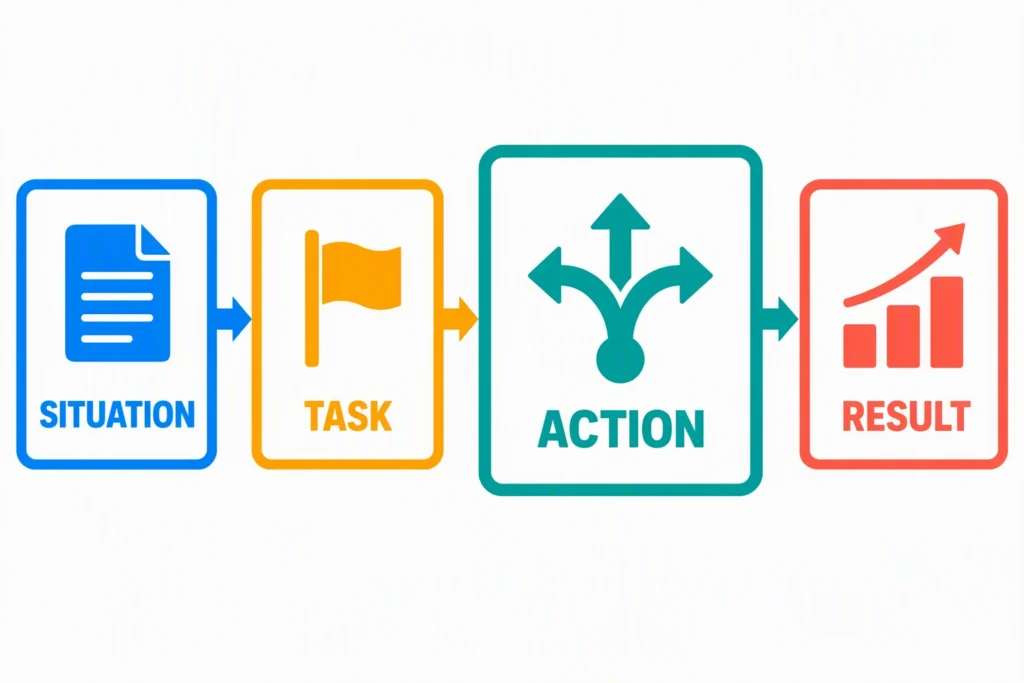
Keep the setup short. In the order-packing example in question 9, the applicant spends most of the answer on what they did. They asked about their coworker’s concern, checked the pickup times, and split the work. Then they gave the result.
For a direct question such as “When can you start?”, give the date or the time you need after accepting an offer.
Choose a few examples you can use
Write a short note about a time you solved a problem, worked through a disagreement, or fixed a mistake. One story may fit more than one question. If you use it again, focus on the part that answers the new question.
Practice saying your answers out loud
Ask someone to choose a question from the list. Answer from your notes, then have them ask one follow-up, such as “What did you do next?” If your answer is hard to follow, shorten the setup and make your part in the story clearer.
Common Questions About Interview Answers
How long should an interview answer be?
A few sentences may be enough for a direct question. A question about a past event may need more time. Give enough detail to explain what you did and what happened, then pause so the interviewer can ask a follow-up.
What if I don’t understand the question?
Ask the interviewer to repeat it or check what they mean. For example, if they ask about a tough decision, you can ask whether they want an example from work or whether a class project would also fit.
What if I’ve never faced the situation they ask about?
Say so briefly, then offer the closest real example. If you’ve never dealt with a customer complaint, you could talk about a time you helped someone who was upset. If you have no similar example, ask whether you can explain how you would handle it.
How can I respond to a personal question?
If you’d rather keep the details private, you can bring the conversation back to the job. If the interviewer asks about your personal plans in relation to evening shifts, for example, say whether you can work those hours.