

A resume should do more than describe what you were hired to do. It should show the value you created while doing it. Strong resume accomplishments turn routine duties into evidence of problem-solving, initiative and results. In this guide, you will learn how to identify achievements for a resume, write focused accomplishment statements and adapt examples to your profession and career level—even when you do not have reliable numbers.
What are good accomplishments to put on a resume?
Good resume accomplishments are specific examples of how you solved a problem, improved a process, saved time or money, increased revenue or engagement, earned recognition, completed an important project or supported customers, coworkers or communities. The strongest examples explain what you contributed and why it mattered. For instance: Reduced customer response time by redesigning the team’s ticket-prioritization process. Choose achievements that match the employer’s priorities and that you can discuss honestly in an interview.
What are resume accomplishments?
Resume accomplishments describe a result, improvement or meaningful contribution produced through your work. They help an employer see not only what you handled, but also how effectively you handled it.
| Responsibility | Accomplishment |
|---|---|
| Responsible for training new employees | Created a structured onboarding guide that helped new employees become productive sooner. |
| Managed customer accounts | Retained high-value accounts by resolving recurring service issues. |
| Prepared weekly reports | Streamlined weekly reporting by consolidating information into one accessible dashboard. |
Responsibilities explain what the position required. Achievements demonstrate your performance within that role. A useful bullet may show a measurable outcome, but it can also reveal improved quality, recognition, ownership or a difficult problem solved.
Ready to Land Your Next Job?
Don’t let your resume get lost in the stack. Build a professional, ATS-friendly resume that highlights your leadership, achievements, and industry expertise.
How to identify your most valuable achievements for a resume
Begin with an inventory rather than trying to write polished bullets immediately. Review each job, internship, project or volunteer role and ask what changed because of your work.
Ask yourself these accomplishment-finding questions
- What problem did I solve?
- What became faster, easier, safer or more accurate because of my work?
- Did I exceed a target or expectation?
- Did I receive praise, recognition or additional responsibility?
- Did I create, improve or launch something?
- Did I help a customer, coworker or department succeed?
- What happened because I completed the task well?
Review your sources of evidence
Check performance reviews, customer feedback, award announcements, sales reports, project records, calendars, completed task lists and emails describing successful outcomes. These sources can refresh your memory and help you verify details. If an exact figure is unavailable, describe the observable result instead. Never invent a number or claim an outcome you cannot support.
How to write effective accomplishment statements
A dependable formula is:
Action verb + task or challenge + result or value
For example: Reorganized the company’s digital filing system, making frequently requested records easier for staff to locate.
Add measurable evidence when it is available
Useful metrics may include revenue generated, costs reduced, time saved, projects completed, customers served, errors prevented, complaint reductions, team size, ratings, rankings or deadlines met. Numbers should clarify the scale of an achievement—not decorate an otherwise vague claim.
Lead with a strong action verb
Start with verbs such as improved, developed, launched, negotiated, redesigned, resolved, trained or streamlined. Choose the verb that accurately reflects your contribution. If you supported rather than led an initiative, state that distinction honestly.
Connect the achievement to the target job
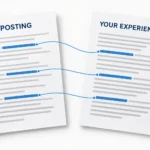
Study the job description for repeated skills, tools and priorities. Use relevant terminology naturally when it reflects your real experience. Do not copy entire sentences or add qualifications you do not possess.
Keep every statement concise
Aim for one or two lines per bullet and communicate one main achievement at a time. Remove background details that do not help the employer understand the action or outcome.
Before: Responsible for answering customer emails.
After: Resolved complex customer inquiries through email while maintaining clear, empathetic communication and consistent follow-through.
Before: Helped with inventory.
After: Reorganized inventory records and introduced consistent item labels, improving stock visibility for the purchasing team.
Ready to Land Your Next Job?
Don’t let your resume get lost in the stack. Build a professional, ATS-friendly resume that highlights your leadership, achievements, and industry expertise.
Where should accomplishments appear on a resume?
In a professional summary, include one or two defining achievements that support your target position. Under work experience, place the most relevant bullets beneath each role, usually before routine duties.
Students and recent graduates can feature academic awards, research, leadership, scholarships and substantial projects in the education section. Results from freelance work, volunteering, community service and independent assignments can appear under projects, volunteer experience or another clearly labeled section.
A separate Achievements section is optional. It works best for major awards, honors, publications or career-wide distinctions that might otherwise be overlooked.
Professional accomplishments examples by job function
Use the following professional accomplishments examples as models, not ready-made claims. Replace every tool, result and figure with details you can verify.
Sales and business development accomplishments
- Generated $420,000 in new annual revenue by developing relationships with midmarket clients.
- Exceeded the annual sales quota by 18% through consultative product recommendations.
- Opened 24 new accounts in an underserved regional territory.
- Retained a major client by coordinating a recovery plan for recurring delivery problems.
- Shortened the sales cycle by creating qualification questions for initial discovery calls.
- Expanded a local territory into two neighboring markets through referral partnerships.
- Reengaged dormant prospects with a targeted follow-up campaign that produced 11 meetings.
- Negotiated contract renewals while protecting margins and strengthening client relationships.
- Built a sales playbook that gave representatives consistent responses to common objections.
- Earned recognition as the team’s top-performing account executive for two consecutive quarters.
Marketing and communications accomplishments
- Increased email click-through rates by 22% after segmenting subscribers by interest.
- Grew organic website traffic by 31% through search-focused content updates.
- Launched a product campaign across email, social media and paid search on schedule.
- Developed an editorial calendar that aligned content with seasonal customer needs.
- Improved brand consistency by creating practical voice and style guidelines.
- Turned technical research into accessible customer stories for a general audience.
- Revitalized an underperforming newsletter with clearer topics and stronger calls to action.
- Coordinated messaging across product, sales and customer-success teams for a rebrand.
- Established an approval workflow that reduced last-minute revisions before publication.
- Produced event materials that helped the sales team start more relevant prospect conversations.
Ready to Land Your Next Job?
Don’t let your resume get lost in the stack. Build a professional, ATS-friendly resume that highlights your leadership, achievements, and industry expertise.
Customer service accomplishments
- Maintained a 96% customer-satisfaction score while handling a high-volume support queue.
- Resolved an escalated billing dispute and restored the customer’s confidence in the company.
- Reduced repeat inquiries by documenting answers to frequently reported account problems.
- Designed a ticket-prioritization process that improved responses to urgent requests.
- Received repeated customer commendations for patience, clarity and follow-through.
- Created reusable response templates without sacrificing a personalized service experience.
- Identified a recurring product issue and supplied evidence that helped engineering reproduce it.
- Coached new representatives on de-escalation techniques and support standards.
- Partnered with operations to clarify return procedures for customers and frontline employees.
- Selected to manage sensitive cases involving long-term and high-value customers.
Administration and operations accomplishments
- Reduced scheduling conflicts by introducing a shared calendar and confirmation process.
- Digitized archived records, making frequently requested files easier to retrieve.
- Consolidated vendor information into a central tracker for faster purchasing decisions.
- Redesigned an approval workflow that removed duplicate reviews and avoidable delays.
- Coordinated meetings, documents and deadlines for several cross-functional projects.
- Corrected inconsistencies in a records database before an internal audit.
- Negotiated improved service terms with an office supplier while maintaining quality.
- Created meeting templates that made decisions, owners and due dates easier to track.
- Managed an office relocation without interrupting essential client services.
- Became the primary administrative contact for confidential and time-sensitive requests.
Technology and engineering accomplishments
- Automated a recurring data-validation task, saving approximately eight staff hours each week.
- Improved application uptime by addressing common failure points in a legacy service.
- Delivered a customer-requested feature within an accelerated release schedule.
- Strengthened account security by implementing multifactor authentication for internal users.
- Created technical documentation that helped new engineers troubleshoot common issues.
- Reduced deployment risk by adding automated checks to the release pipeline.
- Diagnosed a production defect that had resisted earlier troubleshooting attempts.
- Refactored a critical module to make future updates easier to test and maintain.
- Partnered with product and design teams to translate user needs into technical requirements.
- Mentored junior developers through code reviews and structured problem-solving sessions.
Healthcare and education accomplishments
- Improved record accuracy by introducing a verification step before patient files were submitted.
- Supported patients through complex appointment instructions with calm, accessible explanations.
- Developed differentiated lesson materials for students with varied learning needs.
- Increased assignment completion by establishing predictable weekly progress checks.
- Coordinated with clinicians to prepare timely information for patient-care decisions.
- Created a classroom routine that encouraged participation from quieter students.
- Recognized a safety concern and escalated it according to established clinical procedures.
- Organized family resources into a clear guide for navigating school support services.
- Helped multidisciplinary team members maintain continuity during a demanding caseload period.
- Adapted instructional materials to improve accessibility for students using assistive technology.
Accomplishment examples for every career level
The best evidence changes as your career develops. Focus on the scale and type of contribution appropriate to your experience.
Students and recent graduates
- Led a capstone team that delivered a working prototype before the final presentation.
- Earned a competitive scholarship for academic performance and campus leadership.
- Presented original research at a university-wide student conference.
Entry-level professionals
- Completed role-specific training ahead of schedule and assisted the next onboarding group.
- Earned positive feedback for dependable service during peak business periods.
- Suggested a checklist that reduced missed steps during routine handoffs.
Mid-career professionals
- Took ownership of a cross-functional initiative that had lacked a consistent coordinator.
- Became a trusted subject-matter resource for complex client and internal questions.
- Standardized a recurring process across departments to improve consistency.
Managers and executives
- Reorganized team responsibilities to improve accountability and reduce duplicated work.
- Guided a company-wide operational change while maintaining service continuity.
- Developed emerging leaders through stretch assignments and regular coaching.
Career changers
- Applied project-coordination experience from hospitality to deliver a nonprofit fundraising event.
- Translated classroom facilitation skills into effective customer-training sessions.
- Used quality-control experience to improve accuracy in a new administrative environment.
Ready to Land Your Next Job?
Don’t let your resume get lost in the stack. Build a professional, ATS-friendly resume that highlights your leadership, achievements, and industry expertise.
How to write resume achievements without numbers
Numbers are valuable only when they are accurate, relevant and understandable. Resume achievements without numbers can still show impact through recognition, a difficult problem solved, a process improved, greater trust, successful collaboration, a critical deadline or better quality, safety and service.
- Selected by management to train new team members on customer-service procedures.
- Created an editorial checklist that improved consistency across published content.
- Resolved a sensitive client concern that required coordination across three departments.
- Entrusted with confidential records after demonstrating accuracy and sound judgment.
- Developed accessible instructions that made a complex process easier for first-time users.
- Rebuilt a productive relationship with a dissatisfied long-term customer.
- Introduced a quality-review step that prevented incomplete work from reaching clients.
- Delivered essential project materials despite an unexpected change in requirements.
- Recognized by colleagues as a dependable resource during high-volume periods.
- Improved communication between remote and on-site team members through clearer handoffs.
Avoid unsupported descriptions such as excellent communicator or hard worker. Replace them with observable evidence that allows the reader to reach that conclusion.
Ready to Land Your Next Job?
Don’t let your resume get lost in the stack. Build a professional, ATS-friendly resume that highlights your leadership, achievements, and industry expertise.
Common mistakes to avoid
Do not list duties instead of outcomes, invent or exaggerate metrics, rely on weak phrases such as helped with, or repeat the same accomplishment in several sections. Exclude irrelevant awards and unexplained company jargon. Keep bullets focused, avoid keyword stuffing and distinguish your individual contribution from a team result. When describing shared work, use wording such as collaborated, contributed or co-led to preserve credibility.
Resume accomplishment checklist
- Is it relevant to the target position?
- Does it begin with a strong action verb?
- Does it explain your contribution and its outcome?
- Is every claim accurate?
- Is it more informative than a routine duty?
- Can an outsider understand it without company-specific context?
Conclusion
Strong resume accomplishments are relevant, specific and truthful. Review each responsibility on your resume and ask what improved, changed or succeeded because of your contribution. Then select three to five achievements that most clearly demonstrate the skills and outcomes required in your target job.
FAQ
1. How many accomplishments should I include per job?
Include three to five strong bullets for a recent, relevant position. Older or less relevant roles may need fewer. Prioritize quality and relevance over a fixed number.
2. Do all resume accomplishments need numbers?
No. Use figures when they are accurate and meaningful. Recognition, ownership, process improvements, complex problems solved and better service can also demonstrate value.
3. Can I include team accomplishments on my resume?
Yes, but identify your role in the shared result. Use verbs such as collaborated, coordinated or contributed rather than implying that you achieved it alone.
4. What achievements can I list if I have no work experience?
Use results from coursework, academic projects, internships, volunteering, student organizations, athletics or independent work. Select examples that demonstrate skills required by the target job.