


QA interviews test how you think about risk, not just how many tools you know. You can take the ten questions below one by one from the start, or skip ahead to the ones you dread. Each comes with a model answer drawn from real testing work.
Ground every answer in work you actually did: a job, an internship, a class project, or testing you tried on your own. Name your own part in it. If you cannot prove a bug, a tool, or a result, leave it out.
Key Takeaways
- Ask what matters most, then test that first. You will never have time for everything, so start with the risky parts.
- Write bug reports a stranger could follow. Clear steps and proof get bugs fixed fast.
- Automate the boring repeats, not the one-offs. Machines should do what never changes.
- Say what your testing did not cover. Honest limits beat silent gaps.
Testing With a Plan
These three questions are about thinking before clicking: turning fuzzy requirements into a plan, writing reports people act on, and choosing wisely when time is short.
1. How Do You Test Something With Unclear Requirements?
The thinking they want to see: You ask questions first instead of guessing and testing the wrong thing.
Three things to cover:
1. Ask who uses the feature and what hurts them most.
2. Write down your understanding and get it confirmed.
3. Test the riskiest parts first.
“When the requirements are vague, I do not start clicking. First I find out who will use the feature and what would hurt them most if it broke. Then I write down my own plain-language version of what I think it should do and ask the product person to confirm or correct it. That one page has saved me from testing the wrong thing more than once. Once we agree, I list the riskiest parts: money flows, logins, anything customers touch daily. I test those first. The unclear corners get noted as open questions, not silently skipped. Clear requirements are a luxury; clear thinking is the actual job.”
Prepare for discussions about users, priorities, and decisions with these product manager interview questions and answer tips.
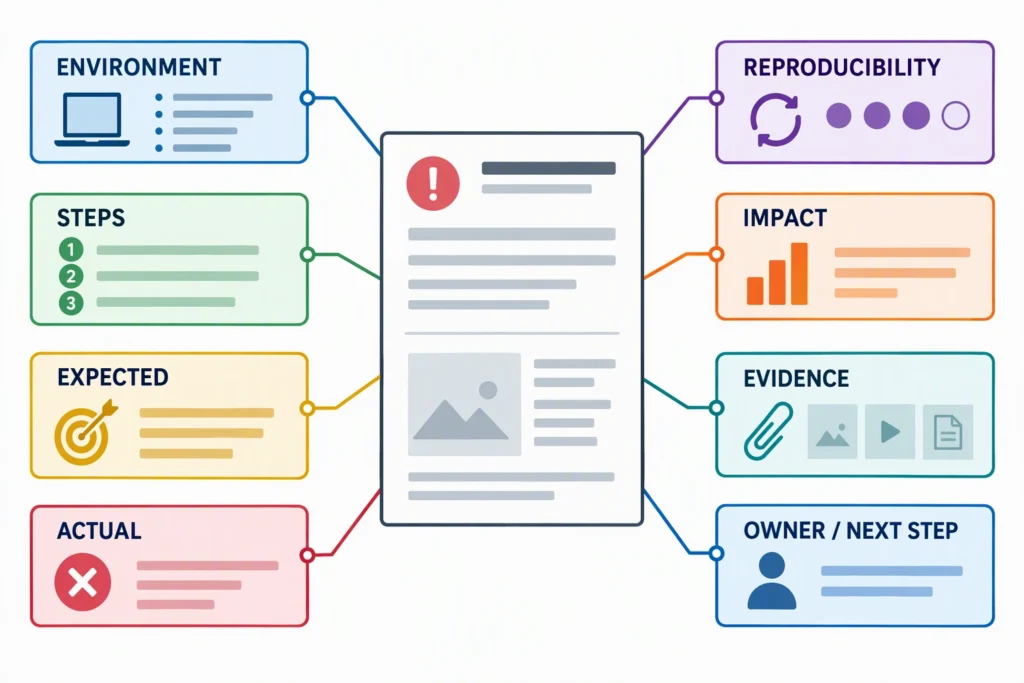
2. What Makes a Bug Report Easy to Act On?
The thinking they want to see: You give the developer everything needed to repeat and fix it, with no back-and-forth.
Three things to cover:
1. A title that says what broke, not just “bug in checkout.”
2. Short numbered steps plus what you expected and what actually happened.
3. Your setup: browser, device, test account, screenshots.
“I learned this from a report that got fixed the same morning I filed it. The title said exactly what broke: ‘Pay button freezes on the second tap (phone, checkout).’ The body had five numbered steps anyone could follow, then two lines: what I expected and what actually happened. I added my setup — phone model, browser, test account — and a short screen recording. The developer told me later she never had to ask me a single question. A good report respects the fixer’s time. Now I read every report I write as if a stranger will act on it alone, because often one will.”
Learn how to tailor your resume to a job description so employers can quickly see your relevant qualifications.
3. With Little Time Before Release, What Do You Test First?
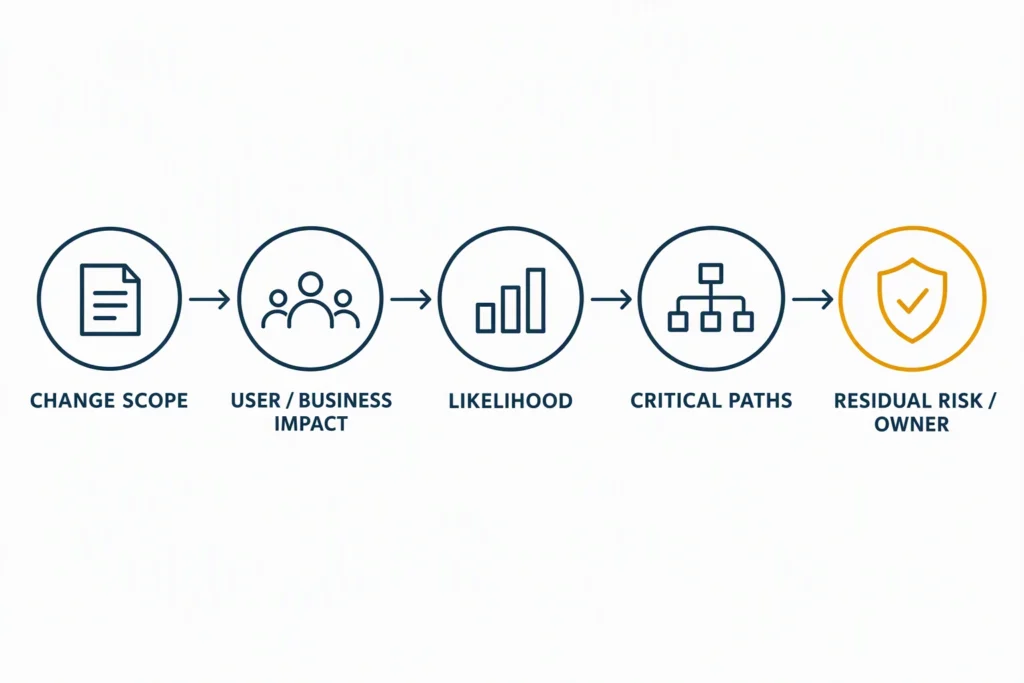
The thinking they want to see: You pick by risk and say openly what stays untested.
Three things to cover:
1. Test what changed and what touches it.
2. Test what customers use most and what handles money.
3. Write down what you did not test and tell the team.
“When release day is close and time is short, I stop trying to test everything. First I test what changed in this release and the screens directly around it — most new bugs live there. Then I run through the paths customers use most: signup, login, search, buy. Anything touching money gets extra care no matter how rushed I am. I write the whole plan on one page so anyone can see it. And I am honest in the release note about what I did not test, so the team decides with open eyes. Testing under pressure is not about speed — it is about choosing the right things and saying the rest out loud.”
Strengthen your application with practical examples from this dental assistant resume guide.
Automation, Ghosts, and Data Flows
These four questions cover the technical half: what to automate, how to catch bugs that barely repeat, re-testing after changes, and testing data end to end.
4. How Do You Decide What to Automate?
The thinking they want to see: You automate for a clear reason, not because automation sounds impressive.
Three things to cover:
1. Automate what is stable, repeated often, and painful by hand.
2. Skip one-offs and screens that still change weekly.
3. Count the real cost: writing and fixing the script, not just running it.
“I automate the boring repeats. If a login-and-buy flow runs every release and never changes, a script saves hours and never gets tired. But I do not automate a brand-new screen that the designers redraw every week — I would spend more time fixing the script than the script saves. Before writing anything, I ask: how often will this run, how stable is the screen, and what happens when it breaks? A flaky script that cries wolf is worse than no script. My rule is simple: automate what is settled and repeated; keep your hands on what is new or rare. The goal is confidence, not a big script count.”
Choose a readable layout with this guide to cover letter fonts, sizes, and styles.
5. Tell Me About a Bug You Could Barely Repeat.
The thinking they want to see: You hunt patiently instead of closing it as “cannot reproduce.”
Three things to cover:
1. Say how you finally caught it repeating.
2. Explain what the real trigger turned out to be.
3. Show what you changed so it stays fixed.
“A payment screen failed about one time in twenty, and only on slow connections. Instead of closing it, I ran the same flow thirty times on a slowed-down network until I caught it three times. The pattern: it failed only when the confirmation was slow to return and the user tapped twice, creating two charges. The trigger was timing, not the button. I wrote it up with the exact slow-network setup so anyone could repeat it, and the developers added a guard against double taps. It has not come back since. Flaky bugs are usually timing bugs wearing a disguise — slow down, repeat, and watch for the pattern.”
Explore how to use AI to write a resume while keeping your experience accurate and your wording personal.
6. How Do You Re-Test After a Change?
The thinking they want to see: You check the blast radius first, then widen out.
Three things to cover:
1. Test the changed area and everything touching it first.
2. Run the wider set on a schedule, not by hand each time.
3. Add a new test for the bug so it never returns quietly.
“When code changes, I start close and move outward. First I test the changed screen itself and every screen that talks to it — most breakage happens at the borders. Then I run our saved set of core tests; the machine runs the full set overnight so I do not burn my day on repeats. Anything the change could plausibly affect gets a human look, not just a script. And for the bug that caused the change, I add a permanent test with the exact steps, so if it ever comes back, we catch it before a customer does. Re-testing is really two jobs: prove the fix works, and prove nothing else broke.”
Explain what makes you a strong candidate with these sample answers about job suitability for freshers.
7. How Would You Test a Data Flow From Start to Finish?
The thinking they want to see: You follow the data like a package through every stop.
Three things to cover:
1. Send in known data and check what comes out each step.
2. Test bad inputs: empty, huge, wrong type, special characters.
3. Check what happens when a middle step fails.
“I treat data like a package and follow it through every stop. I start with simple known input — a normal order with normal values — and check what each step passes to the next, all the way to the final screen or report. Then I get mean: empty fields, giant numbers, wrong types, special characters. Each stop should handle bad input gracefully, not crash or silently swallow it. I also test what happens when a middle step fails — does the whole thing stop cleanly, or does half an order get saved? The bugs I find most often live at the handoffs between steps, where one team’s output becomes another team’s input.”
Showcase your testing experience and technical abilities with these software testing resume examples and writing tips.
Speaking Up and Owning Mistakes
The last three are about character: flagging risks outside your lane, disagreeing about severity with evidence, and owning the bugs you missed.
8. What Do You Do About a Risk Outside Your Main Job?
The thinking they want to see: You raise it with evidence instead of saying “not my department.”
Three things to cover:
1. Describe the risk in plain terms with proof.
2. Say who it affects and how badly.
3. Hand it to the right person and follow up once.
“During testing I noticed our search page took almost ten seconds to load on a normal phone. Speed was not my assigned area, but slow pages lose customers, so I could not stay quiet. I recorded the load times, noted it got worse with images, and wrote a short note: what I saw, who it affects, and how bad it could get. I sent it to the lead developer and the product manager — the people who could actually fix it. They reworked the image loading the next sprint. My job is quality, and quality does not stop at my job description. Flag it clearly, hand it to the right hands, and check once that it moved.”
9. What If a Teammate Disagrees With Your Bug Rating?
The thinking they want to see: You argue with user impact, not with ego.
Three things to cover:
1. Say what each of you thinks and why.
2. Bring evidence: who it hits, how often, what it costs them.
3. Accept the middle path gracefully when the evidence is mixed.
“A developer once pushed back when I marked a bug as high severity — a settings page that reset user choices on every login. He said it was cosmetic. Instead of arguing, I showed him the support tickets: dozens of confused users, some threatening to leave. I walked him through one user’s session so he could feel the frustration. We agreed on medium-high with a fix in the next release, not this one. He was right that it was not a crash; I was right that it was hurting people. Severity is a team decision, and the user is the tiebreaker. Evidence ends these debates faster than titles do.”
10. Tell Me About a Bug You Missed.
The thinking they want to see: You own it fully and show what you changed.
Three things to cover:
1. Say what you missed and how it got out.
2. Own your part without blaming the clock or the developer.
3. Show the process change you made afterward.
“I missed a bug where discount codes stacked when they should not have — customers got double discounts for a weekend before anyone noticed. I had tested each code alone but never two together. That was my miss, not the clock’s and not the developer’s. After the fix, I added a permanent checklist for every pricing change: single codes, combined codes, expired codes, and codes at the exact boundary amounts. I also started asking ‘what can be combined here?’ for every feature with more than one input. Missing a bug hurts, but missing it twice is a choice. The checklist has caught three similar issues since, which tells me the lesson stuck.”
Write It Like a Bug Report
Pick your three hardest answers and write each one down as if it were a bug report. Title: the question in one line. Steps: what you did, in order. Expected vs actual: what the interviewer wants vs what your old answer gives. Read it back as a stranger. If any step is fuzzy, your spoken answer will be fuzzy too. Fix the writing, then say it out loud twice. Clear on paper, clear in the room.
Frequently Asked Questions
Do I Need to Know Automation to Get Hired?
Not always. Many QA roles are mostly manual testing, and clear thinking matters more than scripts. But basic automation knowledge helps a lot — learn enough to write one simple test and explain when automation is worth it.
What If I Have Never Tested at a Real Company?
Say so honestly, then show what you have done: class projects, testing apps on your own, bug reports you wrote for open-source projects. Walk through your process step by step. Employers hire careful thinking, not just job titles.
How Do I Talk About a Tool I Barely Used?
Be exact about your level: “I used it for two weeks to run existing tests” is honest and fine. Never claim comfort you do not have — one follow-up question will expose it. Curiosity plus honesty beats fake expertise.
Should I Mention Bugs I Found in Open-Source Projects?
Yes — it shows you test because you care, not just because you are paid to. Describe the bug, your report, and what happened. Real public reports are proof you can do the work.