


Here are ten questions digital marketing specialists get asked, each with a full sample answer built around real campaign work. Read straight through, or jump to the ones that feel hardest.
Use examples from jobs, internships, freelance gigs, or your own projects. Say what you personally did. Never invent results, budgets, or numbers you cannot back up.
Key Takeaways
- Tie every task to a business goal. If you cannot say what the business gets, do not start the work.
- Test small before you spend big. A tiny test teaches you what a big budget never will.
- Report what happened, not what you hoped. Honest numbers build trust; rosy ones destroy it.
- Never trade trust for clicks. One sneaky tactic can undo months of good work.
Running Campaigns That Work
These four questions are about doing the work: planning a campaign, fixing one that struggles, measuring it honestly, and learning from tests instead of opinions.
1. Tell Me About a Campaign You Planned and Improved
The skill behind this question: showing you can plan, watch, and adjust — not just launch and hope.
Lead with this: Name the goal first, then how you tracked and improved it.
“I ran social ads for a small bakery with a tiny budget. First I wrote down the goal: more weekend orders, not just likes. I started with two different ad versions and a small daily spend. Each week I looked at which one brought actual orders and paused the loser. I also read every comment to learn what people wanted. After a month, weekend orders had clearly grown, and I knew exactly which message worked. On Fridays I sent the baker a short note: what sold, what people asked for, and what I planned to test next. Now I never launch without a written goal and a weekly check-in, even on the smallest campaign.”
2. A Paid Campaign Is Missing Its Target. What Would You Check?
The skill behind this question: diagnosing in the right order instead of guessing and changing everything at once.
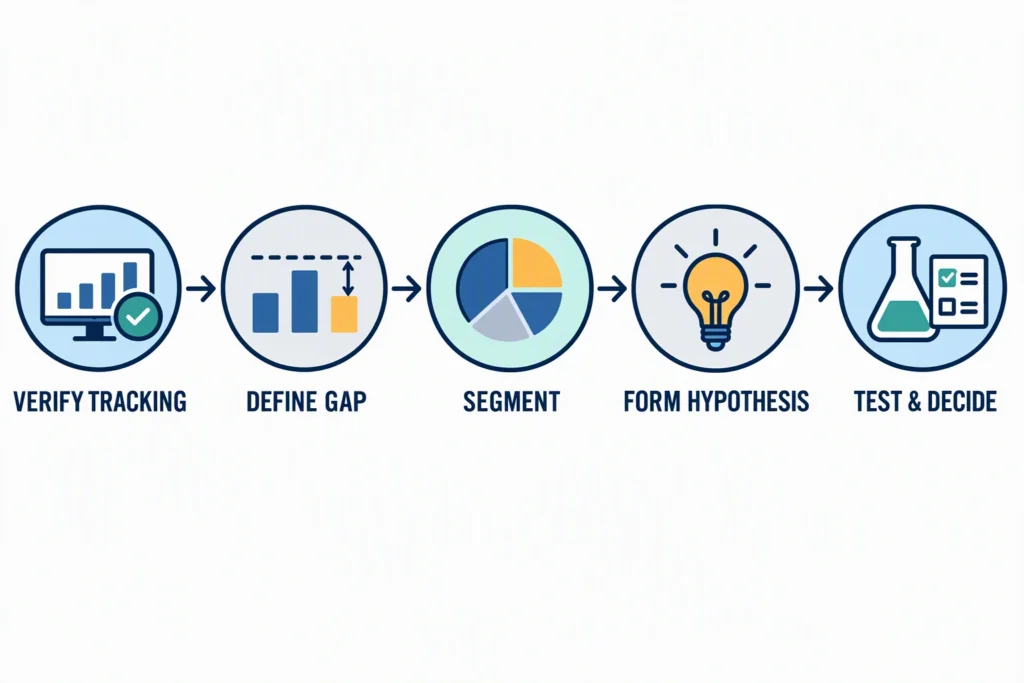
Lead with this: Check tracking first — a broken pixel looks exactly like a failing campaign.
“I check tracking first, because a broken pixel looks exactly like a failing campaign. If tracking is fine, I look at who is seeing the ads — a wrong audience wastes money fast. Next I compare the ad’s promise with the landing page; if they do not match, people click and leave. Then I look at the creative itself: is the first line strong, is the offer clear? I pause the weakest version and move its budget to the best one. I once found the whole problem was a form that broke on phones. Fixing it took an hour and the campaign recovered the same day. Now I check the form on my own phone before any campaign goes live.”
3. How Do You Decide What to Measure and Explain the Results Simply?
The skill behind this question: picking a few numbers tied to the goal — and explaining them to anyone.
Lead with this: Two or three goal-tied numbers beat a dashboard of twenty.
“I pick two or three numbers tied directly to the goal. For orders, I track how many people buy and what each sale costs me. I ignore the rest while the campaign runs. To explain it, I make one simple page: the goal at the top, the numbers below, and one sentence on what I will do next. I never show a wall of charts. If a number moves and I do not know why, I write that down too instead of guessing. When I explained it to the person running the shop, he understood instantly. Plain numbers beat fancy reports every time. He started asking for that same one page every week.”
4. Tell Me About a Marketing Test That Changed Your Approach
The skill behind this question: proving you let test results beat your opinions.
Lead with this: Say what you believed, what the test showed, and what you do differently now.
“I was sure a funny ad would beat a plain one, so I tested both with equal budgets. The plain ad won clearly — more clicks, more orders. I was wrong, and the test proved it in three days. That changed how I work: now I never argue about creative in meetings. I run both versions small, let the numbers decide, and put the budget behind the winner. Taste is personal; test results are not. I keep a small note of every test I run: what I tried, what won, and what I changed because of it. That one test saved me from many confident-but-wrong opinions since. Five minutes of writing after each test keeps the lesson where I can find it.”
Reaching the Right People
These two questions test whether you find the right audience and speak to them clearly — in ads and in search.
5. How Would You Choose an Audience and Channel for a New Product?
The skill behind this question: starting from the buyer instead of chasing trendy platforms.
Lead with this: Describe the buyer first, then pick channels where those people already are.
“I start with the buyer, not the channel. I write down who they are, what problem they have, and where they already spend time online. Then I pick one or two channels where those people actually are — no point advertising somewhere they never go. I launch small on each and compare what each new customer costs. The cheaper channel gets more budget. I once skipped a trendy platform because our buyers were all in one online group. Starting from the buyer keeps me from chasing shiny channels. I also write down why I skipped each channel, so I can explain the choice later instead of just saying no. That short note has settled more than one budget argument.”
Find a strong opening for your application in this guide to starting a cover letter.
6. How Would You Improve a Website’s Visibility in Search?
The skill behind this question: knowing the boring basics beat tricks.
Lead with this: Fix titles, helpful content, and speed before anything clever.
“I fix the basics first. I make sure each page has a clear title that matches what people actually type into search. Then I write content that answers real questions — not stuffed with keywords, but genuinely helpful. I check that pages load fast on phones, since slow pages lose visitors. I also claim the free business listing so we show up on the map. These boring basics beat tricks every time. One shop I worked with got far more search visitors in a few months just by rewriting page titles and answering customer questions on the site. I check the pages again every few months, because what people type into search slowly changes.”
Create a focused introduction for your application with these short email cover letter examples.
Staying Honest and Delivering
The last four cover integrity and execution: handling data gaps, keeping claims honest, running email well, and working through conflict.
7. How Do You Handle Missing Data and Privacy Choices?
The skill behind this question: showing you collect less, ask clearly, and report gaps honestly.
Lead with this: Only collect what you use, and say openly what the numbers do not cover.
“First, I make sure we ask permission clearly before collecting anything — a plain consent banner, no sneaky patterns. I only collect what we actually use; if we will never email them, I do not ask for the email. When data is missing, I say so openly in reports instead of quietly filling gaps. I write one line under every chart about what the numbers do and do not cover. Being honest about limits builds more trust than perfect-looking charts. Privacy rules keep changing, so I check ours every few months. I would rather explain a gap in the numbers than hide it and be caught later. That honesty has kept clients with me longer than any chart could.”
Present your testing tools, methods, and experience with these software testing resume examples.
8. What Do You Check Before Publishing a Claim or Paid Endorsement?
The skill behind this question: proving you verify claims and label paid posts before publishing, not after trouble.
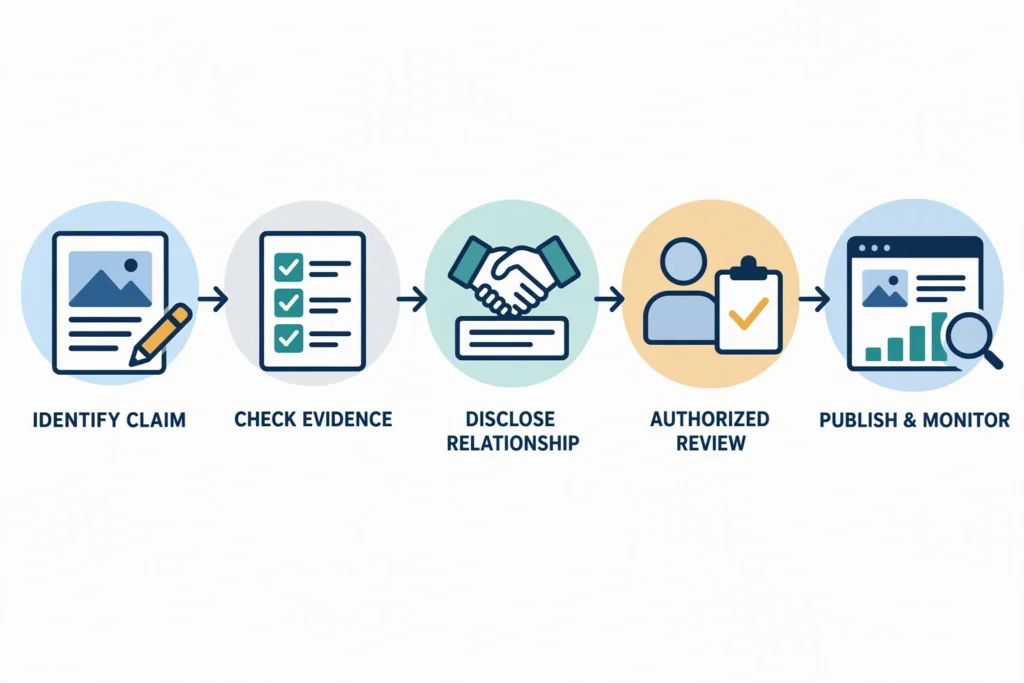
Lead with this: Every claim needs proof on file; every paid post needs a clear label.
“I verify every claim before it goes out. If an ad says ‘best,’ I ask: best by what measure, and where is the proof? I keep that proof saved where anyone can find it. If the proof is weak or old, I soften the claim or drop it until we have better proof. For paid endorsements, I make sure the post clearly says it is an ad — hidden sponsorships destroy trust fast. I also read the platform’s ad rules before publishing, not after a takedown. One rejected ad taught me that ten careful minutes beats a week of appeals. A claim I cannot back up does not go out with my name on it.”
Showcase your musical training and performance experience with this musician resume guide.
9. How Would You Plan and Review a Marketing Email?
The skill behind this question: showing a calm, repeatable process instead of a rushed send.
Lead with this: Walk through the checklist: goal, list, subject, one action, test, review.
“I start with the goal: what should the reader do after opening? Then I clean the list — I remove dead addresses so we do not hurt our sender reputation. I write a short subject line that says what is inside, keep the email to one clear action, and make sure it reads well on a phone. I always send a test to myself first and click every link. After sending, I check opens and clicks, and I note what to try differently next time. A calm checklist beats a rushed send. I keep the checklist in a note on my phone, and it has caught a broken link more than once.”
Learn how to write resume achievements without numbers using clear examples of your contributions.
10. Tell Me About a Marketing Disagreement or Difficult Deadline
The skill behind this question: showing you resolve clashes with tests and protect quality under pressure.
Lead with this: When opinions clash, propose a quick test instead of a long argument.
“A designer and I disagreed hard on a launch page — she wanted it beautiful, I wanted the buy button impossible to miss. The deadline was two days away. I suggested we test both versions live for 48 hours and let orders decide. Hers looked better; mine sold more. We shipped mine and used her design ideas in the next version. We also agreed to write down what each version was trying to do, so the result would teach us something either way. The lesson: when opinions clash under pressure, run a quick test instead of arguing. Data ends debates faster than titles do, and nobody loses face. I now suggest a small test whenever a deadline argument starts to heat up.”
Prepare thoughtful questions to ask a hiring manager about the role, expectations, and team.
Teach It to Someone New
Pick your three hardest questions. Explain each answer out loud to a friend who knows nothing about marketing, in plain words. If they frown or ask what something means, your answer still has jargon to remove. Keep simplifying until they can repeat your main point back to you. An answer a non-marketer understands will land perfectly with a hiring manager.
Frequently Asked Questions
Do I Need Big-Budget Experience?
No. Small budgets teach you to be careful with every dollar, which employers love. Talk about what you did with little: how you tested, what you cut, what you learned. Resourcefulness beats big spending.
What If My Results Were Small?
Say so honestly and explain why the result still mattered. Steady growth from a tiny base is a real story. Interviewers can tell when numbers are inflated, and that kills trust instantly.
How Do I Talk About a Failed Campaign?
Own your part fast, then show what you changed. “I targeted too broadly, burned the budget in a week, and now I always start narrow and expand only what works.” A clean lesson beats a perfect record.
Should I Mention AI Tools?
Only if you actually use them for real work. Say what the tool does for you — drafts, ideas, first passes — and what you always check yourself. Never pretend the tool did the thinking.