


Cybersecurity interviews test how you think when something looks wrong. The ten questions below cover that ground, each with a model answer in first person. Begin with the first question, or go straight to the topics that make you nervous.
Draw on real work — a job, an internship, a lab exercise, or a home project. Be clear about which parts were yours. Only claim breaches, tools, and results you can prove.
Key Takeaways
- Check the alert before you sound the alarm. A quick look at the facts first saves everyone a panic.
- Fix what attackers can reach first. A hole open to the internet beats a worse hole hidden inside.
- Explain risk in plain words. Leaders act on what they understand, not on scary terms.
- Never hide a finding to keep the peace. A painful true report beats a comfortable quiet one.
Acting Fast When Something Looks Wrong
These three questions test your first hour: how you check an alert, dig into an incident, and handle ransomware — calmly and in the right order.
1. A High-Priority Alert Comes In. How Do You Check It?
Why this question matters: They want to see you verify before you escalate, not panic first.
Your answer needs three parts:
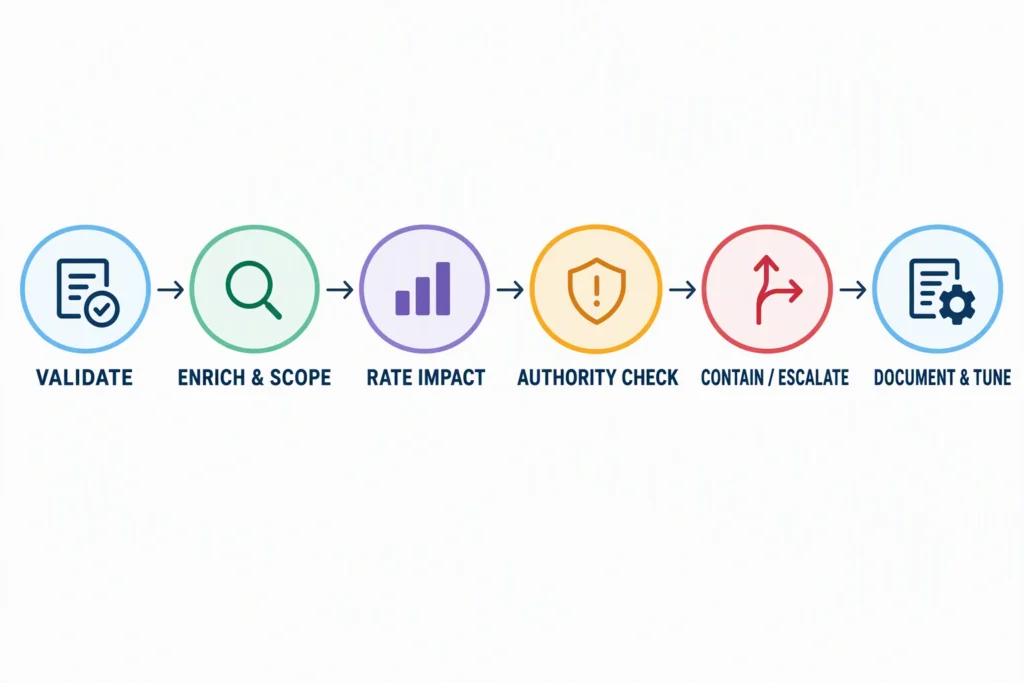
1. Confirm the alert is real: check the raw evidence behind it.
2. See what it touches: which machine, which accounts, how far it could spread.
3. Contain it, then tell the right person with the facts.
“When a high-priority alert lands, I do not forward it right away. First I open the raw evidence — the log lines, the file name, the address — and check whether it looks real or like a known false alarm. Then I find what it touches: which computer, whose account, and whether anything else talked to it. If it looks real, I isolate the machine from the network before I do anything else, so it cannot spread while I think. Only then do I message my lead with three lines: what I saw, what I did, and what I need. That order — check, contain, tell — has kept small scares from becoming big incidents.”
Learn how to spot ghost jobs before spending time on an application.
2. Tell Me About a Security Incident You Looked Into.
Why this question matters: They want a real story that shows you can follow evidence step by step.
Your answer needs three parts:
1. Say what tipped you off and what you found first.
2. Walk through how you traced it and stopped it.
3. End with what you changed so it does not happen again.
“Someone reported a strange email, and one person had already clicked the link. I started by isolating that computer so nothing could spread. Then I checked the email headers and found it came from a fake address pretending to be our vendor. I searched our mail logs for the same sender and found three more people got it but did not click. I had everyone who clicked reset their passwords, and I blocked the sender’s address across the company. Afterward I ran a short session showing the team how to spot fake sender addresses. No one has clicked one since, and that ten-minute talk did more than any tool we bought.”
Explore the role and workplace expectations with these questions to ask a hiring manager.
3. What Would You Do if Ransomware Hit a Work Computer?
Why this question matters: They want the right order burned into memory: disconnect, tell, restore — never pay first.
Your answer needs three parts:
1. Pull the machine off the network immediately so it cannot spread.
2. Tell your manager and the security lead right away.
3. Wipe and rebuild from a clean backup; do not pay the ransom.
“The first thing I do is disconnect the computer from the network — pull the cable or kill the Wi-Fi. Ransomware spreads fast, and every connected machine is at risk. Next I call my manager and our security lead; this is not a solo fix. I do not pay the ransom, because payment funds criminals and often does not even unlock the files. Instead I wipe the machine and rebuild it from our last clean backup, then check that the backup actually works before handing it back. Afterward I find how it got in — usually a clicked link or an unpatched program — and close that hole. Speed matters, but the order matters more.”
Keep your application easy to identify with these resume file naming tips and examples.
Finding Problems Before They Find You
These three questions are about staying ahead: ranking weak spots by real danger, chasing odd logins, and quieting noisy alerts without going blind.
4. How Do You Decide Which Security Holes to Fix First?
Why this question matters: They want to see you rank by real danger, not just by the severity label.
Your answer needs three parts:
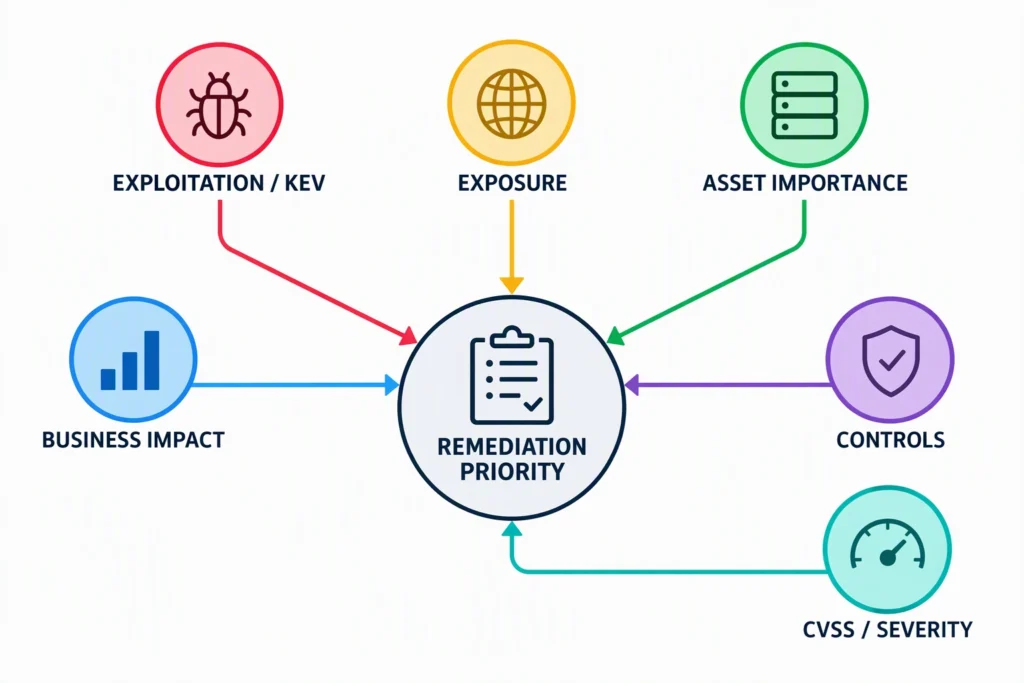
1. Ask what attackers can actually reach from outside.
2. Ask what the hole protects: customer data beats test systems.
3. Fix in that order, and say plainly what waits and why.
“I do not trust the severity label alone. First I ask: can someone on the internet reach this hole, or is it buried deep inside our network? A medium hole facing the internet beats a critical one no outsider can touch. Second I ask what it guards — anything holding customer data or money jumps the queue. Then I make a short ranked list and share it, including what I am deliberately leaving for later and why. When leaders see the reasoning, they back the order instead of demanding everything at once. That list, updated weekly, turned our patching from panic into routine.”
Find a suitable layout for your administrative experience in these office resume templates.
5. How Would You Look Into a Strange Login?
Why this question matters: They want a calm check: is it the real user, or is someone else in the account?
Your answer needs three parts:
1. Look at where and when: a new country at 3 a.m. is a red flag.
2. Ask the user directly through a separate channel.
3. If it was not them, lock the account and check what was touched.
“I start with the login details: where it came from, what time, and what device. A login from a new country at 3 a.m. on an unknown phone gets my full attention. Then I contact the user directly — never by replying to the suspicious session, always through a separate channel like a phone call. I ask one question: ‘Was this you?’ If yes, I note the travel and move on. If no, I lock the account immediately, force a password reset, and check what the intruder looked at or changed. Then I turn on extra login protection for that account. Most strange logins turn out to be travel, but the ten minutes of checking is always worth it.”
Discover experiences that can move you toward your dream job and help you build relevant skills.
6. How Have You Cut False Alarms Without Missing Real Attacks?
Why this question matters: They want proof you tune detections carefully instead of just turning things off.
Your answer needs three parts:
1. Find the noisiest rule and learn why it fires wrongly.
2. Tighten it and test against old data before going live.
3. Watch closely after the change for anything missed.
“One rule fired fifty times a day and was right maybe once a month — the team had started ignoring it, which is dangerous. I pulled a month of its alerts and found most came from our own backup software doing something that looked odd but was normal. I rewrote the rule to skip that known-good pattern and tested it against three months of old alerts: it still caught the one real case and dropped the noise to two a day. I watched it closely for two weeks after. Tuning is slow, careful work — you never just switch a rule off, because the day you do is the day the real attack hides in the silence.”
Update your job-search visibility with this guide to removing Open to Work on LinkedIn.
Explaining Risk and Holding Your Line
The last four are about the human half of the job: explaining danger plainly, using proven security guides wisely, disagreeing well, and never stopping learning.
7. How Do You Explain a Technical Finding to a Non-Technical Leader?
Why this question matters: They want leaders to act on your words, which only happens in plain language.
Your answer needs three parts:
1. Say what happened in one plain sentence.
2. Say what it means for the business: money, customers, or downtime.
3. Give your suggestion and the cost of doing nothing.
“I never open with technical detail. I start with one plain sentence about what happened, like ‘Someone tried to break into our customer database last night and we stopped them.’ Then I translate it: what could have happened to customer trust or revenue if we had not caught it. Then I give my suggestion in plain terms and say what doing nothing risks. I keep the technical proof in an appendix for anyone who wants it. When I explained a phishing wave this way, the CEO approved security training for the whole company the same day. Leaders do not need to understand the attack — they need to understand the choice.”
Find a more precise way to describe your contributions with these alternatives to “created” on a resume.
8. How Do You Use Security Frameworks in Your Work?
Why this question matters: They want to see standard guides as checklists that find gaps, not as buzzwords.
Your answer needs three parts:
1. Pick the guide that fits the job, like NIST CSF or MITRE ATT&CK.
2. Map what you already do against it to find the gaps.
3. Fix the biggest gap first; repeat regularly.
“I treat these guides like a checklist, not a religion. When I joined my last team, I mapped what we did against the NIST CSF categories — identify, protect, detect, respond, recover — and found we had almost nothing written down for recovery. That became our next project. I also use MITRE ATT&CK to think like an attacker: I pick the techniques aimed at companies like ours and check whether we would catch each one. The guide does not do the work for me; it just makes sure I am not blind to a whole area. I redo the mapping twice a year, because both our systems and the attackers keep changing.”
9. Tell Me About a Time You Disagreed About a Security Fix.
Why this question matters: They want respectful pushback backed by evidence, not silent obedience or shouting.
Your answer needs three parts:
1. Say what each side wanted and why.
2. Show the evidence you brought to the table.
3. End with how it resolved and what you learned.
“Our IT team wanted to block a file-sharing tool the sales team used daily; sales said blocking it would kill deals. Instead of arguing, I spent a day learning how they used it and what data flowed through it. I came back with a middle path: keep the tool, but turn on its security settings, limit sharing to company accounts, and watch its logs weekly. I showed both sides the plan in plain words. IT got the protection they needed, sales kept working, and nothing leaked. I learned that ‘no’ without an alternative just creates shadow workarounds — people will find a way around you. A safe yes beats an ignored no.”
10. How Do You Keep Learning and Put It to Use?
Why this question matters: They want a real habit, not “I read blogs sometimes.”
Your answer needs three parts:
1. Name your weekly learning routine.
2. Show how you test new ideas safely.
3. Show how you share what you learn with the team.
“Every Friday I spend one hour reading one detailed incident write-up — not headlines, but the full technical breakdown of how an attack worked. I keep notes on the techniques used. Once a month I rebuild the attack in my home lab, safely cut off from everything, to see if I would catch it. When I learn something useful, I write a short note for the team with three lines: what the attack was, whether we would catch it, and what we should change. That habit has caught two gaps in our defenses before anyone else noticed them. In security, standing still means falling behind, so I treat learning like part of the job, not extra credit.”
Practice Like It’s 2 A.M.
Pick your three hardest questions. Answer each out loud as if you were just woken up at night: short, calm, plain words, no rambling. If you cannot explain it half-asleep, you do not own it yet. Simplify until every answer fits in about two minutes. Then do it once more the next day. Calm and short beats clever and long when it counts.
Frequently Asked Questions
Do I Need Certifications to Get Hired?
They help, but they are not the whole story. Employers want to see you can think through a real alert and explain it plainly. A home lab and clear answers often impress more than a list of letters after your name.
What If I Have Never Handled a Real Breach?
Say so honestly, then show what you have done: labs, practice incidents, write-ups you studied. Walk through exactly what you would do step by step. Interviewers hire judgment and calm, not just battle scars.
How Much Coding Should I Mention?
Enough to show you can read a log, understand a script, and automate a boring task. You do not need to be a developer. For most analyst roles, clear thinking beats deep coding.
Can I Talk About Security Work From School?
Yes — a class lab where you traced an attack or hardened a system counts. Say what you did, what you found, and what you learned. Real effort in a lab beats a vague claim about experience.