


A talent acquisition specialist finds people for open jobs and guides them from first phone call to signed offer. This guide walks you through the ten questions you are most likely to hear.
Each question has plain advice and a full sample answer in first person. Say them out loud, then rebuild them with your own real experience.
Key Takeaways
- Tell one clear story per answer. A short story with steps you took beats a list of traits.
- Keep the person at the center. Strong answers show you treat candidates as people, not names on a list.
- Fairness is a habit, not a line in a policy. Say what you do to keep every candidate on the same footing.
- Make the last line about the future. Explain what you do now so every answer points forward.
Your Path and Your Process
These two are about you: why you chose this work and how you run a search from first call to offer.
Tell me about yourself and why you picked talent acquisition.
The idea behind this question: they want the real reason you care about hiring.
Give your answer this shape:
Name the moment that pulled you toward recruiting, then one step you took to learn it.
“I picked talent acquisition after I watched one great hire change my old team. I was working in customer service when our team lead left, and for months we struggled with the extra work. When her replacement joined, the whole mood shifted within weeks. I asked the recruiter who found her to walk me through her process over coffee, and that talk lit me up. I started reading about hiring after work and asked to sit in on interviews at my own company. Soon I was helping screen candidates for my department, and I loved the detective side of it. I moved into recruiting full time because matching the right person to the right job feels like solving a puzzle that matters. Now I keep a small notebook where I record one hiring lesson I learn each month.”
Explore these management resume examples to present your leadership skills and career achievements.
Walk me through your recruiting process from start to finish.
The idea behind this question: they want proof you run an organized search.
Give your answer this shape:
Go through each step in order and say why it matters.
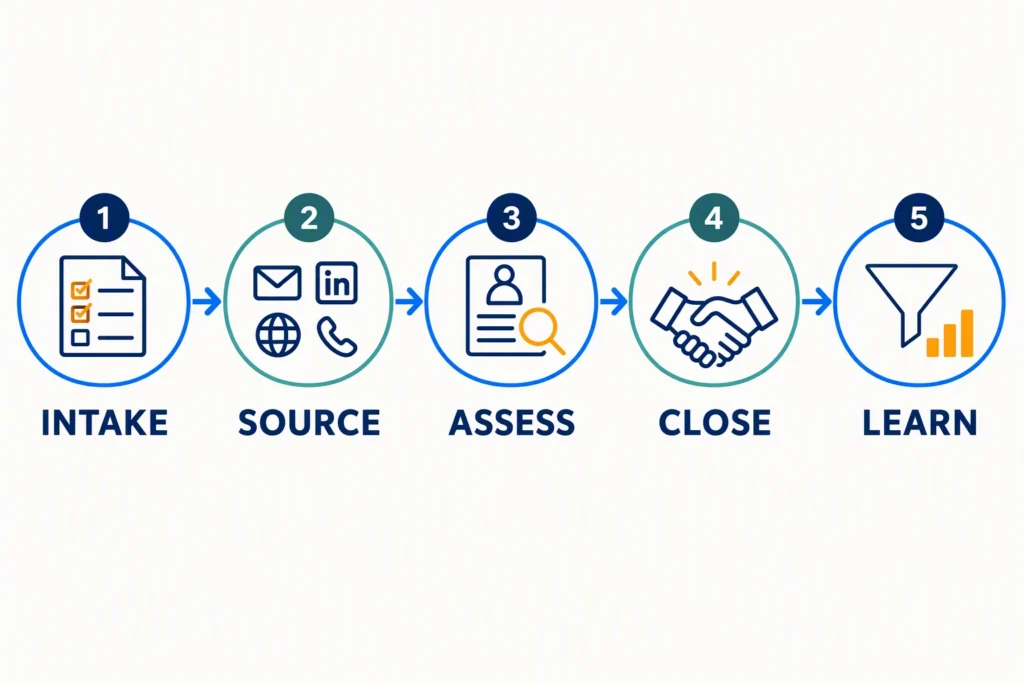
“I start with a kickoff call where the hiring manager tells me what the job really needs. I write a brief profile from that talk and share it back so we both agree on the target. Then I map where people like this spend time, both on job boards and in places where they just talk shop. I screen every candidate with the same core questions so I can compare fairly. I jot down my notes right after each call and pass the strongest people on quickly with my honest read on each one. After interviews, I gather notes fast so no one cools off waiting. I handle the offer talk myself and stay close through the first month after they join. I keep the same written checklist for every search, and I cross each step off so nothing slips.”
Describe your leadership responsibilities more precisely with these synonyms for “managed” on a resume.
Finding People and Keeping It Fair
These three test finding people who are not applying and keeping every search fair.
How do you find and reach candidates who are hard to find?
The idea behind this question: they want to hear how you reach people who are not looking for a job.
Give your answer this shape:
Show how you research first and earn a reply with a personal note.
“I treat a hard search like a research project before I send a single message. I ask the hiring manager and the team where people with these skills spend time, like forums, open-source projects, or local meetups. I read what the best people there have built or written, then I reach out with a note about that specific work instead of a copy-paste pitch. If they say no, I thank them and ask who else in their circle might enjoy this kind of role. I keep every warm reply in a simple list with notes on what they care about, and I check in with them a few times a year. When the right role opens, I am not writing to strangers. I make a habit of adding new names to that list after every search, even the ones that filled fast.”
Understand how support teams track results with these customer service key performance indicators.
Tell me about a time you disagreed with a hiring manager.
The idea behind this question: they want to see you push back with respect and facts.
Give your answer this shape:
Describe the clash, what you checked first, and how you found common ground.
“A hiring manager once wanted to reject a strong candidate because of a brief gap on her resume. I asked him to explain his worry. Then I called the candidate and asked about that gap directly, and she explained she had cared for a sick parent during those months. I shared that with the manager honestly and asked if he would meet her once more with the gap question settled. He agreed, and in that second meeting he saw the same strengths I had seen. She joined the team and did well in her first months. I learned that a quick no often hides an unanswered question. Now I never argue against a rejection until I have chased down the fact behind it.”
Prepare for discussions about testing methods and problem-solving with these quality assurance analyst interview questions.
How do you keep hiring fair and consistent?
The idea behind this question: they want the concrete steps you take to treat every candidate alike.
Give your answer this shape:
Name the small systems that keep every candidate on the same test.
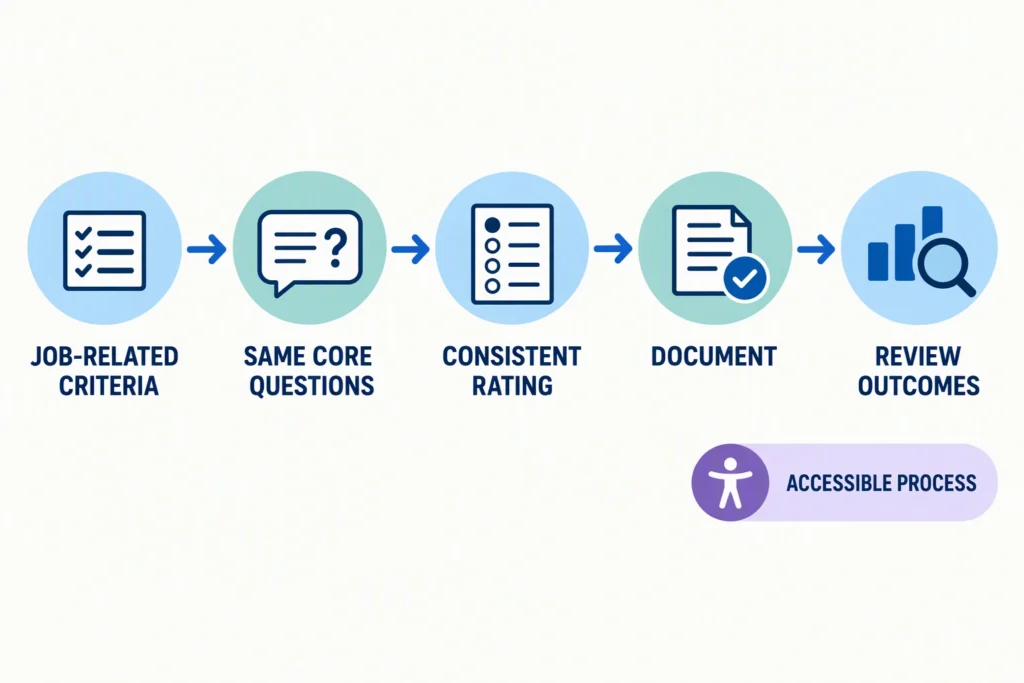
“I use the same set of core questions for every candidate applying for a role, so no one faces a different test. I put my notes down right after each interview, before I talk to anyone else about the person, so my first impression stays honest. I judge those notes against a simple list of what the job actually needs, not against the other candidates. I also rotate who sits on the panel so the same small group does not decide every hire. I never add or drop a step halfway through a search. If a manager asks for a shortcut, I explain what the skipped step protects. I lock the questions and the steps before the first interview, and that habit has kept my searches steady and fair.”
Showcase your property expertise and client relationships with these real estate resume examples.
Shifting Priorities and Lost Candidates
These two are about pressure: what you do when priorities shift and how you handle losing a great candidate.
How do you prioritize open roles when needs change?
The idea behind this question: they want to know how you rank work when everything feels urgent.
Give your answer this shape:
Explain your ranking rule and how you share it with hiring managers.
“When needs shift, I pull all my open roles into one list and rank them with the hiring managers in a quick weekly call. The role where an empty seat hurts the team most goes first, and I say the order out loud so everyone hears it. I then spend most of my week on the top two roles while keeping the others warm with a quick note to candidates and managers. I never pretend a parked role is moving. When a manager’s urgent need drops in priority, I tell them plainly and give them the new timeline. The shared list keeps arguments about importance short because we all see the same page. I update it every week, and it has kept my searches calm even when everything feels on fire.”
Explain sensitive assignments safely with this guide to describing confidential projects on a resume.
Tell me about a strong candidate you lost.
The idea behind this question: they want honesty about a miss and what you learned.
Give your answer this shape:
Say what happened, what you asked after, and what you changed.
“I once lost a top candidate because I took too long between the final interview and the offer. She told me honestly that another company moved faster and made her feel wanted. I thanked her for the truth instead of getting defensive. I called the hiring manager and laid out where my process had dragged, and we agreed no finalist would wait in silence again. I also sent the candidate a warm note wishing her well, because people change jobs again. Six months later she referred a friend to me for a similar role, so the door stayed open. Now I treat speed after the final interview as part of the job, and I fix the slowest step in my process before it costs me another great person.”
Find relevant abilities to highlight in your application with these skills for blue collar jobs.
Numbers, Care, and Careful Tools
The last three cover the numbers you watch, the experience you give candidates, and how you use hiring tools wisely.
Which hiring numbers do you track, and how do you use them?
The idea behind this question: they want numbers that lead to action, not numbers for a report.
Give your answer this shape:
Name the counts you watch and tell one story of a change they caused.
“I track a few simple counts: how long each search takes, where candidates drop out along the way, how many offers get accepted, and how new hires settle in during their early weeks. The drop-out point taught me the most. I once saw people leaving after one long interview day, so I split the day into two shorter sessions and the drop-offs stopped. When offer acceptances dip, I look at my notes on pay talks and timelines before I blame the market. I review these counts once a month and pick one small change to test. That monthly review keeps me honest about what is working and what is just a lucky stretch. I record the one change and check it again the next month.”
Recognize warning signs before applying with this guide to ghost jobs and fake job listings.
How do you give every candidate a good experience?
The idea behind this question: they want to hear how you treat people you will never hire.
Give your answer this shape:
Show the courtesies you keep for every candidate, hired or not.
“I treat candidates the way I would want my best friend treated when job hunting. I answer every message the same day, even if the answer is only that I am still waiting on feedback. I give each person a clear timeline at the start and one person to contact with questions. If we are not moving forward, I tell them quickly and honestly, with one useful line about why. I never let a candidate hear silence for weeks. Rejected candidates often reapply or send me friends, so every no is still a relationship. I draft each rejection note as if the person will sit across from me again, because one day they might. I also ask hired candidates how the process felt, and I fix what they flag.”
How do you use hiring software and AI in a responsible way?
The idea behind this question: they want care with tools that touch people’s chances.
Give your answer this shape:
Explain what the tool does for you and where a human still decides.
“I use hiring software to keep my notes in one place and to sort through large piles of applications quickly. The tool organizes, but it never decides. I read the applications the filter pushes aside before they close, because a good person should not lose a chance to a keyword. I never let the system reject anyone on its own. I also ask the vendor plain questions about how their AI ranks people, and I watch for patterns where certain kinds of candidates keep getting filtered out. When I see that pattern, I change the filter and check again. Every final choice passes through human eyes, and I spot-check the filtered pile to keep the tool honest. I log every change I make to a filter so I can defend it.”
Speak Your Answers, Then Fix the Weak Parts
Pick the three questions that feel hardest and say your answers out loud to a friend. Ask your friend to stop you with follow-up questions, the way a real interviewer would. Record yourself and listen for the spots where you rush or go vague. Fix one weak spot at a time before you move on.
Questions Readers Ask About This Role
I am moving into talent acquisition from another field. What should I say?
Lead with what transfers: reading people, talking to strangers, and keeping many tasks moving at once. Give one real example, like filling restaurant shifts. Say plainly why hiring pulls you and show you have already started learning the craft.
How do I talk about real candidates without naming them?
Change names and details so no one can be picked out. Keep the focus on your own steps, not their story. Never share pay details, health facts, or anything told to you in confidence.
What if I have never hired for this kind of role?
Say so honestly, then show how you prepared. Name the people you spoke to and the postings you studied. A plain “I have not done this yet” followed by real homework beats a bluff.
How do I handle a rejection conversation when a candidate is upset?
Keep it brief, kind, and honest. Give one clear reason, thank them for their time, and wish them well. If they push back, listen and offer to stay in touch. A calm no today can bring back a great hire tomorrow.