


A supply chain analyst reads the numbers behind moving goods: what customers bought, what sits in the warehouse, what suppliers promised. The interview tests whether you can reason through that material out loud.
Each of the ten questions below has a note on the skill tested, two lines of guidance, and a full sample answer to adapt.
Key Takeaways
- Start from the decision the number must support. First ask what choice the answer has to help with, then shape your work around that choice.
- Check the data before you trust it. Compare two sources, hunt for rows that cannot be right, and fix errors first.
- Name what you assumed out loud. Say which guesses sit inside your answer, so the team can judge them.
- Have a backup plan before trouble hits. Line up a second supplier and a second option while things are calm.
Planning Ahead: Forecasts and Inventory
A supply chain analyst spends much of the week looking forward. These two questions test whether your forecasts and stock rules hold up as demand moves.
How Would You Build and Check a Demand Forecast?
What they’re testing here: whether you can turn past sales into a forecast you trust.
Keep your answer practical: Name the data you start from and how you test it against real sales. Say what you do when the test shows the forecast is off.
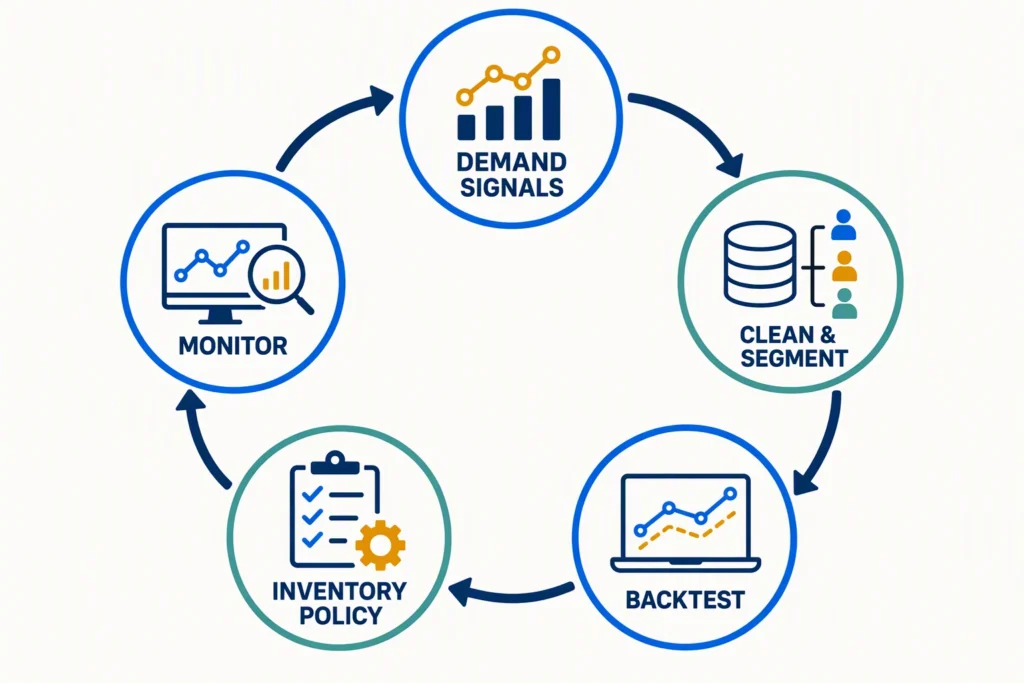
“I start with past sales for the item, cleaned of one-off spikes like a big promotion. Then I look for patterns: which months rise, which fall, and whether the trend is climbing or flat. I build the first forecast from that history, then I talk to sales about what is coming, like a new customer or a price change, and adjust. To check it, I hold back the last three months of real sales and see how close my method comes. If it misses by a lot, I change the method, not the answer. Now I rerun that back-test every time before I share a forecast, so I know its weak spots before anyone asks. That check keeps me from standing behind a forecast I cannot explain in plain words.”
Practise explaining testing decisions and defect handling with these quality assurance analyst interview questions.
How Would You Set Inventory Policy for an Item with Uneven Demand?
What they’re testing here: whether your stock rules fit how the item actually sells.
Keep your answer practical: Explain how wilder demand changes the stock you hold and how often you recheck the rule. Balance the cost of extra stock against the cost of running out.
“First I study how uneven the demand really is. I pull the item’s sales by week and look at the spread between quiet weeks and busy weeks. If the swings are wild, I keep a bigger cushion of stock, because running out costs more than storing extra. I set the reorder point from average daily sales times lead time, then add that cushion. I also watch the item more often than steady items, and I review the policy each quarter. The lasting habit: I write down why I picked each number, so when demand shifts, the next review starts from reasons, not guesses. That note has saved me more than once when a manager asked why we carry so much of one item.”
Choose a layout for your administrative skills and experience from these office resume templates.
Tell Me About a Time Your Analysis Found a Root Cause
What they’re testing here: whether you can follow the data to the real cause of a problem.
Keep your answer practical: Walk through the data you pulled and how you ruled out wrong causes. End with the fix and what you do differently now.
“Our on-time delivery rate was slipping, and everyone blamed the warehouse crew. I pulled the late orders and grouped them by cause: wrong item picked, truck left late, order entered late. The late orders clustered around one shift, but the pick errors were spread across all shifts. I watched the handoff at shift change and found the real cause: the evening team never got the updated pick list because it was printed once in the morning. We switched to printing the list at each shift change. Late orders dropped, and the warehouse crew was cleared. Now I always group problems before I blame a team, so the data points at the cause, not at people. That habit turns arguments into fixes.”
Highlight your database expertise and pipeline projects with this data engineer resume guide.
Checking Data and Finding Causes
Good analysis starts with good data. These three questions test how you check numbers, trace problems, and share results.
How Do You Verify Data Before Making a Recommendation?
What they’re testing here: whether you check your numbers before you build advice on them.
Keep your answer practical: Name the checks you run before you trust a number, and what you do when one fails.
“Before I give a recommendation, I check the data in three ways. First, I compare the numbers from two sources, like the sales file and the warehouse count, and I chase down any gap. Second, I look for rows that cannot be right: negative stock, dates in the future, the same order listed twice. Third, I ask who entered the data and when, because old or hand-typed data needs a closer look. Only after those checks do I build my recommendation, and I say plainly which checks I ran. That way, if someone questions my advice, I can show my work instead of just saying trust me. I learned this the hard way after a bad unit count sent me hunting for a shortage that did not exist. Now the checks come before the conclusions, every time.”
Describe the value of your work with this guide to writing resume achievements without numbers.
Which Measures Would You Put on an Operations Dashboard?
What they’re testing here: whether you choose numbers that help people make decisions.
Keep your answer practical: Tie each number on the dashboard to a decision someone must make. Keep the dashboard small and easy to read.
“I start by asking the operations lead what decision the dashboard has to help with each morning. Then I pick a small set of numbers that serve that decision: on-time delivery, stock on hand versus plan, orders waiting to ship, and supplier late deliveries. I keep it to one screen so nobody has to scroll. Each number gets a simple good-or-bad mark against its target, so problems stand out at a glance. I show the trend for each one, not just today’s value, because a single day can mislead. Before I call it done, I watch the lead use it for a week and I cut anything they never look at. The habit: a dashboard earns its place only if someone acts on it.”
Make your relevant experience easier to spot by learning how to tailor your resume to a job description.
Suppliers Under Pressure
Suppliers do not always deliver as promised. These two questions test how you judge a weak supplier and act fast on a delay.
How Would You Evaluate a Supplier with Declining Performance?
What they’re testing here: whether you judge a supplier on facts instead of frustration.
Keep your answer practical: Start from the supplier’s track record, not from one bad week. Explain how you set a clear improvement plan with dates.
“I would start with the facts. I pull the supplier’s record over the last several months: on-time delivery, share of bad parts, and how fast they answer when there is a problem. I put those numbers next to what the contract asks for, so the gap is clear. Then I speak with the supplier and share the trend, not just the worst month, and I ask what changed on their side. We agree on a short written plan with dates and one person in charge of the fix. If the trend keeps falling after that, I bring the facts to my manager with a backup supplier already checked. The habit: judge suppliers on the trend, not one bad week. Facts first, feelings second.”
Explore ways to present sensitive work in this guide to listing confidential projects on a resume.
A Critical Supplier Reports a Delay. What Would You Do First?
What they’re testing here: how you act in the first hours of a supply delay.
Keep your answer practical: Show your first moves in order: confirm the facts, check your stock, tell the right people. Say when you switch to the backup plan.
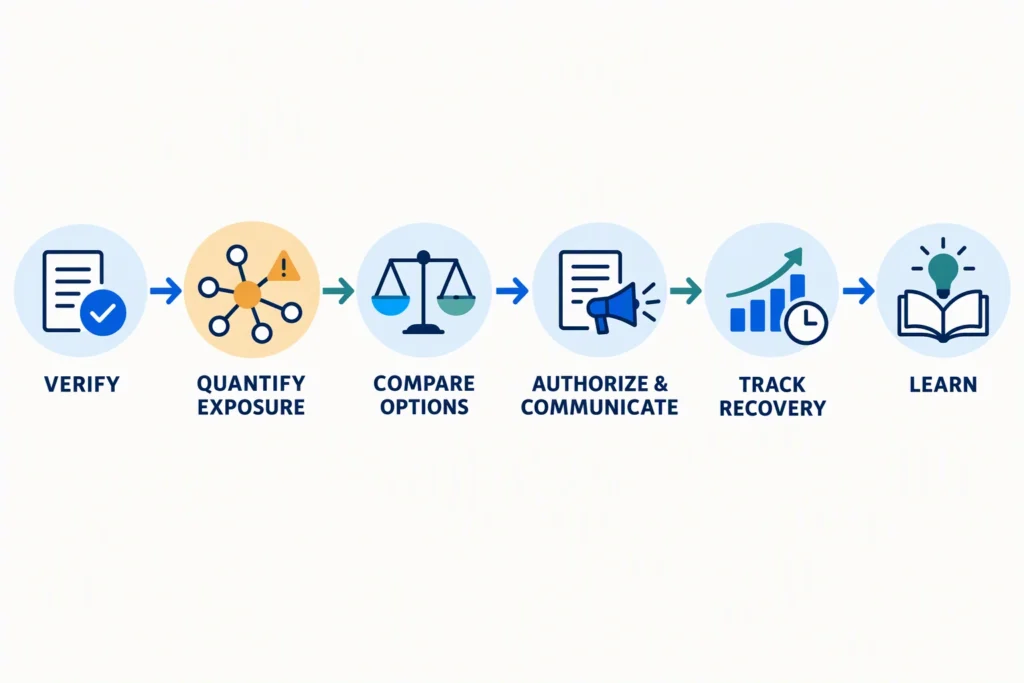
“My first move is to find out how bad the delay really is. I call the supplier and ask for the new date, how much of our order is affected, and whether part of it can ship early. At the same time I check our stock on hand and how many days it covers at current sales. With those two facts, I can see whether this is a scare or a real stockout risk. Then I tell the right people fast: the planner, the warehouse lead, and sales, with the numbers, not rumors. If the risk is real, I start the backup option we lined up earlier. The habit: get the facts in the first hour, because every good decision after that depends on them.”
Tough Choices, Tools, and Shipments
The last three cover the rest: settling team clashes, the tools you use, and shipments stuck on paperwork.
How Do You Resolve Competing Requests from Sales, Finance, and Operations?
What they’re testing here: how you settle it when three teams want three different things.
Keep your answer practical: Explain how you rank requests by what breaks first, and how you keep all three teams in the loop.
“I get the three requests on one page: what each team wants, by when, and what breaks if it waits. Then I talk to each person to make sure I understood the real need, not just the ask. I rank the requests by harm: what hurts customers or stops work goes first. I share the ranking and my reasons with all three teams before I act, so nobody is surprised. If two requests truly clash, I propose a middle path, like a smaller first batch for sales while finance gets the full review. I write down the final order and the reasons. The habit: when people see the reasons in writing, they accept the order even when they are not first.”
What Experience Do You Have with ERP, SQL, Spreadsheets, or Other Tools?
What they’re testing here: whether you can work with the tools the job runs on.
Keep your answer practical: Name the tools you have used and what you did with each. Show how you pick up a new tool fast.
“For cleaning data and quick checks, spreadsheets are the tool I reach for each day, and I know my way around pivot tables and lookup formulas. I write SQL to pull my own data from the company database instead of waiting for reports, which saves a lot of back-and-forth. I have worked inside an ERP system to look up orders, stock levels, and receipts, and I know how a wrong entry there spreads everywhere. For bigger files I use Python with pandas to repeat the same cleaning steps without errors. When I meet a new tool, I learn it by redoing a task I already know, so I can compare the new result with the old one. The habit: I learn the tool by checking its answers, not by trusting them.”
What If an International Shipment Had a Classification or Customs Issue?
What they’re testing here: how you handle a shipment stuck on a paperwork problem.
Keep your answer practical: Show how you find the exact problem with the shipment papers. Explain how you stop the same problem from happening again.
“I would start by finding exactly what the customs office is questioning: the product code, the declared value, or a missing paper. I pull the shipment papers and compare the code we used with the product’s real description, because a wrong code is the most common cause. Then I speak with our customs broker the same day, since they know the local rules and the right office to contact. If the goods are held, I check what we have in stock to cover sales while we wait. I keep the team updated in writing so nobody promises a delivery date we cannot keep. After it clears, I fix the code or the paper that caused the hold, so the next shipment does not hit the same wall. The habit: fix the paperwork cause, not just the delay.”
Explain It Without the Spreadsheet
Say each answer out loud with the spreadsheet closed. If the logic holds without the sheet, it is solid. Keep every answer under two minutes.
Frequently Asked Questions
What if I have no supply chain title yet?
Draw on class projects, internships, or any job where you worked with data and made a recommendation. Say plainly where the story comes from. Clear thinking matters more than a fancy title.
What if I have never used their ERP system?
Say so honestly, then name what you have used. Most of these systems hold the same things: orders, stock records, and receipts. Show you understand what the system is for, and that you can learn a new one through a task you already know.
Should I memorize formulas?
No. Learn what each formula is for instead. If you understand why a cushion of extra stock exists, you can talk through it even if you forget the exact math. They want your reasoning, not your memory.
Can I reuse one story for several questions?
Yes, if you pick a different angle each time. One project can show how you checked data, found a cause, and handled a supplier. Do not tell the same story word for word twice; change the focus to fit the question.