


Executive assistant interviews feel different from other job interviews. The questions sound simple, but each one is a small test of trust. The hiring manager is really asking one thing in many ways: can I trust this person with my schedule, my name, and my work?
The ten questions below are grouped by theme, and each comes with a full sample answer. Read them to learn the shape of a strong answer, then rewrite each one around your own real experience.
Key Takeaways
- Show the choice, not just the task. Say what you decided and why. Anyone can list duties; the decision is what gets you hired.
- Keep private material private by habit. Never share names, numbers, or secrets to impress. Describe your care, not their data.
- Write in the leader’s voice, not your own. Short, clear lines in their tone matter more than fine words.
- Turn each error into a lasting rule. Name what went wrong, then show the habit that stops it from happening again.
Running the Leader’s Day
The day belongs to the leader, but you run it. These two questions test how you choose and arrange.
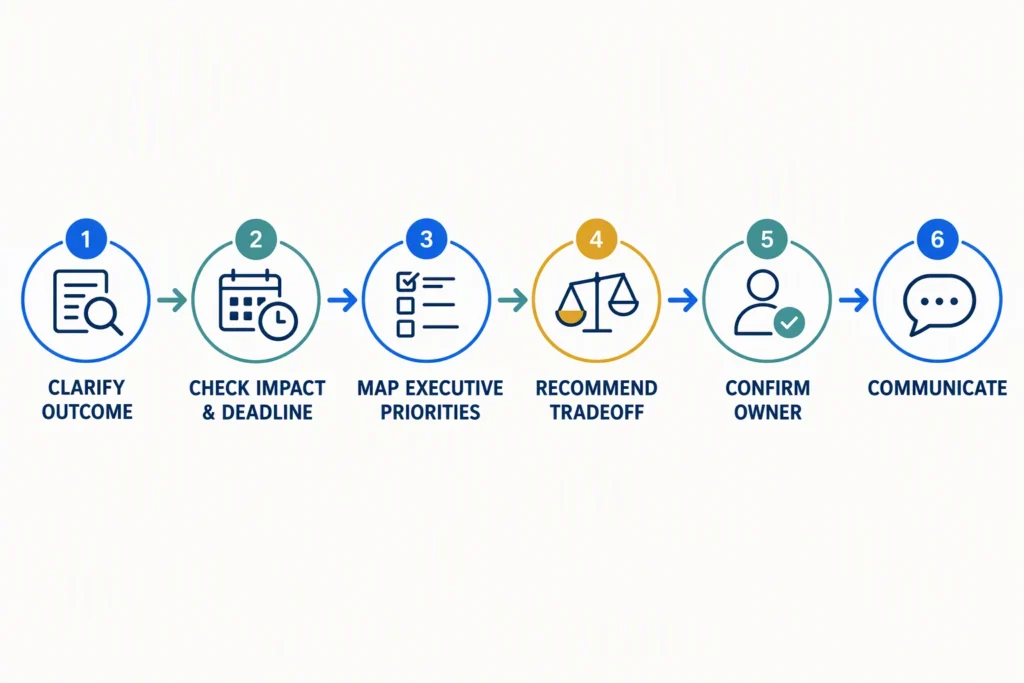
How Do You Choose What Comes First When Leaders Disagree?
What the interviewer is listening for: how you pick a winner when two bosses both say their request is urgent.
Say it like this: Name the rule you use to choose. Then walk through one clash you solved with it.
“Two senior leaders once needed me in the same morning. One had a client visit with no agenda ready. The other had a board paper due at the printer by noon. I asked each of them one question: what breaks if this waits? The board paper had a hard print time, so it won. The visit could open with a short welcome I had already drafted. I told the second leader honestly what I could and could not finish, and I moved the visit prep to the evening before. We printed the paper at eleven, and the visit ran on time. Now I ask ‘what breaks if this waits’ for every clash, and I confirm the order in writing so nobody is surprised.”
Present your clinical skills and patient care experience with this dental assistant resume guide.
How Do You Run a Complex Executive Calendar?
What the interviewer is listening for: whether you guard the leader’s hours or only fill them.
Say it like this: Describe your weekly rhythm for the calendar. Then show how you handle an overlap.
“I supported two leaders in three time zones, so I built a weekly rhythm. Every morning I blocked one hour of quiet time before I accepted any meeting, and I kept travel days meeting-free when I could. I left fifteen minutes between meetings for overruns and marked the hours each leader did their best thinking. Every Friday I sat with each leader for ten minutes and locked the next week together. When two meetings clashed, I looked for which one could move without harm, moved it myself, and told both sides in one message. Double bookings nearly stopped within a month, and both leaders said their weeks felt calmer. The habit stuck: I still block that hour first, keep the buffers, and lock the week every Friday.”
Secrets and High-Stakes Meetings
Some work must stay private and some meetings decide big things. These two questions test how you guard information and prepare choices.
Tell Me About a Time You Kept Sensitive Information Safe
What the interviewer is listening for: whether you can hold a secret without making a show of it.
Say it like this: Pick one real moment with private material. Show what you did, not what you saw.
“In a past role I handled pay review letters that named salaries. One set was left on the shared printer by mistake. I picked the pages up at once, locked them in my drawer, and told the manager quietly what I had found. I never read beyond the cover page and never spoke a number aloud, even when a coworker joked about the pile. After that, review letters went out in sealed envelopes, and I suggested the change to the team. Nothing leaked, the team thanked me for catching it, and the new habit held. My rule now is simple: I treat any paper I did not create as private, I look only at what my task needs, and I speak of it to no one.”
Highlight your serving experience and customer service strengths with this waitress resume example and writing guide.
How Do You Prepare an Executive for a Meeting With Big Decisions?
What the interviewer is listening for: whether your prep work makes hard choices easier.
Say it like this: Explain what goes into your briefing. Then tell how it changed a meeting.
“My leader once had to choose between two vendors in a single meeting. I read both long proposals and pulled the real differences onto one page: price, delivery time, and past complaints from our team. I went over the numbers twice so she could trust them. I put the hard choice at the top in plain words and sent the page the night before, with the full files behind it. I also added the three questions she had asked about vendors in the past, answered in one line each. She walked in already knowing the trade-off and made the decision before lunch. Now I prepare every big meeting the same way: one short page, sent early, with the choice spelled out and the proof behind it.”
Travel and the Unexpected
Trips break and strange requests land without warning. These two questions test whether you stay steady and rebuild fast.
How Do You Plan Executive Travel and React When Plans Change?
What the interviewer is listening for: whether you rebuild calmly when a trip falls apart.
Say it like this: Show the order you fix things in when travel breaks. End with what you keep ready now.
“Once my executive’s evening flight was canceled while she was already at the airport. I booked her on the next morning flight and picked seats near the front so she could leave fast. I moved the hotel to the new night, pushed two meetings back by one day, and sent the driver the new pickup time with the flight number. I packed the new plan into one message and called her with a clear summary, starting with what changed and ending with what stayed the same. She landed a day late, but every meeting still happened. Now I always save a backup flight and hotel option before any trip, and I fix the ground pieces first so the traveler hears one finished plan, not a list of problems.”
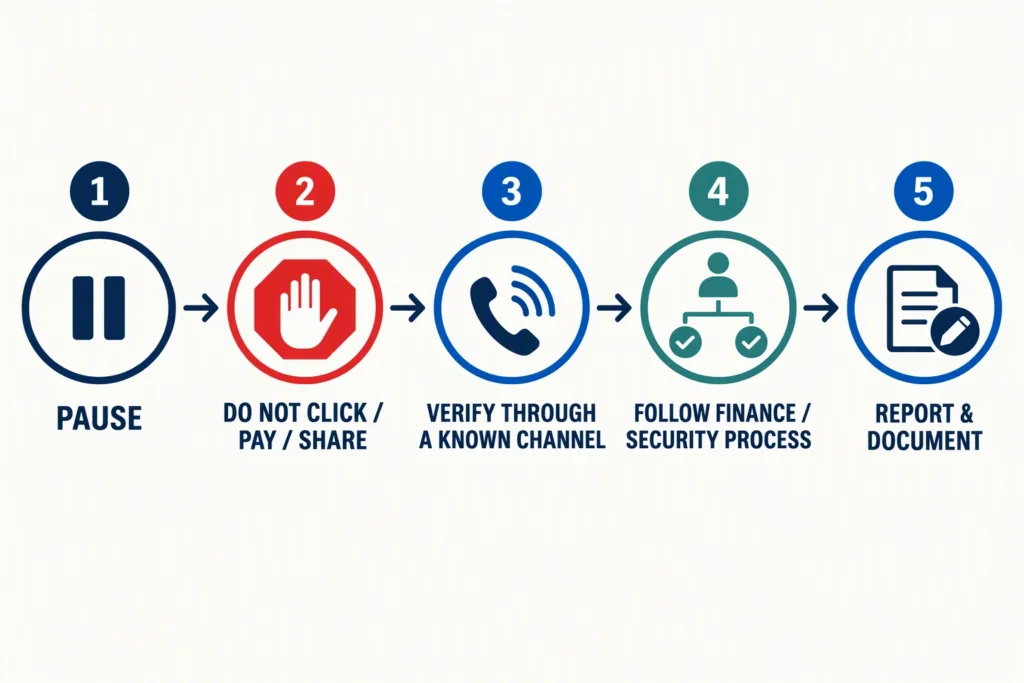
What Would You Do with an Urgent and Unusual Request?
What the interviewer is listening for: whether you pause and check before acting on an odd request.
Say it like this: Show that you stop first. Then explain the check you run before acting.
“I once got an urgent message that looked like it came from my executive, asking me to pay a new vendor right away. The tone felt off — too rushed, and he never used that greeting. So I stopped. I checked our rule: no payment without a signed approval form. I called my executive on his known number and read the request back to him word for word. He had never sent it. We reported the fake message to our tech team and no money moved. I also wrote a quick note to the team about the warning signs. Now any request that feels strange gets a second look through a different channel before I touch it, no matter how urgent it claims to be.”
Choose the right file format for your application with this comparison of PDF and Word resumes.
Voice, Improvement, and Owning Mistakes
The last group is about how you write, what you fix, and what you learn. These four questions test your voice, your initiative, and your honesty.
How Do You Manage an Executive Inbox and Write in Their Voice?
What the interviewer is listening for: whether you sort mail like the leader and draft in their tone.
Say it like this: Explain your mail sorting system. Then show how you learned the leader’s tone.
“I took over an inbox with hundreds of unread messages, and client replies were slipping through the cracks. I sorted mail into three folders: act today, read this week, and for information only. I cleared the old mail in small daily batches so nothing new piled up. I drafted replies in plain lines and kept a note of how my leader wrote — her greetings, her closings, her short sentences — until her tone came naturally to me. Anything about money or legal risk I flagged for her eyes only and never touched. Clients started getting same-day answers, and my leader stopped worrying about her inbox. I sort mail every morning, and I never send in her name until she has approved my first drafts.”
Tell Me About Speaking or Writing on an Executive’s Behalf
What the interviewer is listening for: whether people trust the words you send in their name.
Say it like this: Give one message you sent for the leader. Show how you kept their tone and their trust.
“My leader once asked me to decline a speaking invitation she could not take. I asked her first about the true reason and how warm the no should be. Then I wrote a short reply in her voice: thanks for the honor, an honest reason in one line, and an offer to speak next quarter instead. I read it twice for tone before sending, since a cold no can burn a bridge. The organizers wrote back kindly and invited her again for the next event. She thanked me for handling it well and now trusts me with every decline. I never say no in a leader’s name without knowing the reason first, and I always leave the door open for the next time.”
Describe a Work Process You Improved
What the interviewer is listening for: whether you fix weak steps instead of working around them.
Say it like this: Name the slow step you found. Then show the fix and the time it saved.
“Travel approvals in my office took a week of chasing signatures. I watched the process for two weeks and saw the real problem: every form looked different, so approvers kept sending them back with questions. I made a one-page form with the trip dates, the cost, and one box for a signature, so nothing was missing. I set a two-day reply rule and kept a small list of waiting forms that I nudged each morning. Approvals came back in two days instead of seven, and the form is still in use today with no changes. New team members learn it on their first day. What stuck: when I chase the same step three times, I write the step down, share it, and stop chasing.”
Tell Me About a Mistake You Made While Supporting a Leader
What the interviewer is listening for: whether you admit a fault and change the habit behind it.
Say it like this: Admit the error in one line. Then show what you changed so it stays fixed.
“I once sent the wrong file to a group of senior leaders before a review meeting. I attached an early draft of a report instead of the final one, and the draft still had old numbers in it. One leader wrote back to ask why two pages did not match. I owned it at once. I replied to everyone on the same thread, said the file was my mistake, and sent the correct version. Then I called my leader and told her before the meeting started. The meeting ran with the right numbers, and no one used the old file. Now I open every attachment and check its first and last page before I send it, and I add the word FINAL to the name of the finished file.”
Practice in Real Conditions
Real interviews are not quiet desk work. Make practice feel like the real thing.
1. Answer while walking. Say each answer out loud on a walk, with no notes. If you lose the thread, the answer is too long.
2. Let a friend interrupt. Ask a friend to cut in with follow-ups like “Why did you do it that way?” Answer the interruption, then return to your point.
3. Time every answer. Keep each one near two minutes. Short answers sound sure; long ones sound unsure.
Frequently Asked Questions
What if I have never supported an executive before?
Talk about the closest work you have done: running a busy office, helping a team lead, or planning events. Show the same skills — choosing, arranging, and keeping secrets — and say plainly that you are ready for the bigger scope.
What if I cannot think of a story for a question?
Answer with what you would do, step by step. Say “Here is how I would handle it” and walk through your plan. A clear plan is stronger than a forced story.
How much detail can I share about private work?
Share the type of work, never the content. You can say “pay review letters” but never names or numbers. Interviewers respect the silence; it proves the habit.
Can I use one story for more than one question?
Yes, if it truly fits both. Change the angle each time so you never sound like you are repeating yourself. Two strong stories are better than five weak ones.