


A compliance analyst helps a company follow the law and treat people fairly — through plain explanations, honest testing, and hard talks with busy people.
Each has a full first-person sample answer. Swap in your own real moments.
Key Takeaways
- Read the actual rule before you decide. Summaries mislead; the text tells you what applies.
- Write down each check you ran. Your notes prove how you reached your answer.
- Keep reporters and reports safe. People only speak up when they trust the channel.
- Never soften a finding to please someone. A bent finding helps no one and hurts everyone later.
Rules, Risks, and Controls
Start with the basics: which rules apply to you, where the biggest risks sit, and whether your checks really work.
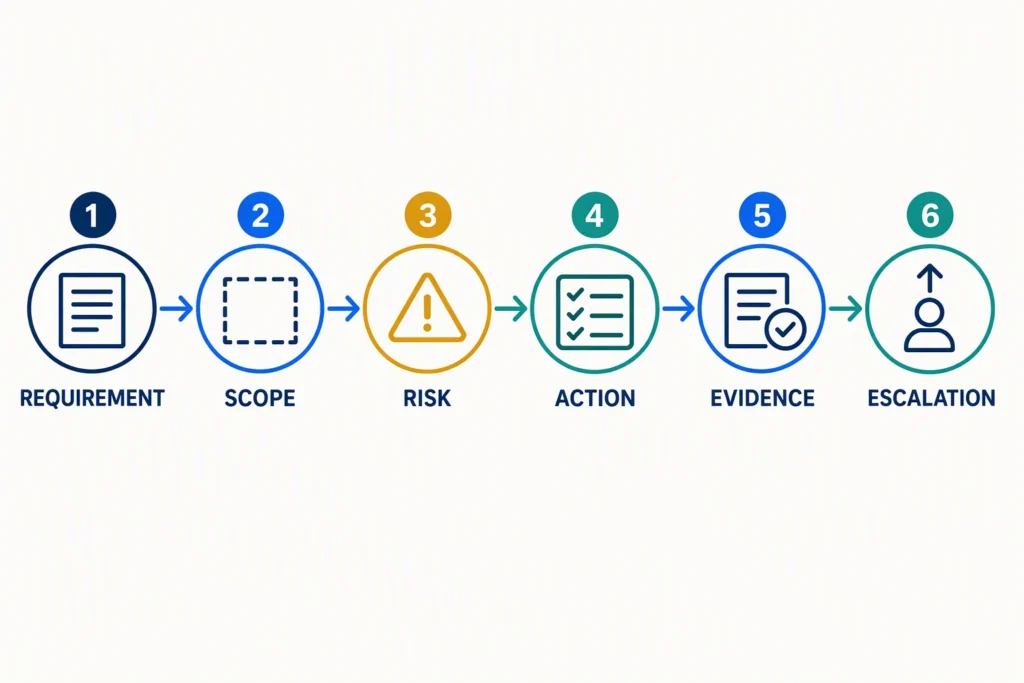
1. How Do You Decide Whether a New Requirement Applies?
What this question checks: whether you read the rule itself instead of guessing from a headline.
Build your answer around: Show the steps before your yes-or-no answer. Name where you look and who you ask when the words are unclear.
“When a new data privacy rule came out, my manager asked whether it applied to us. I did not answer from the news summary. I read the rule’s scope section line by line and checked who it covered, what data counted, and when it took effect. I compared that to what our company actually did — we stored customer names and addresses, which fell inside the scope. Two phrases were unclear, so I wrote them down and asked our lawyer to confirm my reading. I then wrote a short note with my answer, the parts of the rule I relied on, and the two questions I had asked. What I do now: no opinion on a new rule until I have read the rule itself. Summaries help you start; only the text tells you the answer.”
Prepare for testing scenarios and discussions about quality with these quality assurance analyst interview questions.
2. Tell Me About a Risk Review That Changed Your Priorities
What this question checks: whether you rank risks by real harm and change your plans when the facts change.
Build your answer around: Name what the review covered and what surprised you. Show how you moved your time and attention.
“Each year I helped review where our company faced the most risk. One year the review showed something new: most of our customer complaints about billing errors came from one product line we had barely watched. I had planned to spend the quarter on gift-card rules; instead I moved most of my hours to the billing process for that product. I mapped how bills were built, found two steps where wrong amounts slipped in, and we fixed both. Complaints about that product fell sharply over the next two quarters. What I do now: I rank my work by where the harm is, and I re-rank every time the facts change. A plan is only as good as its last review.”
Make the most of your interview with these questions to ask a hiring manager about the position and team.
3. Describe a Control You Tested and a Weakness You Found
What this question checks: whether you test the way things really work, not the way the written rule says they work.
Build your answer around: Say what the control was supposed to do and how you tested it. End with the fix you pushed through.
“Our policy said every large payment needed two approvals before it went out. I tested it by pulling twenty recent payments and checking the timestamps. Six had the second approval stamped after the money had already left. The control existed in the policy but not in practice — the second approver was just signing late. I showed the pattern to the finance lead and we changed the system so the payment could not release without both approvals in place first. Then I re-tested the next month’s payments: every one had both approvals before release. The habit that stuck: I test controls the way a rule-breaker would, looking for the gap between the written rule and the real steps. A control you never test is a hope, not a control.”
Present your property knowledge and sales experience with these real estate resume examples and writing tips.
Pressure Tests
These two test what you do when doing the right thing is hard.
4. What Would You Do With a Confidential Report About a Senior Leader?
What this question checks: whether you protect the reporter and follow the same process no matter who is named.
Build your answer around: Say where the report goes and how you keep it safe. Make clear the leader’s rank changes nothing.
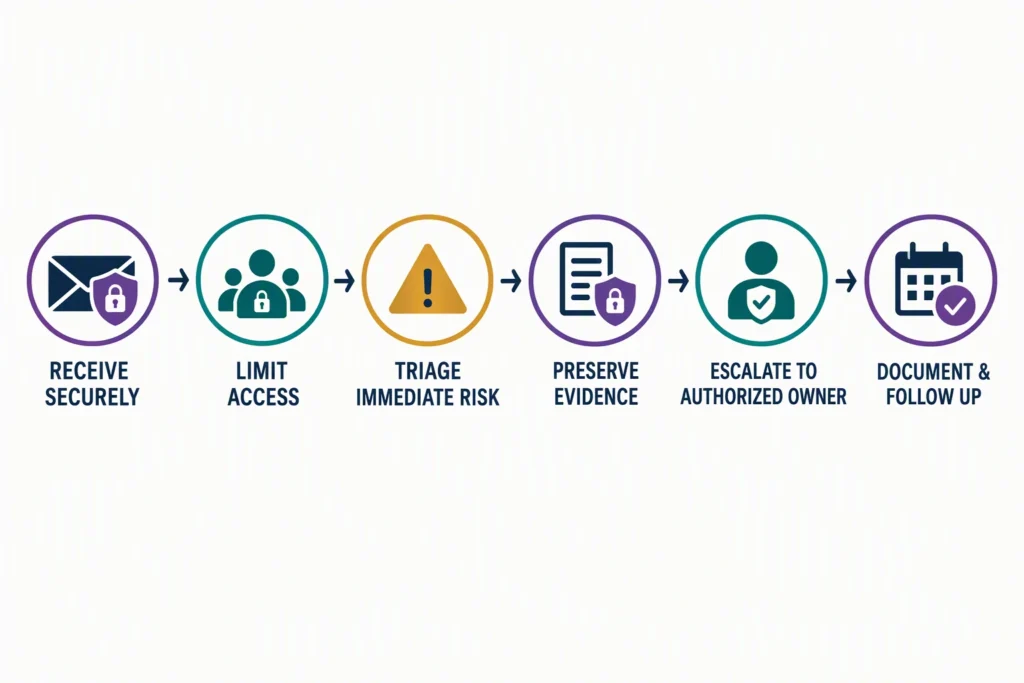
“I would treat it exactly like any other report. First I would keep the reporter’s name and the details private — locked files, no hallway talk. Then I would send the report through our normal channel to the head of compliance, and if the report is about that person, to the backup person our policy names, such as the audit committee chair. I would not warn the leader, investigate it alone, or sit on it. I would log the date I received it and what I did with it. The rank of the person named changes nothing about my steps. What never changes for me: the process is the same for everyone. People only trust the reporting channel when they see it works even against the powerful.”
Learn how to include confidential projects on your resume without revealing sensitive information.
5. What Would You Do if a Leader Asked You to Delay or Soften a Finding?
What this question checks: whether you hold your ground calmly when the pressure comes from above.
Build your answer around: Say the exact words you would use to refuse. Show how you protect yourself in writing.
“I would say no, calmly and plainly: ‘I have to report what I found, in full.’ I would explain that softening a finding puts the company and me at risk, and that the report has to match my notes. Then I would write down the request — who asked, what they asked, and when — and keep that note with my work papers. If the pressure continued, I would raise it through our reporting channel, because pressure to change a finding is itself something to report. The finding goes out as I found it: no delay, no softening. The line I hold: the report says what I found, nothing more and nothing less. A finding bent for one leader will be bent for the next.”
Organize your administrative qualifications with these office resume templates for different roles.
Making It Work Day to Day
The rest is about daily practice: turning rules into habits, teaching people, measuring honestly, settling clashes, and watching vendors.
6. How Do You Turn a Regulatory Change Into Daily Work?
What this question checks: whether you can turn a long rule into small steps people actually follow.
Build your answer around: Walk from the rule text to the changed daily task. Show how you check that people really changed.
“A new record-keeping rule required us to keep certain forms for seven years instead of three. First I read the final text and listed exactly which forms were named. Then I sat with the two teams who handled those forms and mapped their daily steps. We changed the filing steps, updated the written guide, and added one line to the weekly checklist so nothing slipped back to the old habit. I ran a short training with real examples of the named forms. A month later I pulled a sample of files and checked the dates myself. Nearly all matched the new rule; the two that did not got fixed on the spot. The rule I keep: a rule is not done until the daily work looks different.”
Showcase your office leadership and organizational skills with these office manager resume templates.
7. How Would You Train Employees Who See Compliance as Red Tape?
What this question checks: whether you can teach without lecturing.
Build your answer around: Show how you make the rule feel real and useful. Say how you keep the session short and honest.
“I once had to train warehouse staff who called compliance paperwork a waste of time. I threw out the slide deck and started with a true story from our own company: a missed form had delayed a shipment for a week and cost a customer. Then I showed them the exact three fields that mattered and why each one protected them if something went wrong. I asked what slowed them down most, and we cut one duplicate step on the spot. The session lasted twenty minutes, not an hour. More people asked questions than in the last training. What stuck with me: start with a real story of harm, teach only what people touch, and fix one annoying step while you are in the room.”
Describe your contributions more precisely with these alternatives to “helped” on a resume.
8. How Do You Know if a Compliance Program Works?
What this question checks: whether you look at real behavior instead of pretty paperwork.
Build your answer around: Name a few signs you actually watch, what each tells you, and what you do when one looks bad.
“I watch five signs. First, do people actually use the reporting channel — more real reports means people trust it. Second, does training reach everyone, including new hires. Third, do the same problems repeat; a fixed problem that comes back is not fixed. Fourth, are fixes done by their due dates. Fifth, what do our own audits find. Once I saw training completion was high but the same mistake kept appearing in audits, which told me the training was not landing. We rewrote that module with real examples and the errors dropped in the next audit. That is how I know what to fix next. What I trust now: what people do more than what the paper says. Numbers are only useful when they lead to a change.”
Highlight your salon support experience and customer care skills with this salon assistant resume guide.
9. How Do You Resolve Disagreement Among Compliance, Legal, and Operations?
What this question checks: whether you can settle a three-way clash without taking sides.
Build your answer around: Say how you hear each team out. End with the written agreement you get everyone to sign off on.
“In a past role, legal wanted a new customer form to collect every detail, operations said it would slow sign-ups, and I needed the form to meet the rule. I met each team alone first and noted what each one feared. The shared aim was clear: stay within the law without killing the business. I drafted a middle path — the form asked for what the rule required and nothing more, with a plain-language help line so customers finished it faster. We tried it for one month and checked the numbers together: sign-ups held steady and the forms passed review. What I do now: I write the disagreement down, find the aim everyone shares, and test the middle path small. Most clashes are two good goals colliding.”
10. How Would You Review and Monitor an Outside Vendor?
What this question checks: whether you watch vendors for the whole relationship, not just at signing.
Build your answer around: Cover the check before you sign and the watch during the work. Say what you do when a red flag appears.
“I treat vendor reviews in three parts. Before signing, I check the vendor’s background, ask for references, and read the contract terms with our lawyer so the work, the pay, and the compliance duties are all written down. During the work, I set a simple review rhythm: I look at their reports, I visit or call on a schedule, and I watch for red flags like missed deadlines or vague invoices. Once a vendor’s invoices stopped matching the agreed rates, and I raised it within a week — they fixed the billing and we added a monthly price check. The rule I keep: signing the contract is the start, not the end. I keep watching for the whole life of the relationship, because that is when most trouble shows up.”
Practice Saying No Calmly
Pick the question about softening a finding. Say your refusal out loud until it sounds calm and natural — not angry, not shaky. Then ask a friend to play the pressuring manager and push back twice, and answer each push the same calm way. Keep the round under two minutes. This drill makes your backbone sound like a habit, not a speech.
Frequently Asked Questions
Can I Move Into Compliance From Another Field?
Yes. Show how your past work maps to the job: audit help becomes control testing, training new hires becomes teaching rules, clear emails become clear findings. Name the rules you have studied on your own and any courses you finished. Interviewers hire careful thinkers who can show their work, not just people with the title.
How Do I Talk About a Real Investigation Without Naming Names?
Describe your role and your steps, never names, companies, or places. Say “a senior leader” instead of a name, and keep dates vague if the story is easy to trace. If an interviewer pushes for details you cannot share, say so plainly and move to what the case taught you.
What If I Have Never Held a Compliance Title?
Say so in the first line, then show the closest real work you have done: policy reviews, audit support, training sessions, or risk lists you built. Honesty about the gap plus proof of preparation beats a stretched story.
Can I Reuse One Story for Two Questions?
Yes, if it truly fits both. Change the focus for each question and pick different details to stress — one telling can center on the testing, another on the hard talk. Never recite it word for word. The interviewer should hear two answers, not one story twice.