


Operations interviews test how you keep work moving when the day goes wrong. The ten questions that follow each pair a short guide with a model answer drawn from real day-to-day work. Start wherever you like — the first question, or the one you least want to be asked.
Base your answers on times you really ran something: a job, an internship, or a project. Spell out what you handled yourself. Results, savings, and numbers all need proof behind them — if you cannot show it, do not claim it.
Key Takeaways
- Fix the process, not just the symptom. A quick patch fails again; a better process holds.
- When everything is urgent, rank by harm. Safety first, then what hurts customers most.
- Cut costs where customers will not feel it. Waste first, quality never.
- Bring people with you before you change things. A change no one follows is not a change.
Making the Work Run Better
These three questions are about the daily core: improving a process, choosing under pressure, and picking numbers that actually guide you.
1. Tell Me About a Process You Improved.
What this question is really about: Showing you find the real slowdown and fix it, not just work harder.
Walk them through it:
1. Say what the process looked like and where it dragged.
2. Show the one change you made and why you picked it.
3. End with what got better and how you know.
“Our returns process took a full week, and customers complained daily. I mapped every step on paper and found the real drag: every return sat in a pile waiting for one person’s approval. I changed the rule so returns under a small amount skipped that approval and went straight to the shelf check. I also put a simple checklist at each station so nothing bounced back for missing information. Returns now clear in two days, and complaints about them nearly stopped. The lesson I carry: walk the process yourself, find the single biggest wait, and fix that first. Most slowdowns are one bad step, not lazy people.”
Identify strengths you can bring to a new role with this transferable skills guide.
2. How Do You Choose When Everything Is Urgent?
What this question is really about: Proving you rank calmly by harm instead of shouting loudest or working randomly.
Walk them through it:
1. Safety and legal issues go first, no debate.
2. Then rank by customer harm and money at risk.
3. Tell everyone the order so no one guesses.
“When three fires start at once, I do not run to the loudest one. First I ask: is anyone unsafe, or is anything illegal? That goes first, always. Then I rank the rest by harm — what hurts customers most, what costs the most money per hour. I write the order down and tell the whole team, so nobody wastes time guessing what matters. The lower items get a named person and a later time, not silence. Once, a broken freezer, a late delivery, and a staff no-show hit the same morning. The freezer won, the delivery got a call and a new time, and the no-show got covered by a cross-trained cashier. Calm ranking beats heroic rushing.”
Present your leadership experience and process improvements with these operations manager resume examples.
3. What Numbers Would You Watch to Run This Well?
What this question is really about: Picking a few numbers that lead to action, not a dashboard nobody reads.
Walk them through it:
1. Name three or four numbers tied to what customers feel.
2. Say how often you review each and with whom.
3. Show how a bad number leads to a specific action.
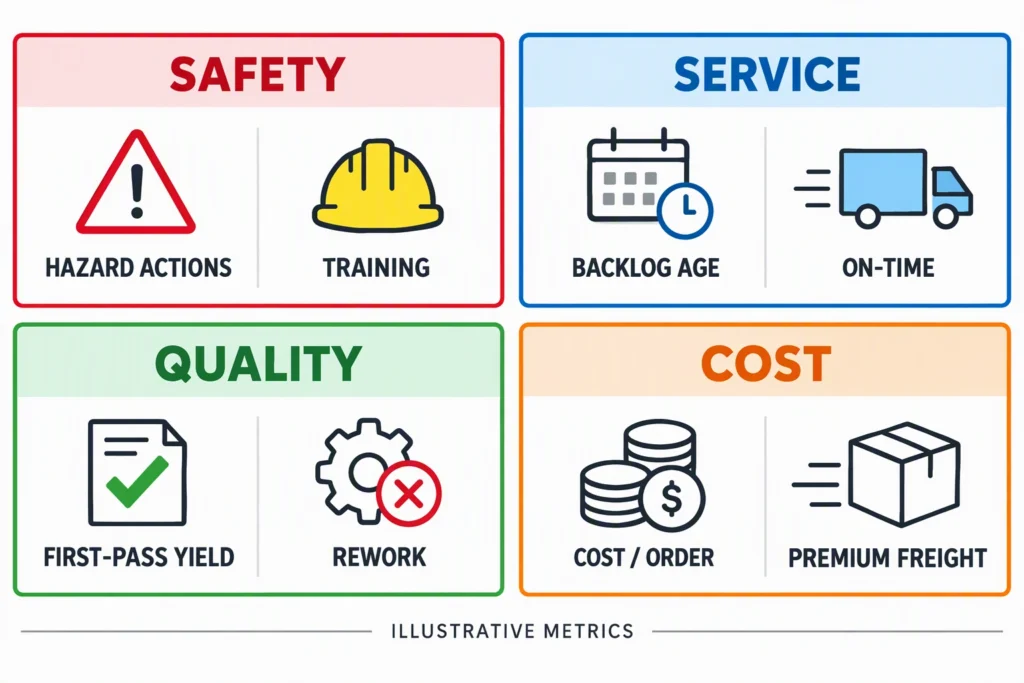
“I keep it small: wait time, error rate, cost per unit, and staff attendance. Wait time and errors are what customers feel; cost per unit tells me if we are efficient; attendance warns me before a shift breaks. I review wait time and errors daily with the shift leads, and cost monthly with my manager. Every number has an action attached: if wait time climbs two days in a row, we open another counter and I find out why. A number without an action is decoration. I once cut our dashboard from twenty numbers to five, and for the first time the team actually talked about them in meetings.”
Explore these customer service performance indicators to understand which results teams measure.
Handling Pressure and Surprises
These three questions test you under strain: cutting costs without hurting quality, surviving demand spikes, and managing a real disruption.
4. How Did You Cut Costs Without Hurting Service?
What this question is really about: Showing you cut waste, not corners.
Walk them through it:
1. Say where you looked first: waste, not people or quality.
2. Describe the specific changes you made.
3. Prove service held steady with the numbers you watched.
“When I had to cut costs, I started with waste, not with people or quality. I walked the floor and found lights and machines running in empty rooms, packaging being thrown away that could be reused, and a supplier contract we had not renegotiated in years. I fixed the energy waste, set up packaging reuse, and renegotiated the contract with three competing quotes in hand. I watched our quality scores and customer complaints the whole time — they did not move. Cutting costs is easy; cutting them without anyone noticing is the skill. You go after what nobody will miss, and you guard what customers feel like treasure.”
Build an application that highlights client care and daily support duties with this salon assistant resume guide.
5. How Have You Handled More Demand Than You Could Meet?
What this question is really about: Showing you stretch capacity smartly instead of just saying “we worked harder.”
Walk them through it:
1. Say how you spotted the spike coming.
2. Show the moves you made: hours, cross-training, temp help.
3. Close by naming the fix you left in place for the next busy season.
“Our busiest season once brought double the normal orders with the same staff. I saw it coming from last year’s numbers and started early. I moved two people to flexible hours covering the peak window, cross-trained four cashiers on packing so they could switch when lines grew, and brought in temporary help for the two worst weeks. I also set a simple daily target on a whiteboard so everyone could see where we stood. We cleared the season without late shipments. Afterward I wrote down everything we learned — what worked, what broke — and built it into next year’s plan. Surviving a spike is good; preparing for the next one is better.”
Showcase your investigation skills and case-handling experience with this claims adjuster resume example.
6. Tell Me About a Disruption You Managed.
What this question is really about: Proving you contain, communicate, and fix the root cause — in that order.
Walk them through it:
1. Say what broke and your first containment move.
2. Show how you kept people informed and work moving.
3. End with the root cause fix.
“Our main supplier’s truck broke down on the morning of our biggest delivery day. My first move was containment: I called our backup supplier and secured half the load, then told the team the plan before rumors started. I called our top customers myself, gave them honest new times, and offered the partial delivery first. Nobody likes bad news, but everyone hates surprises more. The day stayed busy but calm. Afterward I found the root cause — we had no backup for that route — and signed a standing backup agreement. Disruptions are really three jobs: stop the bleeding, keep everyone informed, and make sure it cannot happen the same way twice.”
Practise discussing priorities and product decisions with these product manager interview questions.

Leading People Through Change
The last four are about people: handling an underperformer, settling department fights, keeping suppliers honest, and bringing in big changes without breaking the team.
7. How Do You Handle an Employee Who Falls Short?
What this question is really about: Showing you are direct, fair, and give a real chance before any hard decision.
Walk them through it:
1. Have a private, specific conversation early.
2. Set clear expectations with support and a timeline.
3. Follow through honestly, whatever the outcome.
“I do not wait and hope. When someone’s work slips, I talk to them privately within days — specific examples, no generalizations. I ask what is going on, because sometimes the cause is training, tools, or something personal. Then we agree on clear expectations, what support I will give, and a timeline to check progress. I check in weekly and write down what we agreed. Most people improve when they know exactly what is expected and feel supported. When someone does not improve after real support and clear warnings, I make the hard call — keeping an underperformer hurts the whole team. Fair means clear, not soft.”
Prepare examples of handling budgets, deadlines, and teamwork with these project manager interview questions and sample answers.
8. Tell Me About a Fight Between Departments You Helped Settle.
What this question is really about: Showing you find the shared goal instead of picking a side.
Walk them through it:
1. Lay out each team’s goal, and why each one was fair.
2. Show how you found the goal they shared.
3. End with the trial you agreed on and the result.
“Sales kept promising delivery dates the warehouse could not meet, and both sides blamed each other loudly. I sat with each team separately first and listened — sales needed to win deals, the warehouse needed realistic schedules. The shared goal was obvious once I said it out loud: happy customers who order again. I proposed a trial: sales would check a simple capacity sheet before promising rush dates, and the warehouse would hold two rush slots per week. We tried it for a month. Late deliveries dropped sharply and the blaming stopped. Department fights are usually two reasonable goals colliding — find the bigger goal they share and build the fix around it.”
Learn how to describe confidential projects on your resume while protecting sensitive details.
9. How Do You Keep Suppliers Reliable?
What this question is really about: Proving you manage suppliers with clear expectations and honest conversations, not just hope.
Walk them through it:
1. Set clear expectations in writing from the start.
2. Track a few simple measures and review them regularly.
3. Always have a backup for what you cannot live without.
“I treat suppliers like team members: clear expectations, regular feedback. Every key supplier gets a simple written agreement — what, when, and what good looks like. I track three things: on-time delivery, quality rejects, and how fast they respond to problems. We review these quarterly, good or bad, so there are no surprises on either side. When a supplier slipped twice, I had an honest conversation with the data in front of us, and they fixed their packing process. And for anything we cannot run without, I keep a backup supplier warm with small regular orders. Trust, but with a scorecard and a spare.”
10. How Do You Bring In a Big New Change?
What this question is really about: Showing you bring people along instead of dropping change on them.
Walk them through it:
1. Explain the why before the what, and involve people early.
2. Pilot small, train well, and listen to feedback.
3. Measure against the old way and share the results.
“When we replaced our paper scheduling with a new system, I started with the why: the paper errors were costing us shifts and overtime. I involved the shift leads early — they helped pick the system and spotted problems I never would have. We piloted it with one team for two weeks, fixed what broke, and trained everyone hands-on before going live. I kept the old paper as backup for the first month, which calmed nerves. After two months I shared the numbers: fewer errors, faster scheduling, happier leads. Big changes fail when people feel ambushed. Involve them early, start small, and let the results do the convincing.”
Explain It to the Night Shift
Pick your three hardest answers. Explain each one out loud as if you were talking to someone on the night shift: tired, busy, no patience for fancy words. If they nod and get it, your answer is ready. If they frown, simplify until they do. An answer that works at 3 a.m. works in any interview room.
Frequently Asked Questions
Do I Need Experience in This Exact Industry?
No. Operations skills transfer well — scheduling, cost control, and leading people work the same in most industries. Show how your experience maps to their problems, and learn their specifics fast in the first month.
What If I Have Never Managed a Big Team?
Say so honestly, then show what you have led: a shift, a project, even a volunteer group. Talk about the people skills, not the headcount. Many strong operations managers started with small teams.
How Do I Talk About a Change That Failed?
Own it fast and show what you learned. “I rolled it out too fast, people resisted, and I learned to pilot first” is a strong answer. Interviewers trust people who have failed and adjusted more than people who claim a perfect record.
Should I Mention Numbers From Past Jobs?
Only numbers you can back up. “We cut wait times noticeably” is safe; exact figures you cannot prove are risky. If you share a number, be ready to explain how you measured it.