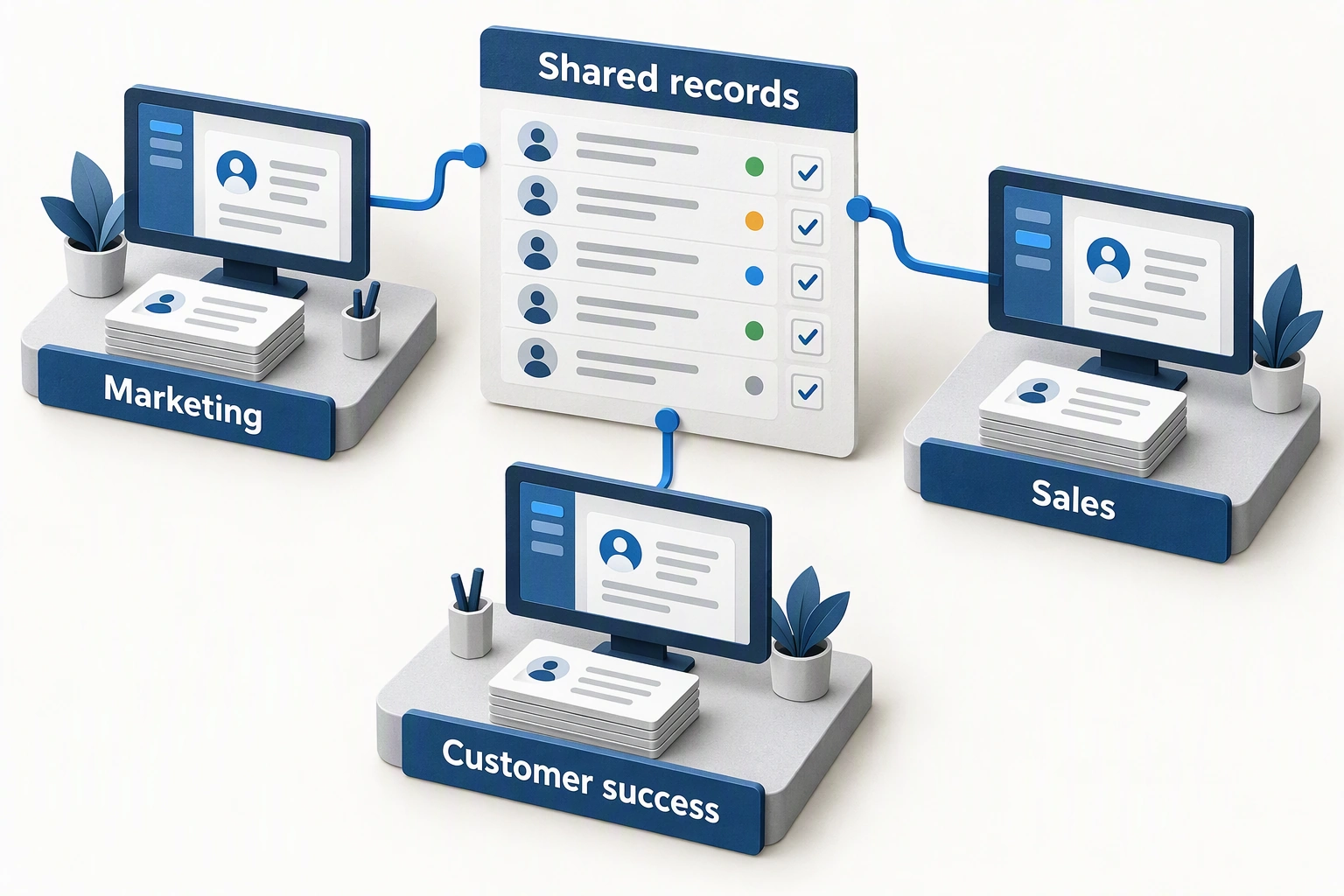

“Managed Salesforce” could mean updating a few records or keeping a company’s selling process running. Your resume needs to make that difference obvious.
Start with the process you supported, explain what you personally changed, and show how the work helped its users. A dashboard matters because someone uses it to make a decision. Automation matters because it moves the right work to the right person without creating another cleanup job.
You don’t need to claim responsibility for the company’s entire revenue growth. You need evidence that you can make its revenue operations more dependable.
Key Takeaways
- Choose evidence for the actual job. Systems administration, reporting, and sales support can sit under similar titles but require different experience.
- Connect the tool to a useful change. Name what you built, checked, or improved, who used it, and the result you can support.
- Define your numbers. A percentage needs a clear population and comparison; company revenue growth alone doesn’t establish your contribution.
Find the work behind the title
First, check what “revenue operations” means at this employer. A commercial RevOps role may connect marketing, sales, and customer success. A revenue-accounting or medical-billing position can involve very different work despite similar wording.
Within commercial roles, look for the employer’s main problem:
| Emphasis in the posting | Evidence to bring forward | Detail that establishes scope |
|---|---|---|
| Systems and data | CRM configuration, integrations, data quality | What you owned, tested, or escalated |
| Reporting and planning | Pipeline analysis, dashboards, forecast support | Metric definition, audience, decision |
| Process and handoffs | Lead routing, onboarding, renewal workflows | Teams involved and exception handling |
Seniority changes the expectations, too. RCX Sports’ senior posting required experience as a primary Salesforce owner, including testing and release management. Linxup’s archived specialist posting covered a broader mix of processes, reporting, and forecasting support. Use postings like these to recognize different scopes, then tailor to your target vacancy.
Don’t copy an employer’s whole software list. Select the tools and responsibilities you can discuss in detail.
Turn system work into a useful achievement
A good bullet gives the reader enough context to understand the change without needing a tour of your CRM.
Compare these illustrative descriptions:
- Too vague: “Responsible for data quality.”
- More useful: “Created a weekly exception report for opportunities missing close dates or next steps, giving sales managers a review list before forecast meetings.”
The second version identifies the records, the problem, the deliverable, and its use. It also works without an invented percentage.
Choose verbs that match your responsibility. Configured means you changed the setup. Tested means you checked behavior. Supported can describe valuable work without implying that you owned the whole platform. If another administrator deployed your change, say what you designed or validated.
Include the less visible work when it mattered: gathering requirements, checking permissions, reconciling an import, writing a rollback plan, or training users. These details help distinguish a working improvement from a feature someone switched on.
For collaboration, name the shared task. “Agreed on lead-assignment rules with sales managers and marketing operations” tells an employer more than “excellent stakeholder management.”
Make the numbers interpretable
Before adding a metric, identify what was measured, which records were included, and the comparison period. Use the same definition before and after a change.
Here’s an illustrative audit of the same 500 records:
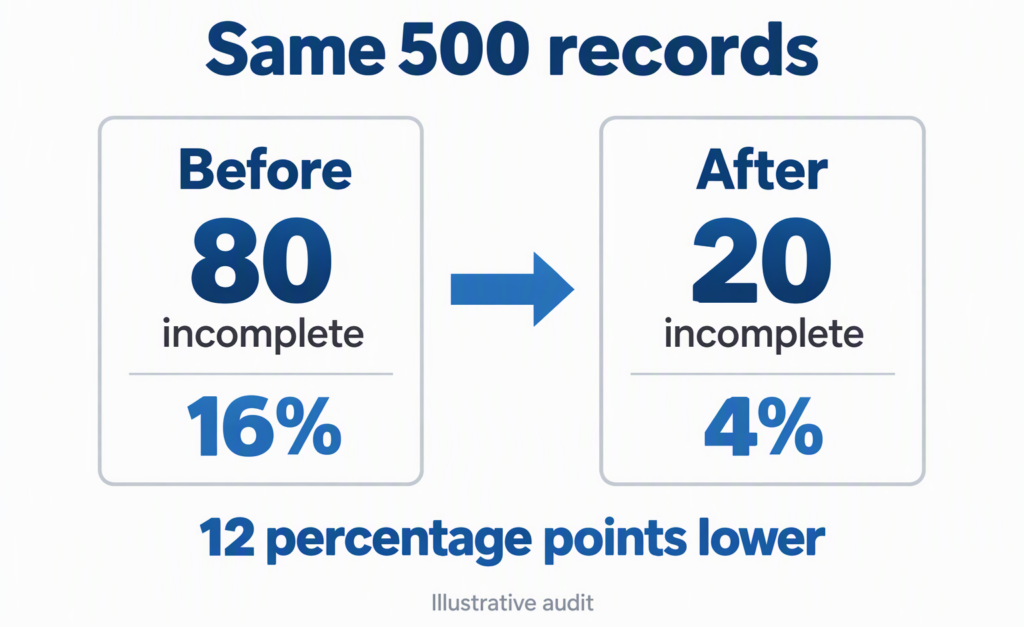
That’s a 12-percentage-point decrease, or a 75% reduction in incomplete records. Those describe the same improvement differently. “Improved accuracy by 75%” would introduce a different claim: missing fields and incorrect values are not the same problem.
Apply that care to other measures:
- Time saved: explain the recurring task and how you measured the before-and-after time. A rough estimate should be labeled as an estimate.
- Win rate: define the denominator. For a closed-deal calculation, divide won deals by won plus lost deals in the stated period; exclude open opportunities. Other reports may use different cohorts.
- Pipeline or revenue: distinguish open deal value, closed-won bookings, and recognized revenue. Name the measure your source actually reports.
Avoid attributing every improvement after a rollout to your work. Pricing, staffing, and customer mix may also change. Report the operational result you can establish, and describe your contribution to a broader outcome accurately.
Make tools and qualifications easy to assess
Use specific skill descriptions: “Salesforce: reports, validation rules, and Flow testing” or “Excel: Power Query and pivot tables.” Separate production experience from coursework or personal projects. Using a platform daily doesn’t automatically establish administration experience.
Be precise about its concepts, too. HubSpot’s Lifecycle stage and Lead Status are separate properties; a deal stage is another concept. Name the part of the system you actually worked on.
List education with the institution, location, actual degree, and completion date. Use “Expected” with the anticipated month and year for a degree in progress. Put education higher when it’s your strongest relevant evidence; experienced applicants can usually lead with work.
For certifications, use the issuer’s exact title and your current status. Salesforce’s current credential is Salesforce Certified Platform Administrator. Studying for its exam or earning individual Trailhead badges does not mean you hold that certification.
See two ways to present the experience
All names, organizations, dates, qualifications, and achievements below are fictional. These condensed examples show how to organize evidence, not results to copy. Keep entries newest first within each section. A short summary is optional; use one when it adds context rather than repeating your bullets.
A specialist with hands-on systems experience
Jordan’s example identifies the platform, the users, and the work performed. It includes an operational result without claiming sole credit for company revenue.
Jordan Lee
Austin, TX | jordan.lee@example.com | 512-555-0134
Summary
Revenue operations specialist with four years of experience supporting a business software sales team. Combines Salesforce configuration and reporting with documented testing and practical user support.
Experience
Revenue Operations Specialist | Example Workflow Software, Austin, TX
September 2022–Present
- Built and reconciled a Salesforce pipeline report that reduced weekly preparation from three hours to 45 minutes across four timed reporting cycles.
- Configure lead-routing flows with the sales operations lead, test assignment scenarios in a sandbox, and monitor unassigned records after release.
- Maintain required-field checks and exception reports for a 20-person sales team; resolve record issues with the responsible owners.
- Document configuration changes, test results, and release instructions so another administrator can support each update.
Skills
Salesforce reports, dashboards, validation rules, and Flow; Excel Power Query; user acceptance testing; requirements gathering; process documentation.
Education
Example University, Austin, TX
Bachelor of Business Administration in Information Systems
May 2022
A customer-success coordinator moving into operations
Casey’s example retains the original job title and separates workplace experience from an independent project. The project demonstrates analytical judgment without pretending to be a production deployment.
Casey Rivera
Denver, CO | casey.rivera@example.com | 303-555-0168
Summary
Customer-success coordinator experienced in maintaining CRM records, organizing renewal follow-up, and resolving handoff gaps. Brings SQL project work and careful reporting habits to an operations support role.
Experience
Customer Success Coordinator | Example Client Services, Denver, CO
June 2023–Present
- Maintain HubSpot contact records and renewal task lists for the customer-success team, confirming missing owners and dates with account managers.
- Consolidate onboarding updates into a shared handoff checklist used by sales and customer success.
- Investigate discrepancies between CRM records and weekly account-review spreadsheets before meetings.
Independent Project
Pipeline Reporting Exercise | Synthetic data
August 2026
- Created a fictional opportunity dataset and wrote SQL queries to summarize closed-deal outcomes by segment.
- Checked duplicate IDs and missing close dates, reconciled totals to the source file, and documented which records each calculation excluded.
Skills
HubSpot record maintenance; Excel pivot tables; SQL joins and aggregation in projects; data reconciliation; handoff documentation.
Education
Example State University, Denver, CO
Bachelor of Science in Business Administration
May 2023
If you’re coming from sales, finance, or administration, look for similarly relevant work you’ve already done. A tracker, reconciliation, or documented handoff can establish a starting point when you explain its purpose and your responsibility.
Give a small project enough evidence
An optional portfolio can help when your job history doesn’t show much systems work. Keep the project focused on one question, such as which records are making a pipeline report unreliable.
Provide the calculation logic, explain an important exception, and show what someone should do with the result. A clean dashboard alone doesn’t reveal whether its totals are right. Describe any limitations, including features you designed but didn’t implement.
Use invented records or material you’re authorized to share. Don’t upload customer exports, internal screenshots, or credentials. If you include a portfolio link near your contact details, test it without your own account’s access privileges.
Keep the resume itself easy to scan: one column, clear section labels, and concise bullets. Leave dashboard screenshots in the separate portfolio and follow the employer’s file instructions.
Finish with a claim you can explain
Pick your strongest bullet and rehearse the follow-up: what was broken, what did you change, and how did you check it? If you can answer clearly, the resume has given the interviewer a useful place to start.
Frequently Asked Questions
These choices matter when your experience doesn’t fit the posting word for word.
Can I change my previous title to match the vacancy?
Keep the official title. If it was vague, add a truthful clarification such as “Business Analyst (sales systems focus).” Use your bullets to establish relevant responsibilities without implying a promotion or a different job.
Should I include quota-carrying sales achievements?
Yes, when they help explain your commercial experience. Identify personal versus team results, then give enough space to the reporting, process, or systems work relevant to the operations position. Selling successfully doesn’t by itself demonstrate CRM administration.
Do I need SQL for every role?
No. Requirements depend on the position. Some emphasize CRM configuration and spreadsheet reporting; others need querying or more advanced analysis. If SQL is requested, describe what you can actually write and label project-only experience accurately.