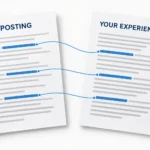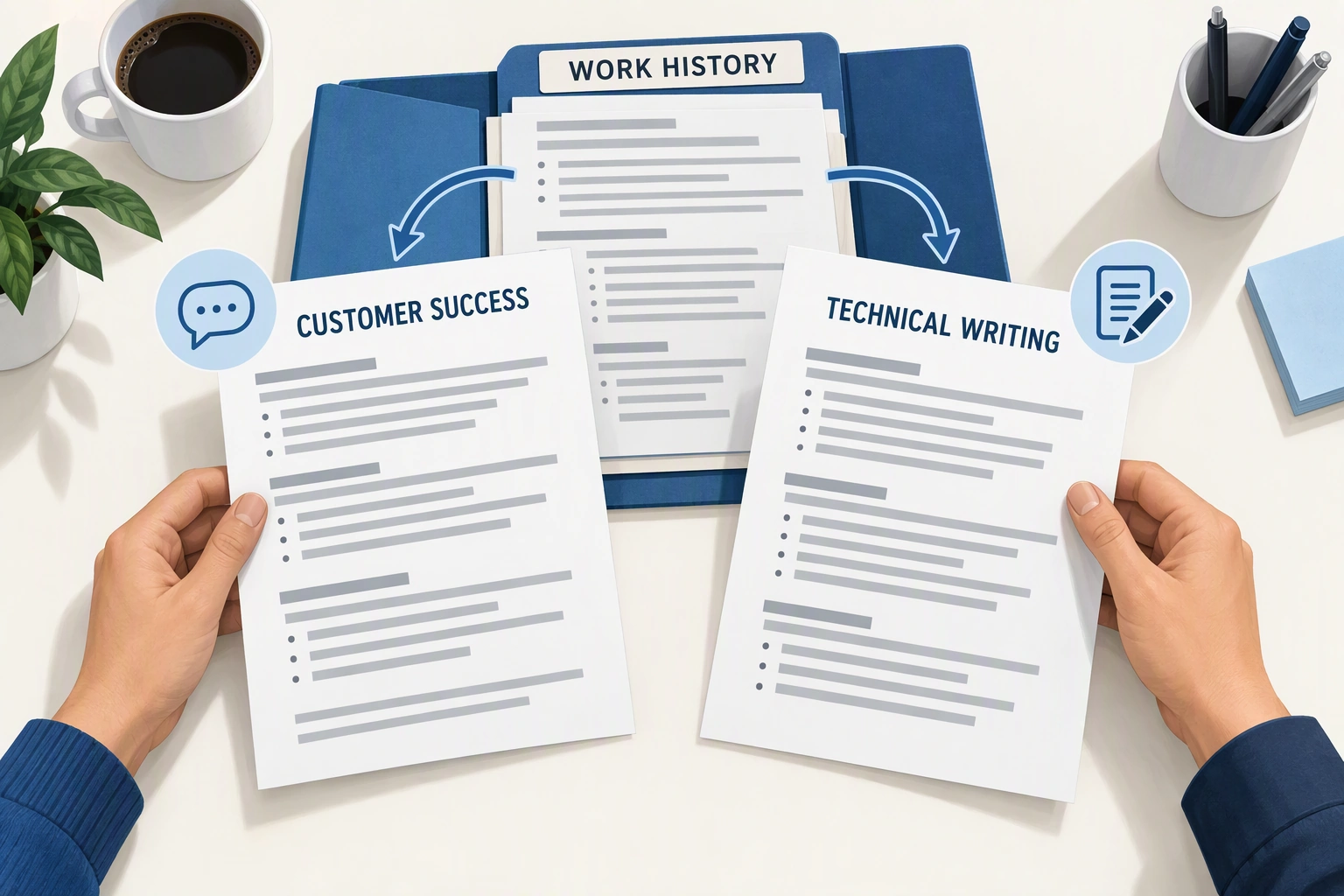

One job posting wants someone who can guide customers through a new product. Another wants someone who can write instructions people actually understand. You’ve done both. Then you open your resume and try to make one opening paragraph sell two different careers.
That’s where the document starts losing its direction.
For distinct targets, build one resume version for each kind of work, using a shared record of your experience. Change what you emphasize, which examples you include, and how you explain their relevance. Keep the underlying facts consistent. You can explore both paths without making every hiring manager evaluate both at once.
Key Takeaways
- The right level may differ between paths. Several years in one field don’t automatically qualify you for the same seniority in another.
- A second version needs evidence, not just a new headline. If you can’t support the target duties yet, identify the missing experience before polishing the wording.
- Your strongest achievement isn’t always your most relevant one. Choose what helps this employer assess you, even when that means shortening a prestigious but unrelated role.
Decide whether you’re targeting two jobs or one combined role
Look past the titles and compare the actual responsibilities. Two differently named vacancies may ask for much the same work. Conversely, two jobs at the same company may need entirely different evidence.
Separate versions make sense when the priorities diverge: customer relationships versus documentation, for example. They can share plenty of material; there’s no required percentage that must change.
A combined role is different. If a small company’s opening explicitly includes both customer onboarding and help-center ownership, a single resume should demonstrate both. Organize it around that employer’s needs rather than splitting the page into two competing career pitches.
Try this sentence: “This employer needs someone who can ___, and my evidence is ___.” If filling the first blank requires describing two unrelated vacancies, choose which one the application addresses.
Start with a shared record of your work
MIT’s career guidance recommends keeping a master resume, then selecting experiences for a specific position. That approach is especially useful when you’re maintaining two directions at once.
Keep your full employment history, project details, qualifications, and possible bullets in a private working document. Beside each example, note the skill it demonstrates and any result you can support. The application versions are selections from that record.
Consider Alex Morgan, a fictional customer support specialist at Harbor Software since January 2023. Alex has led customer walkthroughs, written help articles, summarized recurring issues, and trained colleagues. Those facts suggest two plausible directions:
| Evidence Alex already has | Customer success emphasis | Technical writing emphasis |
|---|---|---|
| Walkthroughs for new business customers | Explain setup and follow up on unresolved questions | Understand where readers get stuck |
| Published help articles checked with product team | Help customers use the product independently | Write and verify task-based instructions |
| Monthly summaries of recurring support issues | Communicate customer needs across teams | Identify documentation gaps |
Before building either version, mark each important requirement as demonstrated, related experience, or missing. A job asking for customer onboarding may fit Alex’s record; a senior customer success role requiring renewal ownership needs different evidence. Likewise, user-facing help content and developer documentation aren’t interchangeable specialties. This check helps you choose realistic openings within each path instead of treating every vacancy with the right title as a match.
See the same background support two directions
The following excerpts use invented names, dates, and work details. They show the parts that change; contact information, education, and any earlier employment would complete the actual resumes.
Version A: A customer success opening
Suppose the posting emphasizes onboarding, product guidance, and customer follow-up. Alex leads with direct customer work:
Alex Morgan
Target role: Customer Success Associate
Summary
Customer support specialist experienced in guiding business customers through account setup and resolving product questions. Works with Product to communicate recurring issues and maintains clear follow-up notes for colleagues.
Relevant Skills
Customer onboarding; product walkthroughs; Zendesk; issue escalation; customer feedback reporting.
Experience
Customer Support Specialist | Harbor Software
January 2023–Present
- Guide new business customers through account setup, recording unresolved questions and coordinating follow-up with the product team.
- Prepare monthly summaries of recurring customer issues to inform product and support discussions.
- Wrote 14 help-center articles that support colleagues use when answering setup and billing questions.
The first bullet puts Alex in a customer conversation. The articles remain useful supporting evidence, but they don’t take over the application.
Version B: A technical writing opening
Now suppose the posting focuses on user guides, editing, and checking instructions with product specialists. The writing work moves forward:
Alex Morgan
Target role: Technical Writer — User Documentation
Summary
Customer support specialist with hands-on experience creating software help content. Turns recurring setup and billing questions into step-by-step articles and works with Product to verify instructions against the interface.
Relevant Skills
User documentation; editing; procedural writing; Zendesk Guide; product walkthroughs.
Experience
Customer Support Specialist | Harbor Software
January 2023–Present
- Wrote 14 published help-center articles covering account setup and billing, checking instructions with Product before publication.
- Revised an account-setup guide after recurring support questions revealed unclear steps; verified the revised instructions against the product interface.
- Created a troubleshooting checklist used to train two new support colleagues.
The target title is clearly labeled; Alex’s actual employment title stays visible. This version establishes relevant writing practice without claiming previous employment as a technical writer.
For a portfolio, Alex could link to a permitted public article. If workplace samples can’t be shared, an independently written guide for a public tool could demonstrate the process, clearly labeled as a personal project.
Change the emphasis without changing the achievement
Sometimes a single project genuinely supports both paths. Choose the part the reader needs to evaluate, while preserving who did what and what happened.
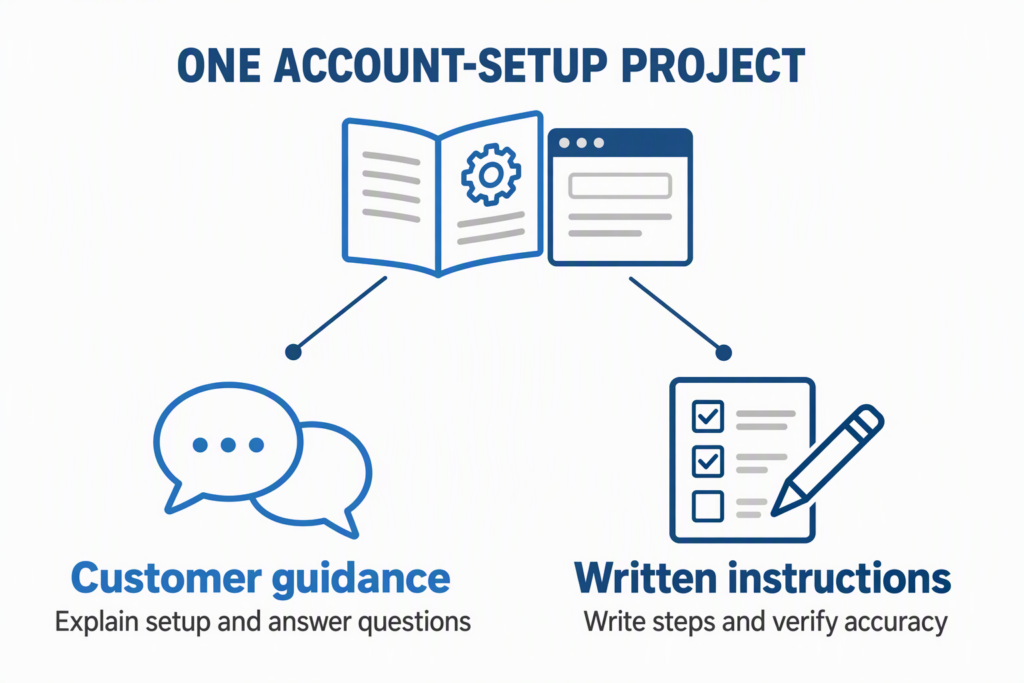
For Alex, “guided customers through setup” and “verified written setup instructions” describe different work around the same process. Both can be accurate. Neither justifies “increased retention” or “reduced support tickets” without evidence of that result.
Keep relevant industry terms, but check what they imply. Answering billing questions isn’t automatically account management; contributing help articles isn’t automatically documentation strategy. A stronger-sounding noun can quietly change the claim as much as a stronger verb.
Arrange mixed experience so the reader can follow it
Alex’s strongest evidence sits inside one current job. Your relevant work may be scattered across an older role, a recent project, and volunteering.
UC San Diego’s resume guide recommends ordering sections by relevance and keeping entries newest-first within each section. It also suggests separating relevant experience from additional experience when an older role deserves attention.
For example, a retail supervisor returning to design could lead with Design Projects, followed by Employment Experience. A version aimed at store management could lead with the retail role instead. Label freelance, volunteer, and personal work accurately so their position on the page doesn’t imply a different employment relationship.
Give less relevant jobs shorter entries when they help explain your background. Avoid duplicating a full job under two headings or mixing dates into an unexplained sequence. The reader should be able to find both your strongest evidence and your employment history.
Keep LinkedIn broad enough to connect the two
Your public profile may be read by people considering either direction. It can describe the wider connection without opening with “seeking anything in writing or customer success.”
MIT recommends a clear, specific LinkedIn headline and a summary that complements the resume. For Alex, a possible headline is:
Customer Support Specialist | Software Onboarding & User Documentation
The About section can explain the link: helping people understand and use software through conversations and written guidance. Include examples of both, and keep employment details consistent with the application versions.
If the fields have little in common, don’t invent an umbrella identity. Briefly explain the two genuine interests in the About section, while making each application specific. Link directly to the relevant portfolio work so the reader doesn’t have to search through an unrelated collection.
Keep the right file attached to the right application
Two versions create a small administrative risk: sending the wrong one. Use role-specific filenames, then keep a record of each submission.
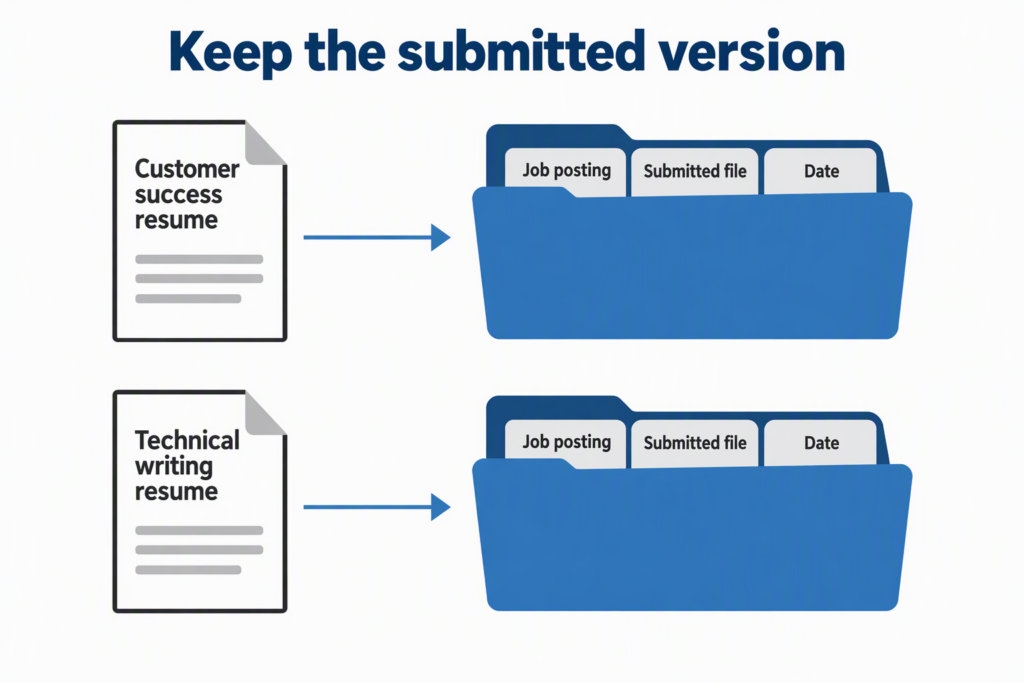
Record the employer, job title or ID, submission date, and attached filename. Save the posting too. Before an interview, review that saved version rather than the working draft you’ve since changed.
Open the exported file before uploading it, follow the requested format, and check any automatically filled fields. A later profile update may not replace an earlier application attachment; confirm how the particular portal handles changes.
Put each version in front of the right reader
Ask someone familiar with each field to review its version beside a real vacancy. Have them identify where the evidence is convincing and where it falls short. That feedback can help you decide which path is ready for applications and which needs further preparation.
FAQ
These situations involve who receives the resume and how much of your wider search they need to see.
Can I apply for two roles at the same company?
Check the employer’s process and make sure you can explain your fit for each. If one clearly interests you more, tell the recruiter rather than asking them to choose your direction.
Don’t assume the applications stay separate. Greenhouse documents a feature that combines candidate profiles and attachments. That’s one system’s capability, not proof every employer uses it, but it’s a practical reason your versions must tell a consistent story. When the process is unclear, ask whether separate applications are appropriate.
What should I send a networking contact who could introduce me to either field?
Explain the two targets briefly and ask which team or contact they have in mind. Send the version relevant to that introduction. If they explicitly want both, label them clearly and include a sentence explaining each direction. Avoid sending two unexplained attachments and making the contact figure out your pitch.
What if a job board allows only one uploaded resume?
Choose the version that fits the opportunities you’re prioritizing on that platform. Read whether an application lets you attach a different file, and check which document will actually be sent. For a broad recruiter introduction, a concise overview can show both areas, followed by a focused version once a particular role emerges.