
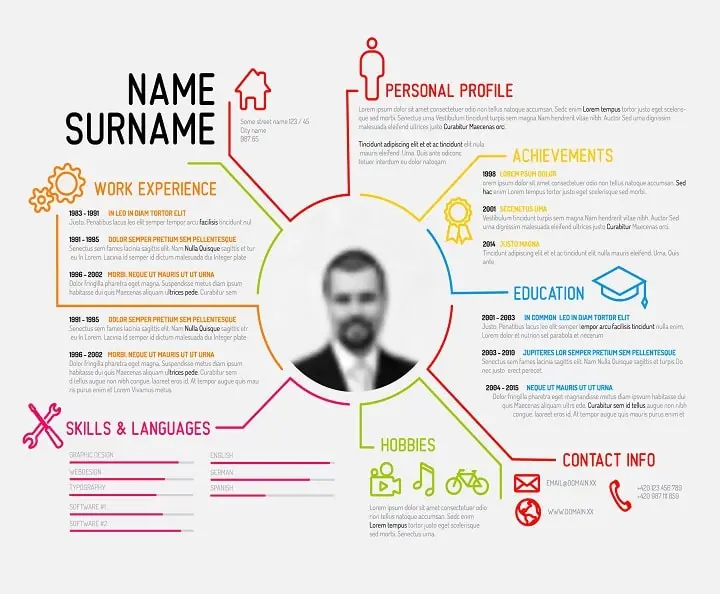

The main components of a resume are your contact information, experience, education and skills. You can also include a summary or objective, projects, certifications and other details that help show you are suited to the job.
These parts are organised into resume sections so employers can find the information they need. You do not need every possible section—just the ones that help explain what you can offer.
If you are starting out, projects or volunteering may provide your strongest examples. If you have relevant work experience, give that more space. A required license or certification may also deserve a place near the top.
Below, we’ll explain what belongs in each section, show examples you can adapt and help you decide what to keep or leave out.
What Are the Main Parts of a Resume?
Resume components are the parts that tell an employer who you are, what you can do and what experience or education supports your application. The table below shows the main sections and when to include them.
| Resume Section | What Goes Here? | When to Include It |
|---|---|---|
| Contact Information | Your name, phone number, professional email and location. Add a relevant profile or portfolio link if useful. | Always. Employers need a way to contact you. |
| Summary or Objective | A brief introduction connecting your experience, skills or career direction to the job. | When it adds useful context. You do not need both, and some resumes can work without either. |
| Experience | Relevant roles, organisations, dates, responsibilities and achievements. | Include relevant experience you have. If it comes from projects, internships or volunteering, label it clearly. |
| Education | Your relevant education, institution and qualification. Show an expected completion date if you are still studying. | Usually include it, especially when your education helps meet the job requirements. |
| Skills | Relevant tools, software, methods and other abilities you can support with examples. | Include a clear list when it helps employers find your relevant abilities quickly. |
| Additional Sections | Certifications, licenses, projects, volunteering, awards, languages or publications. | When the information supports your application. A required license or certification needs particular attention. |
You do not need a fixed number of sections. A resume with five sections can be complete. Another may need seven because projects or certifications provide useful evidence. Choose the content first, then give each section a clear heading.
What to Include in Each Resume Section
Each part of your resume has a different job. Your contact details help employers reach you. Your experience shows what you have done. Your education and skills help explain what you know.
Use the examples below to see what belongs in each section. Replace the details with your own before using them.
Contact Information
Put your name, phone number, professional email address and location at the top. For a US resume, city and state are usually enough; a full street address is generally unnecessary.
Add a LinkedIn profile or portfolio if it gives the employer useful information about your work. Make sure the link opens and the information is up to date.
Contact Information Example
Avoid: adding your date of birth, marital status or other personal details that do not help assess your suitability for the job.
Our guide explains how to add LinkedIn to your resume.
Summary or Objective
A summary introduces relevant experience and skills. An objective can help explain the kind of role you are seeking and what you bring, especially when starting out or changing careers.
Choose one if it adds useful context. You do not need both, and you can leave the introduction out if it only repeats information that is already clear.
Resume Summary Example
Avoid: an introduction that only says you are hardworking, motivated or looking for a challenging position. Name the experience or abilities that matter.
Browse our resume summary examples for different roles. If you are starting out, see how to write a summary without work experience.
Work Experience
For each job, include your title, employer and employment dates. Add the location where useful. Start with your most recent role, then explain the relevant work you did and what it achieved.
Give enough detail for someone outside your workplace to understand your responsibilities. Use numbers when you have accurate ones; a clear description is better than an invented result.
Work Experience Example
Avoid: copying your job description word for word. Choose details that show your own responsibilities and contribution.
Use specific action verbs for your resume to describe the work. If you have a long employment history, check how far back your resume should go.
Education
Include the qualification, subject and institution. If you are still studying, show the expected completion date. Recent graduates can add relevant coursework, honours or a project when those details support the application.
Once your work experience provides stronger evidence, you can usually keep this section shorter.
Education Example
Avoid: listing an unfinished qualification as completed. State its status clearly and include only details that are accurate.
See what to include in your education section for more examples.
Skills
List abilities that match the job and reflect what you can do. Include relevant software, tools, procedures and job-specific knowledge.
Support important skills elsewhere in the resume. For example, if you list customer complaint handling, your experience can show how you used it.
Skills Section Example
Avoid: adding skills just because they appear in the advertisement. Include only abilities you can explain or demonstrate.
Our guide helps you choose skills for your resume based on the position you want.
Additional Resume Sections You Can Include
Add another section when it gives the employer useful information that is not already clear elsewhere. You do not need to include every section below.
Use the examples to see how each section can look. Change the details to match your own experience.
Certifications and Licenses
Include a credential when it is required for the work or helps show relevant knowledge. List its name, issuing organisation and the dates needed to make its status clear.
If a license is a job requirement, make it easy to find. It may deserve a place near the top rather than at the end.
Certifications Example
Do not present an expired or unfinished credential as current. See how to list certifications for more examples.
Projects
Projects can show how you use a skill, especially when you have little related work experience. Explain what you created, what you personally did and what the work produced.
Project Example
Label college, personal and client projects accurately. Our guide shows how to describe projects on your resume.
Volunteer Work
Volunteer work belongs on your resume when it shows useful responsibilities or skills. Include the role, organisation, dates and relevant contribution.
Volunteer Work Example
If volunteering provides your strongest relevant experience, it can appear higher on the page. Keep it clearly labelled as volunteer work.
Awards and Achievements
Include an award when it supports your application. Give its name, who awarded it and why you received it. An achievement connected to a particular job can usually stay under that job.
Award Example
Avoid listing an award twice, both here and under Work Experience, unless each mention adds useful context.
Languages
Language skills are useful when the role involves customers, colleagues or documents in those languages. State your ability clearly rather than using stars or an unexplained score.
Languages Example
Describe the level you can actually use at work. See how to show your language proficiency with more detail when the job requires it.
Publications
Include publications when writing, research or subject knowledge matters for the position. Name the work, publication and date. Use a consistent citation style where your field expects one.
Publication Example
Keep publication status accurate. Our guide explains how to list publications and distinguish published work from work still under review.
Activities and Interests
Add an activity when it shows relevant experience or gives useful context. A specific responsibility usually says more than a list of general hobbies.
Activity Example
Leave this section out if your other experience provides stronger evidence and space is limited.
You can combine small sections. One relevant certification may fit under “Education and Certifications.” One additional language may fit under “Skills.” Use a heading that clearly describes what is underneath it.
What Order Should Resume Sections Follow?
Put your contact information first. After that, give priority to the sections that best show you can do the job. Your strongest evidence might be work experience, education or a relevant project.
Choose a situation below to see a suggested order. These are starting points, not rules for every application.
Move an essential qualification higher when needed. If the job requires a particular license, certification or language, make it easy to find. You do not have to leave it at the bottom simply because it is an additional section.
Know which sections you need? Use our resume outline to arrange your information and start writing.
Resume Example With Each Section Explained
Here is how the main resume components can work together. This example is for a customer service applicant with three years of relevant experience.
Notice that each section adds something different. The summary introduces the applicant, the experience shows their work and the skills list makes relevant abilities easy to find.
Jordan Lee
Austin, TX
(512) 555-0142 | jordan.lee@example.com
Summary
Customer service representative with three years of experience handling order questions, returns and delivery issues. Uses Zendesk to track enquiries and keep customers informed. Experienced in helping new colleagues learn support procedures.
Work Experience
Customer Service Representative | Northline Retail
Austin, TX | October 2023 – Present
- Handle customer questions about orders, returns and deliveries through email and live chat.
- Record cases in Zendesk and follow up with the warehouse on missing shipments.
- Prepare notes on recurring delivery problems for the weekly team review.
- Help new colleagues learn the returns process and customer response guidelines.
Skills
Customer Support: Order enquiries, returns processing, complaint handling
Software: Zendesk, Microsoft Excel, Google Workspace
Communication: Email support, live chat, clear case notes
Education
Associate of Applied Science in Business Administration
Austin Community College, Austin, TX
Graduated May 2023
Why These Sections Work Together
Contact information is easy to find. The name, location, phone number and email are at the top. No unrelated personal details are included.
The summary has support below it. It mentions customer support, Zendesk and helping new colleagues. The experience section then shows how the applicant used those abilities.
Experience comes before education. The applicant’s customer service work is the strongest evidence for another customer service job.
The skills are grouped clearly. Readers can quickly find customer support tasks, software and communication skills.
There are no extra sections just to fill space. A certification, project or language section could be added if it provided relevant information.
Use the example to understand the parts. Replace the name, employer, education, dates and descriptions with your own details. Keep only skills and responsibilities that accurately reflect your work.
What Resume Sections Can You Use Without Work Experience?
You do not need to leave an empty Work Experience section on your resume. Use headings that describe the experience you do have, such as Projects, Volunteer Experience or College Activities.
Choose examples that connect to the job. If you want an office role, keeping club records or organising an event may show useful experience with documents, schedules and communication.
Example: Using College Activities as Experience
This section could support an application for an entry-level office role. It shows specific tasks without presenting a college activity as paid employment.
College Activity Section Example
A useful example does not need an impressive title. Explain what you actually did. Do not turn occasional help into a full-time role or claim responsibility for work someone else completed.
For help putting the whole application together, see how to write a resume for your first job.
How to Name and Format Your Resume Sections
A heading should tell the reader what comes next. Familiar names such as “Work Experience,” “Education” and “Skills” make your resume easier to scan.
You can be more specific when it helps. “Research Experience” or “Technical Skills” gives useful detail. A heading such as “My Journey” leaves the reader guessing.
Choose Clear Section Names
Instead of
Use
Instead of My Career Journey
Use Work Experience
Instead of What I Bring
Use Skills or Technical Skills
Instead of My Learning Journey
Use Education or Education and Training
Instead of Things I Have Built
Use Projects
Keep the Formatting Consistent
- Make headings easy to recognise. Use the same size, weight and spacing for headings at the same level.
- Keep each heading with its content. Check that “Education” or “Skills” has not been left alone at the bottom of a page.
- Use one date style. For example, use “June 2023 – May 2025” consistently rather than switching between several formats.
- Give entries a similar structure. If one job lists the title, employer and dates in that order, follow the same pattern for the others.
- Keep text readable. Shorten repeated content before making the font smaller or squeezing the sections together.
Use Job Terms Where They Belong
Keep section headings simple. Put relevant tools, qualifications and responsibilities in the section content instead of forcing them into every heading.
For example, use “Skills” as the heading and list “Microsoft Excel” underneath it if you can use Excel and the job requires it. Our guide explains how to choose relevant resume keywords without adding claims you cannot support.
Check the saved document. Open the file you plan to submit and check the headings, spacing and page breaks. If the application provides a preview of your details, review that too. Clear headings help, but no heading guarantees that every hiring system will read a file perfectly.
What Should You Leave Off Your Resume?
A complete resume does not need every detail about you. Keep information that helps the employer understand your suitability for the job. Remove content that repeats another section or adds little useful evidence.
Unnecessary Personal Details
For a typical US job application, leave out your date of birth, marital status, Social Security number and photograph. A full street address is usually unnecessary too.
Requirements can differ by country or application. Check the instructions rather than adding sensitive information to a general resume.
Empty Sections
Do not leave a heading with nothing underneath it. If you have no certifications, remove that section. If you have no paid work experience, use relevant projects, volunteering or activities instead.
Example: Replace an empty “Work Experience” section with “Academic Projects” when projects provide your relevant experience.
Repeated Information
A summary can introduce a skill that your experience then demonstrates. But copying the same description into several sections uses space without adding useful detail.
Example: Keep an award under the job where you earned it, or in a separate Awards section. You usually do not need the same full entry in both places.
Skills or Qualifications You Cannot Support
Leave out software you have not used and credentials you have not earned. Describe unfinished training or expired credentials accurately if there is a relevant reason to include them.
Adding a term from the job posting does not replace having the ability or qualification.
Details That Do Not Support the Application
An unrelated hobby, old course or long list of student activities may no longer help once your relevant work provides stronger evidence.
Example: For an accounting role, a recent bookkeeping project may deserve space that a list of general hobbies does not.
References Unless Requested
You can usually leave reference names and contact details off the resume. There is also no need to add “References available upon request.”
If the employer asks for references, follow the requested format. Our guide explains when and how to provide references.
Ask one question before adding another section: Does this give the employer useful information they cannot already find? If it does, keep it. If it only makes the resume longer, shorten it or leave it out.
Resume Components FAQs
What are the five main components of a resume?
A common five-part resume includes contact information, a summary or objective, experience, education and skills. This is a useful starting point, not a fixed requirement. You can leave out the introduction if it adds little value and include other relevant sections when needed.
Does every resume need seven sections?
No. A seven-section resume might contain contact information, a summary, experience, education, skills, projects and certifications. Another applicant may not need projects or certifications. Choose sections that support your application rather than trying to reach a particular number.
Are resume components and resume sections the same thing?
In this context, the terms usually refer to the same main parts of a resume. “Components” describes what the document contains, while “sections” describes how that information is grouped under headings.
Does a resume need a summary?
Not always. A summary helps when it quickly connects your background to the job. If it only repeats your title or uses general claims such as “hardworking professional,” improve it or use the space for stronger evidence.
Can I combine two resume sections?
Yes, when the information fits together and the heading remains clear. For example, “Education and Certifications” can work for a short list. Keep a separate section when an important qualification would otherwise be difficult to find.
Should education or work experience come first?
After your contact details and any introduction, lead with the stronger evidence for the job. Relevant work often comes first for experienced applicants. Education may come first for students and recent graduates, unless an internship or another experience is a closer match.
What should be the last section of a resume?
There is no compulsory final section. Education, certifications, languages or relevant activities may appear last, depending on your background. Do not add a weak section simply to finish the page.
Should references be a separate resume section?
Usually, leave references off the resume unless the employer asks for them there. If references are requested separately, provide a separate list in the required format.
Ready to put your resume together? Add your details and choose the sections you need in our resume builder.
Prefer to work in Word? Browse our editable Word resume templates.