


Coordinator interviews return again and again to the same ten topics. Each one below comes with a note on what a strong reply shows, plus a complete example answer.
Use honest examples from studies you have worked on. Never invent results, numbers, or events. If you are new, say what you would do and why, step by step.
Key Takeaways
- Put the person before the protocol. When safety and paperwork clash, care for the participant first and document right after.
- Write it down the way it happened. Record what you see, when you see it. Never backdate, erase, or rewrite.
- Ask, don’t assume, and never pressure. Consent only counts when the person truly understands and freely agrees.
- Know who decides what. You coordinate the work, but the lead doctor decides medical questions.
Safety First, Always
These questions test what you protect first: the person, their trust, and the truth.
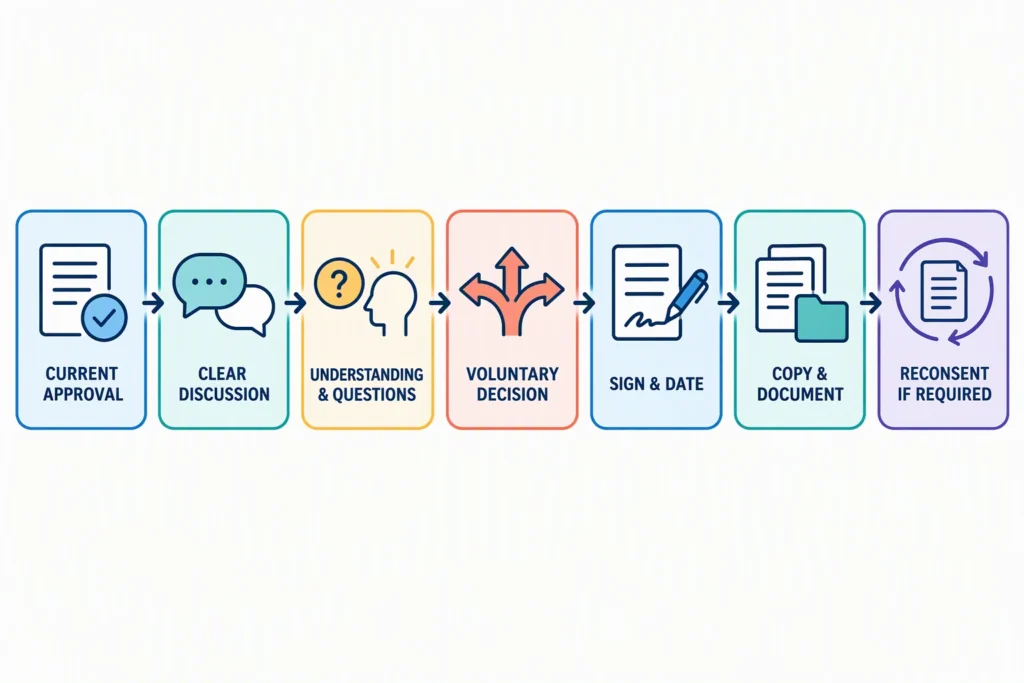
1. How Would You Obtain and Document Informed Consent?
What a good answer proves: that you treat consent as a real conversation, not a signature on a form.
Show the order you act in: explain in plain words first, check understanding, then document every step.
“I would sit with the person somewhere quiet and explain the study in plain words: what it is for, what happens at each visit, the possible risks, and that joining is fully voluntary. I would ask them to explain it back in their own words, because a nod is not proof of understanding. I would give them time to think and ask questions, and answer honestly, even saying I do not know when that is true. Only then would I ask them to sign and date the form, and sign it myself. I would give them a signed copy and file the original where monitors can find it. I would note in the study record the date, the form version used, and that questions were answered. If the study changes later, I would go through the whole process again with the new form.”
Find a suitable layout for your administrative experience in these office resume templates.
2. A Participant Reports a Serious Symptom After a Visit. What Do You Do?
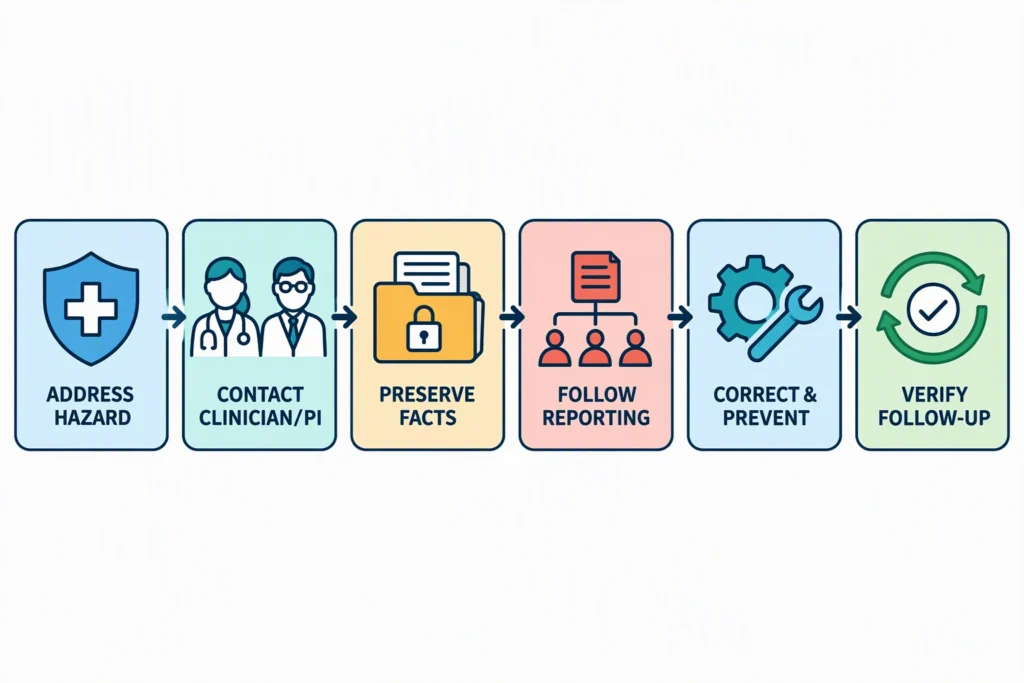
What a good answer proves: that the person’s safety comes before everything else.
Show the order you act in: assess urgency first, get medical help, tell the lead doctor, then document and report.
“I would first find out how serious the symptom is right now. If it sounds urgent, I would tell them to seek care at once or help arrange it, staying on the phone until help is on the way. The study can wait; the person cannot. Next, I would call the lead doctor at once and report exactly what the participant said. Then I would write down everything with date and time: what was reported, what I did, and who I told. I would file it as an adverse event following the study’s reporting rules and timelines. I would also flag for the doctor whether the study drug or procedure could be related, without guessing myself. Finally, I would follow up with the participant to see how they are doing. My rule: care first, calls second, paperwork third, and never in any other order.”
Present independent assignments clearly with this guide to listing freelance, contract, and gig work on a resume.
3. What Would You Do if You Discovered a Protocol Deviation?
What a good answer proves: that you report problems openly instead of hiding them.
Show the order you act in: write down the facts, tell the lead doctor, assess the impact, report as required, and fix the cause.
“I would write down exactly what happened, when, and who was involved, using facts only and no guesses about why. For example, for a visit outside the allowed window, I would record both dates and what was done. Then I would tell the lead doctor promptly and ask whether the participant’s safety or the study data could be affected. I would file the deviation report according to the sponsor’s and review board’s rules, within their timelines. After reporting, I would look for the cause with the team. If visits were missed because reminders went out late, I would set up an earlier reminder system and check it weekly. I would never backdate a form or rewrite a record to hide a deviation. One honest report protects the participant and the study; one hidden mistake can ruin both.”
Highlight your clinical qualifications and medical experience with these doctor resume examples and writing tips.
The Everyday Work
These questions cover the daily grind: honest records, competing deadlines, and finding participants fairly.
4. How Do You Keep Study Records Accurate and Honest?
What a good answer proves: that every record you touch could be checked by a stranger and still hold up.
Show the order you act in: write it at the time it happens, keep the original visible, and correct mistakes without hiding them.
“I write down what happens when it happens, not at the end of the day. Every entry gets the date and my initials, so anyone can see who wrote what and when. I record what I actually saw, not what I expected to see. If I make a mistake, I draw one straight line through it, write the correction beside it, and add my initials, the date, and a short reason. I never erase, cover, or rewrite a page to make it look clean. For electronic records, I enter data the same day and never share my login, keeping the audit trail honest. Before filing, I read each entry as a stranger would: does it say what happened, when, and who did it? Clean-looking records mean nothing if they are not true.”
Choose relevant abilities for your performance profile with these special skills for an acting resume.
5. How Do You Handle Several Studies and Competing Deadlines?
What a good answer proves: that safety and hard deadlines always come first, by a clear system and not by luck.
Show the order you act in: rank by safety and deadline, work the list daily, and warn people early.
“I keep one master list for all my studies, reviewed every morning. Safety tasks come first, always: a participant issue beats any paperwork. Next come hard deadlines set by regulators or sponsors, like safety reports with fixed due dates. Everything else ranks by date. I block time for visits before office work, because participants cannot wait while I file papers. When two deadlines clash, I tell the affected people early and propose a new date, instead of quietly missing one. My rule: no study goes a day with records out of date. At the end of each week, I check the next two weeks for collisions. The system is boring, and that is the point. Boring systems do not drop participants.”
Describe your contributions with greater precision using these alternatives to “helped” on a resume.
6. How Would You Recruit Participants Without Creating Pressure?
What a good answer proves: that you can fill a study without pushing anyone.
Show the order you act in: use only approved materials, give full facts, and leave the decision fully with the person.
“I would only use recruitment materials the review board has approved, word for word. When I talk to a possible participant, I would explain what the study involves, the time it takes, and that saying no will not affect their normal care in any way. I would never suggest joining will cure them. I would give them the consent form to read at home and tell them to take all the time they need. If someone seems unsure, I would say plainly that it is fine to decline, and I would mean it. I would document each contact: who I spoke with, what I explained, and what they decided. The habit I keep: if I feel even a small pull to persuade, I stop and reset, because pressured consent is not consent.”
Ready for a Closer Look
These questions check whether your work survives inspection, including your own mistakes.
7. How Do You Prepare for a Monitoring Visit or Inspection?
What a good answer proves: that your files are ready any day, not just the night before.
Show the order you act in: keep files ready always, do a self-check before the visit, and answer honestly during it.
“I keep the study files inspection-ready all the time, so a visit never means a panic. Each study has its own binder: the approved protocol, current consent forms, signed consents, visit records, deviation logs, and safety reports, all in date order. A week before, I do my own review. I check that every consent is the current version and signed correctly, every visit has a matching record, and every deviation was reported on time. I list anything I cannot fix and tell the lead doctor before the monitor arrives. During the visit, I answer directly and say when I do not know, then find the answer. Monitors respect an honest gap far more than a covered-up one.”
8. Tell Me About a Time You Found a Mistake in the Records.
What a good answer proves: that you catch errors, fix them openly, and stop them from happening again.
Show the order you act in: confirm the error, fix it the honest way, tell the right people, and add a check.
“I was entering visit data when I noticed the date on a lab report did not match the visit date in our records. I pulled the original form and saw I had typed the wrong date. Instead of just retyping it, I drew one line through the wrong date, wrote the correct one beside it, and added my initials, today’s date, and the note ‘wrong date entered.’ I told the lead doctor what I found and fixed, and I checked whether any other records from that day had the same error. They did not. Then I changed my habit: I now check each date against the source before moving to the next field. Finding my own mistake felt bad for a minute, but catching it myself is exactly what the job requires.”
Respect in Every Direction
The last questions are about people: keeping many parties aligned and letting a participant go gracefully.
9. How Do You Coordinate Investigators, Participants, Pharmacy, Laboratory, and Sponsors?
What a good answer proves: that many moving parts still move as one, because you confirm everything in writing.
Show the order you act in: one shared schedule, written confirmations, and early warnings when plans shift.
“I run coordination from one shared schedule: visits, drug shipments, lab pickups, and report deadlines. For each study activity, I confirm in writing with the party involved. I confirm visit times with participants the day before, drug supply with the pharmacy before enrollment opens, and lab pickup times so samples never sit too long. I send the sponsor a short status note each week: enrollment numbers, upcoming visits, and any issues. When something changes, I tell every affected party the same day. And I remember my lane: I arrange and confirm, but medical decisions belong to the lead doctor. If a pharmacist questions a dose, I take it straight to the doctor instead of answering myself. Clear writing prevents most mix-ups before they happen.”
10. What Would You Do if a Participant Wanted to Withdraw?
What a good answer proves: that you respect a person’s right to leave, immediately and without pressure.
Show the order you act in: accept the decision, ask about their reason only if they wish to share, document, and close out their records properly.
“I would accept their decision right away and thank them for the time they gave the study. I would make clear that leaving changes nothing about their normal care. I would ask gently whether they would like to share a reason, and I would accept no as a complete answer. If they mention a problem, I would note it for the team, but I would not use it to talk them into staying. I would document the withdrawal date and the reason in their own words, or ‘declined to give a reason’. I would handle their collected data exactly as the consent form promised. Then I would inform the lead doctor and update the study records so no one contacts them by mistake. People remember how you treat them when they leave.”
Rehearse the Urgent Ones Out Loud
Practice the safety and deviation answers out loud until they feel automatic. Have a friend play a worried participant reporting a bad symptom, and walk through what you do first, second, and third. Then have them play a monitor who found a gap, and practice saying what happened plainly. In this job, calm and exact beats clever every time.
Frequently Asked Questions
I Have No Clinical Background. Can I Still Become a Coordinator?
Yes. Many start in nursing, pharmacy, or lab work. What matters is care with detail, respect for participants, and willingness to learn the rules. Say what you would do step by step.
How Do You Handle the Emotional Weight of Serious Adverse Events?
Follow the process; it protects both you and the participant. Talk to your team after a hard case. Caring deeply and staying steady are not opposites.
Do I Need a Special Certificate to Get Hired?
Not always, but it helps. Many employers value Good Clinical Practice training. Ask what training they provide; knowing the basic rules matters most.
What if an Investigator Asks Me to Do Something Against the Protocol?
Do not do it. Explain that the protocol requires a different step, and put your concern in writing to the lead doctor. Protecting participants outranks pleasing anyone.