
UX interviews return to the same ground: how you learn about users, make choices, and work with a team. Each answer below sets out what the interviewer wants to learn, points to cover, and an example to shape in your own words. Begin wherever you feel least sure.
Bring one or two real projects to every answer. Say what your role was and what you learned from real users. Never invent test results, user counts, or business numbers.
Key Takeaways
- Explain the why behind each screen. Interviewers care more about your reasons than your pixels. Be ready to say what problem each choice solved.
- Match the research method to the question. A quick hallway test and a week of interviews answer different questions. Say why you picked it.
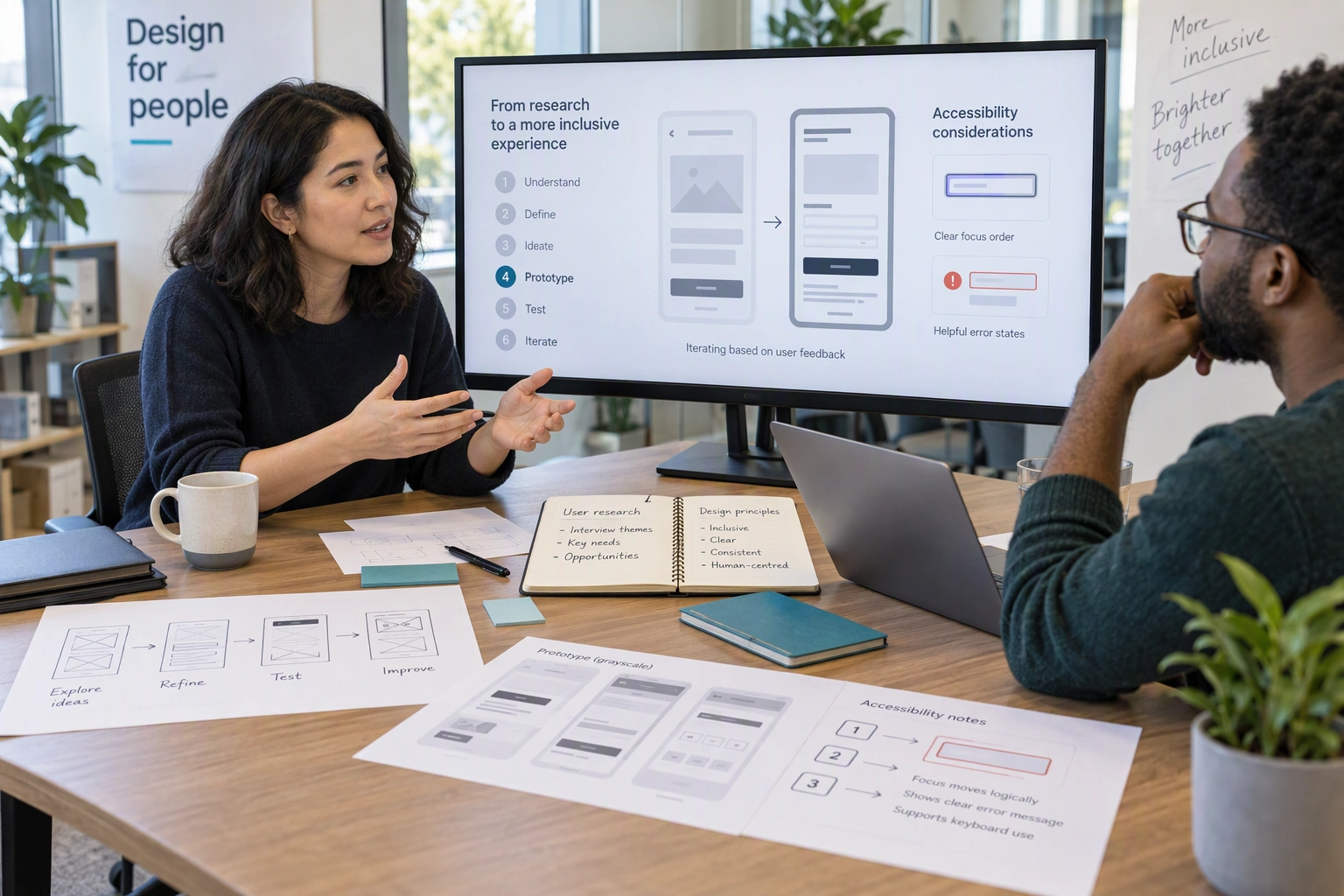
- Include people with disabilities from the start. Check text contrast, keyboard use, and screen reader order while you design, not after you finish.
- Give credit and name what you would change. Say who helped you, and end with one thing you would do differently next time.
Start With One Strong Story
Open with the project you know best. Walk through it slowly and let the interviewer ask questions.
1. Walk Me Through a Portfolio Project.
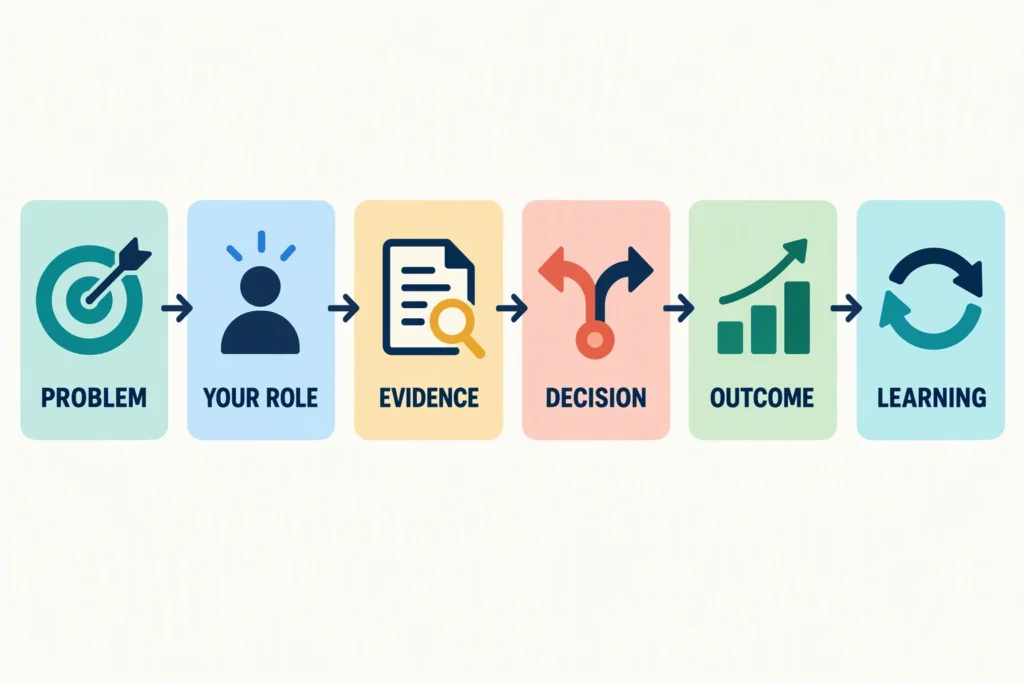
Here’s what the question is really testing: whether you can explain your thinking from the first problem to the final screen.
Answer with a real example: pick one project, keep the order of events clear, and pause after each big choice to say why you made it.
“I’ll use the food delivery app I redesigned last year. The problem was clear: too many people quit before placing an order. I started by watching five people try to order lunch. I saw them get stuck on the same screen, where the delivery fee appeared only at the last step. I sketched three simpler layouts on paper and tested them with six new people. The winner showed the full price early and cut one screen. I then built a clickable version and tested it with eight more users. Most finished without help. I worked with two developers to build it and stayed through launch to fix small issues. After launch, fewer people quit at that screen, and support tickets about surprise fees dropped. If I did it again, I would test the price display even earlier, before drawing anything final.”
Practise explaining product priorities and decisions with these product manager interview questions and answer strategies.
Learn Before You Draw
These questions check whether you study users first.
2. How Would You Approach an Unclear Design Problem?
Here’s what the question is really testing: whether you have a repeatable way to turn confusion into a clear plan.
Answer with a real example: describe your steps in order, and say what you do first when nobody knows the answer yet.
“When a problem is unclear, I slow down before I draw anything. First, I write down what we know and what we are guessing. Then I talk to the people closest to the problem: users if I can reach them, support staff and salespeople if I cannot. I look for the one question that, once answered, would unlock the rest. On a team dashboard project, nobody knew why managers stopped logging in. I interviewed six managers and learned they only needed one number each morning, not a full dashboard. That one finding shaped everything after. I sketched three directions, tested the simplest with five users, and built from there. My rule now: no pixels until the problem fits in one sentence.”
Showcase your financial technology experience with these fintech product manager resume templates.
3. How Do You Choose a User Research Method?
Here’s what the question is really testing: whether you pick research on purpose instead of using the same method every time.
Answer with a real example: name two methods, say what question each one answers, and explain how you chose between them.
“I start with the question I need answered, then pick the simplest method that answers it well. If I need to know why people do something, I talk to them one on one and ask them to show me. If I need to know whether a design works, I watch people try to use it and note where they get stuck. On a recent settings-page redesign, I first interviewed seven users to learn which settings they actually changed. That told me which options to keep. Then I ran short usability tests on two layouts to see which one people finished faster. I skipped the survey because I needed to watch a few people closely, not collect hundreds of opinions. The habit I keep: match the method to the question, and never use a heavy method for a light question.”
Present independent client assignments clearly with this guide to listing freelance work on your resume.
4. Tell Me About a Time Research Changed Your Design.
Here’s what the question is really testing: whether you actually listen to users, even when it means throwing away your work.
Answer with a real example: describe what you believed first, what users showed you, and what you changed.
“I was redesigning a sign-up flow and I was sure a single long page would work best. It looked clean and I was proud of it. Then I tested it with six people. Four of them stopped halfway and said the page felt endless. One woman said she would rather do it in small steps she could finish. I threw away the long page that same day. I rebuilt it as three short steps with a progress bar at the top. I tested the new version with five more people, and all five finished without stopping. The lesson stuck with me: my taste does not matter if users quit. Now I test my favorite idea first, because that is the one most likely to fool me.”
Learn more about your potential employer with these questions to ask a hiring manager.
Design for Everyone, With Everyone
These questions check whether you include all users and work well with the people around you.
5. How Do You Design and Test for Accessibility?
Here’s what the question is really testing: whether accessibility is part of your normal process or something you add at the end.
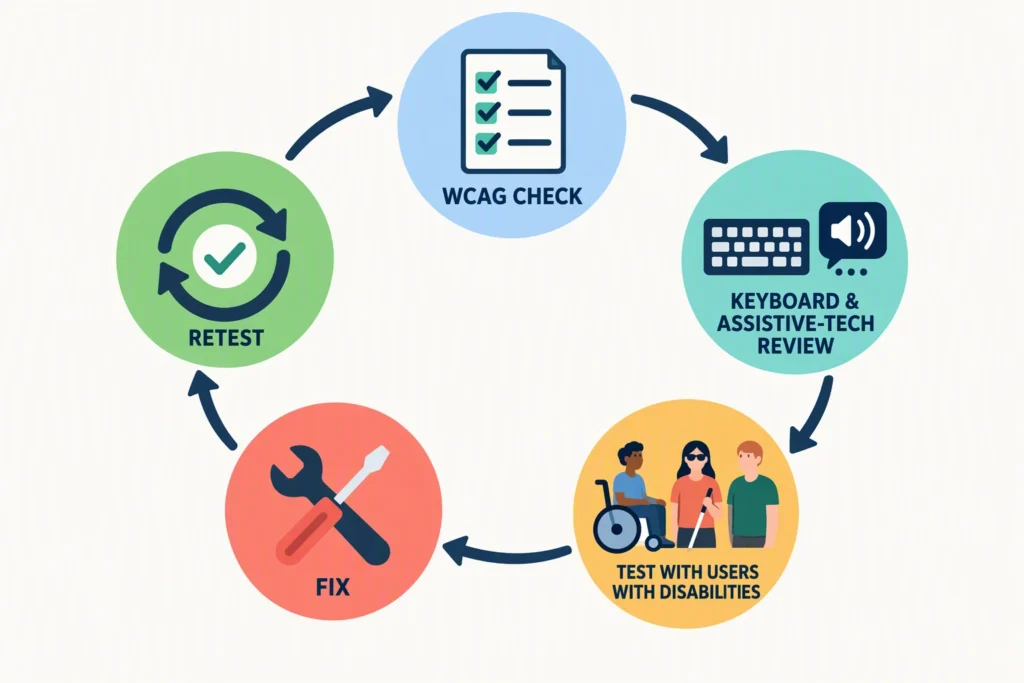
Answer with a real example: name three checks you run, and say when in your process you run them.
“I build accessibility in from the first sketch. As I design, I check three things: can I read all text easily, can I use every button with only a keyboard, and does a screen reader announce things in a sensible order. I use a free contrast checker for text colors, and I tab through every screen myself with the keyboard before I share anything. On a recent form project, keyboard testing showed me that the error messages appeared in the wrong order for screen reader users. I fixed the order before the developers built anything, which saved us a rebuild. I also ask one or two people who use assistive technology to try key flows when I can. My rule: if it does not work with a keyboard, it does not work.”
Highlight your property sales and client service experience with these real estate resume examples and writing tips.
6. How Do You Work With Product Managers and Engineers?
Here’s what the question is really testing: whether you are easy to build with, not just easy to talk to.
Answer with a real example: show how you share early, handle pushback on your designs, and stay involved after handoff.
“I share my work early, before it feels finished. With product managers, I bring the user problem and two or three directions, and I ask which one fits the timeline best. With engineers, I invite them to design reviews while the work is still rough, because they always spot what will be hard to build. On one project, an engineer told me my filter design would slow the page too much. Instead of defending it, I asked what a faster version could look like, and we sketched a simpler one together in twenty minutes. I also stay close after handoff. I check built screens against my designs and quickly adjust a label rather than file a long complaint. Teams build faster when designers stay in the room.”
Turn your practical work into clear application evidence with this guide to listing projects on a resume.
7. What Do You Do When a Stakeholder Rejects Your Recommendation?
Here’s what the question is really testing: whether you can disagree without burning the relationship.
Answer with a real example: show that you listened first, brought proof second, and accepted the final call.
“A marketing lead once rejected my simpler homepage layout because she wanted more banners. My first job was to listen, not argue. I asked what she needed the banners to achieve, and she said more sign-ups for an event. I went back and tested both versions with eight users. Mine got more people to the sign-up button. Hers got more clicks on banners but fewer sign-ups. I showed her the short video clips, not just my opinion. She still chose her version for the event week. I accepted it and helped her launch it well. After the event, the results favored the simpler layout, and she agreed to switch. I learned to bring proof, not pride, and to respect who gets the final call.”
Prepare to discuss planning, resources, and delivery with these project manager interview questions.
Choose, Measure, and Stay Honest
The last questions test your judgment: what to fix first, how you know it worked, and where you draw the line.
8. How Do You Choose Which Usability Problem to Fix First?
Here’s what the question is really testing: whether you rank problems by user harm instead of by who shouts loudest.
Answer with a real example: explain your ranking rule and walk through one real ranking decision.
“I rank by two things: how many people hit the problem, and how badly it hurts them. A problem that blocks checkout for many people beats a confusing label that annoys a few. On one app, I had a list of eleven issues from testing. I scored each one from one to three on reach and on harm, and I fixed the three that scored highest first. One low-scoring item was a button color a manager disliked. I was honest that it could wait. I shared the ranked list with the team so nobody thought I was picking favorites. The habit I keep: fix what blocks people first, polish later, and show your ranking so the order never looks personal.”
Find examples suited to your technical background in this collection of engineering and design resumes.
9. How Do You Tell Whether a Design Worked?
Here’s what the question is really testing: whether you check your work after launch instead of moving on.
Answer with a real example: name what you watched, how long you waited, and what you did with what you learned.
“Before launch, I write down what success looks like in one sentence. For a recent help-center redesign, my sentence was: people find answers without contacting support. After launch, I watched two things for a month: how many people finished the help articles, and how many still wrote to support about the same topics. Fewer people wrote in, and more finished the articles. I shared a one-page summary with the team: what improved, what did not, and what I would test next. One article still confused people, so I rewrote it and tested the new version with three users before publishing. My rule now: every launch gets a check-up date, or I never really know if it worked.”
10. What Would You Do if a Requested Design Could Mislead Users?
Here’s what the question is really testing: whether you will push back when a design tricks people, even under pressure.
Answer with a real example: show the exact harm, who you told, and the fair version you proposed instead.
“A product manager once asked me to make the free trial button huge and hide the price in small gray text below. I told him directly that this would trick people into paying. I showed him how the screen would look to a rushed user and explained that confused users complain, cancel, and tell others. I proposed a fair version instead: a clear button that said exactly what the trial cost and when billing started. He worried sign-ups would drop, so I suggested testing both versions for two weeks and comparing sign-ups with complaints. He agreed. The fair version got slightly fewer sign-ups but almost no complaints, and I kept the test results to show the next person who asked for a trick. I will not design something I would not want used on me.”
Rehearse With Your Portfolio Open
Pick your two strongest projects and walk through each one out loud in under five minutes. Have a friend ask “why did you choose that?” after every big decision. If you cannot answer in two sentences, your story needs work. Do this three times and the real thing will feel familiar.
Frequently Asked Questions
I Have Never Worked as a UX Designer. Can I Still Interview?
Yes. Use school projects, freelance work, or a redesign you did on your own. Show what you learned from users, what you tried, and what changed. Interviewers hire for how you think, not your job titles.
How Many Projects Should My Portfolio Have?
Three strong projects beat eight weak ones. Pick ones where you can explain every decision, including what you would do differently now.
What if They Ask Me to Redesign Something on the Spot?
Ask what problem you are solving and who it is for before you draw. Think out loud as you sketch. They test your thinking, not your drawing speed.
Should I Show Work Covered by a Non-Disclosure Agreement?
Do not share anything your old employer would not want shared. Describe the project type in general words, or show a personal project instead. Interviewers respect that boundary.