


Accounting interviews are less about book definitions and more about proof you can keep real books clean. The interviewer is picturing you on a busy month-end, dealing with a number that will not tie out. This guide gives you one full sample answer per question, each in plain first person, so you can hear what a strong answer sounds like.
Each sample shows a short situation, the exact steps you took, what changed, and the habit you kept. Swap in your own details as you read. Honest detail beats clever wording every time.
Key Takeaways
- Lead with a real moment. A story from your work beats a rule from a textbook.
- Say what you checked and changed. Name the exact steps, not just the result.
- Use short, plain words. Simple language sounds more professional than fancy terms.
- End on the habit. Finish with what you still do today.
Pull Together Your Examples First
Think of two or three real moments from your work: a difference you found, a close you ran, a time you asked for help. Write one line for each: what happened, what you did.
Getting the Numbers Right
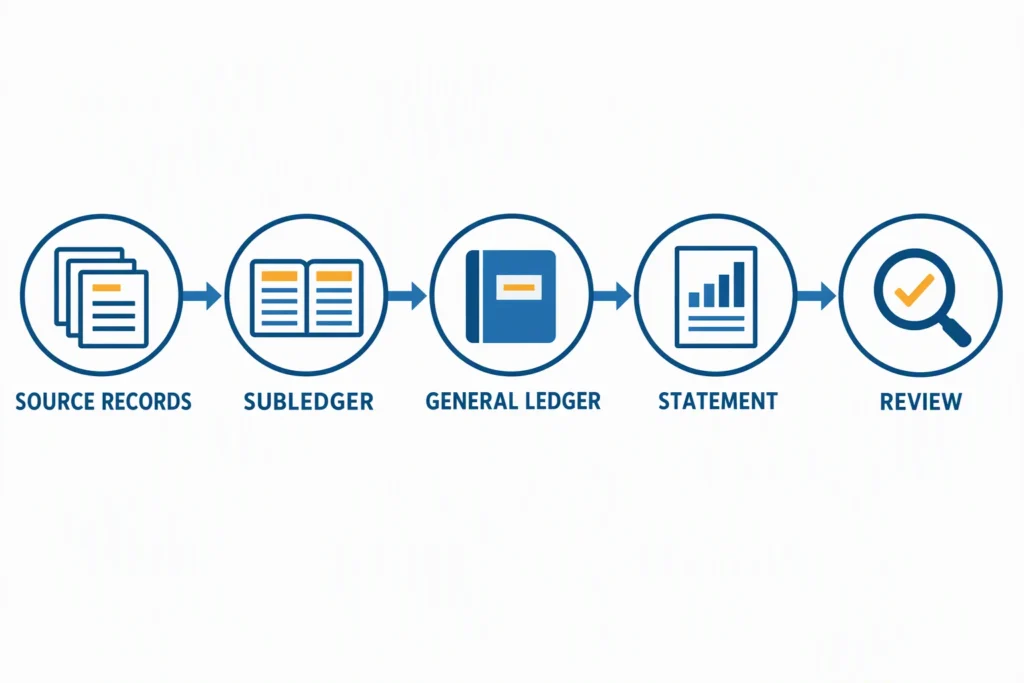
These five questions test your hands-on accounting craft: finding differences, closing the books, handling gray areas, strengthening controls, and helping auditors.
1. How Do You Handle a Reconciliation Difference?
The interviewer wants to know whether you stay calm and dig until the cause is clear.
Try this pattern: Name the gap, trace it back to source documents, fix it, and lock in a check that stops it from coming back.
“In my last job, my bank reconciliation showed the cash balance was off from the bank statement by a few thousand. I did not post a plug entry. I started with the bank statement and compared every item to our cash book line by line. I found a customer receipt that our system had recorded twice, because the cashier entered it once by hand and once from a receipt copy. I removed the double entry and asked the cashier to write a note on the copy when he entered it by hand. I matched the whole account again until the difference was zero, and my manager signed off on the file. The books tied out that same week. Now I always compare the source documents first and never post a difference to make the account balance.”
Prepare clear explanations of your testing approach with these quality assurance analyst interview questions.
2. How Do You Organize Month-End Close?
The interviewer wants to hear that you can run a tight, repeatable close without chaos.
Use this rhythm: Work from a calendar with named people and cut-off dates, finish reconciliations before adjustments, and review the trial balance before sign-off.
“I keep a close calendar that lists every task, the person who owns it, and the day it is due, so nothing is vague. Two days before the end of the month, I send a cut-off note so late invoices and expenses are still recorded in the right month. I finish the bank, vendor, and customer reconciliations first, because every later step rests on those balances. Then I post accruals, prepaid items, and depreciation, and I review the full trial balance for any odd or large amounts. If something looks strange, I ask the person who owns that account the same day. The last close I ran finished with no late adjustments. I now update the calendar after every close so each month is a little smoother than the last.”
Highlight your revenue results and team leadership with this sales manager resume guide.
3. What Do You Do When You Are Unsure About an Accounting Treatment?
The interviewer wants to see that you ask rather than guess.
Follow this arc: Say what the rule seems to say, ask the right person, document the choice, and apply it the same way next time.
“A vendor once billed us for a full year of software support, and I was not sure whether to record the whole cost at once or spread it across the months. Instead of guessing, I read the accounting standard on prepaid expenses and wrote down how I thought it applied. Then I took it to my manager with the invoice and my notes, and we agreed to spread the cost month by month. I saved the standard, the invoice, and the approval in one file so anyone could see why we did it. The auditors looked at it later and accepted it without a single question. Since then, whenever I am unsure about an entry, I check the rule, ask my manager, and file the reasoning with the entry itself.”
Understand the employer’s expectations with these questions to ask a hiring manager.
4. Describe a Control You Helped Improve
The interviewer wants proof you have made the accounts safer, not just followed rules.
Try this pattern: Point out the hole, explain the fix you suggested, show that it worked.
“I noticed that our assistant raised purchase orders, approved them, and also posted the vendor invoices, which meant no one was checking her work. I told my manager this was a risk and suggested that one person raise the order and another person approve payments above a set limit. My manager agreed, and I helped set the approval limits in our accounting software so the system would block any payment that skipped approval. In the first month, the new step caught an invoice that had been raised twice for the same order. We paid only once. The control is still in place today, and now I look for the same kind of hole in any process I inherit, because a small gap can cost real money.”
Practise discussing project planning and delivery with these project manager interview questions and sample answers.
5. How Do You Support an Audit?
The interviewer wants to know you are organized, honest, and quick with evidence.
Use this rhythm: Keep files ready before the auditors ask, answer plainly, fix what is wrong, and note the lesson.
“When our auditors asked for proof of our fixed asset purchases, I did not scramble. I keep a folder for every capital purchase with the invoice, the approval, and the asset tag number, so I sent the whole set the same day. The auditors picked a sample and came back with three items they could not trace to a purchase order. I pulled the approval emails and showed them the purchase requests that had been approved by phone during a busy week. They accepted the proof but told us to keep written approvals from then on. We added a written approval step that week. Now I save every approval email with the asset file, and audit requests take me hours instead of days.”
Introduce your qualifications concisely with these short cover letter samples.
Working with People and Time
These five questions test how you handle pressure, deadlines, tools, plain-spoken explanations, and hard moments.
6. How Do You Explain a Budget Variance?
The interviewer wants to see you turn numbers into a story a manager can act on.
Follow this arc: Compare actual to budget, separate price, quantity, and timing, and name one action for each big gap.
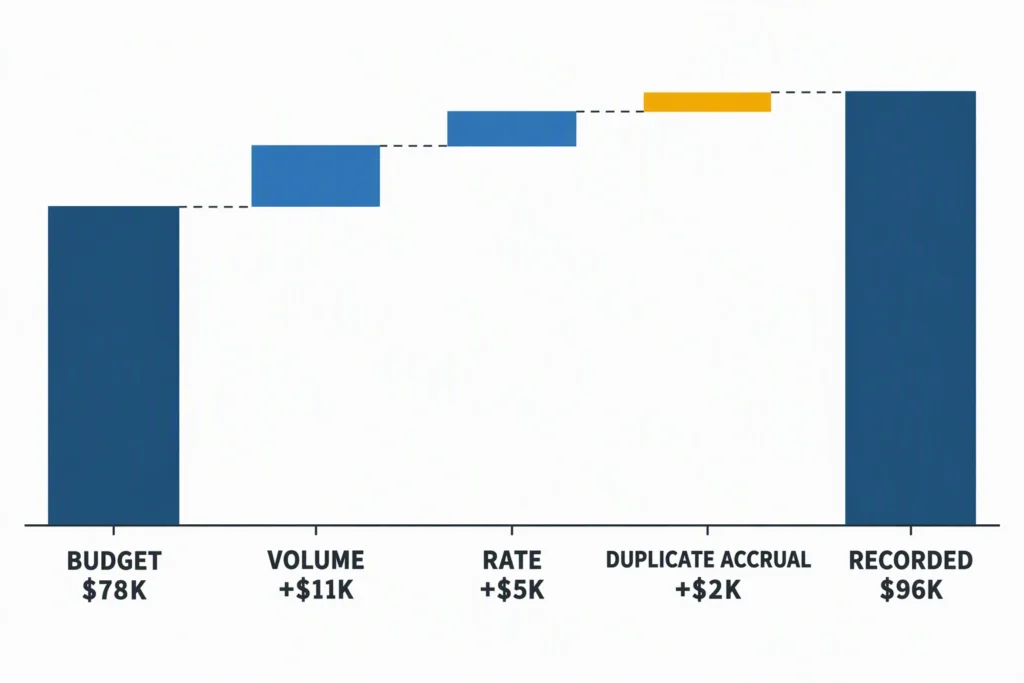
“Our office supplies spending came in well over budget one quarter, and my manager asked me why. I pulled the budget and the actual spending by month and found that most of the gap came from one rush order of printing supplies that cost far more per box than our normal supplier charged. The rest was timing: we bought in March what was budgeted for April. I showed my manager both parts in a simple table and suggested we keep two months of supplies in stock and never use the rush supplier without his approval. He agreed, and the next quarter the spending was back inside the budget. I now break every variance into price, quantity, and timing before I explain it, because the fix is different for each one.”
Present your payment-handling abilities and retail experience with these cashier resume examples.
7. How Do You Prioritize Competing Accounting Deadlines?
The interviewer wants proof you stay steady when everything is due at once.
Try this pattern: List everything, rank by due date and impact, talk to people early, and protect accuracy.
“During one month-end, our tax filing, a payroll correction, and the close all landed in the same week. I wrote down every task with its due date and what would break if it slipped. The tax filing had a legal deadline, so I did that first. The payroll correction affected people’s pay, so I handled it next and told the affected staff the exact day it would show. I asked my manager if two low-impact reports could move by three days, and she agreed. Everything was filed or posted on time. I now keep that ranked list on my desk all year, and when a clash comes up, I speak to my manager early instead of hoping the problem will go away.”
Showcase sensitive assignments appropriately with this guide to describing confidential projects on a resume.
8. Which Accounting or Data Tools Have Helped You Work Better?
The interviewer wants to hear that you learn tools fast and use them to cut errors.
Use this rhythm: Name the tool, say what you did in it, show the error or time it saved.
“I use spreadsheets every day for reconciliations, and I built a bank matching sheet that pulls in the bank statement and flags any item that does not have a match in our cash book. Before that sheet, I compared lines by hand and it took me a full morning. Now the flagged items take me about an hour to clear. In our accounting software, I learned to use the recurring journal feature for rent and depreciation, so those entries post themselves on the first of the month and I only check them. I also keep a simple shared checklist for the close so everyone sees what is done. When I move to a new system, I learn its rules first and its buttons second, which helps me work well in it within a week or two.”
Explore the findings of this survey on managers pressured to discriminate in hiring.
9. How Do You Explain Financial Information to a Nonaccountant?
The interviewer wants to see you drop the jargon and speak the listener’s language.
Follow this arc: Learn what they need to decide, use one plain comparison, and check they understood.
“Our warehouse manager once asked me why his overtime budget looked wrong. I could have talked about accruals, but he needed a decision, not a lesson. I told him to think of the budget like fuel for a truck: he had used more than half the tank in the first half of the year, so he had to drive slower for the rest. I showed him the numbers month by month on one page and pointed out which weeks the extra hours happened. He got it right away and spread the remaining overtime more carefully over the next months. He even came back to me before approving extra shifts after that. I now always ask what decision the person is making before I explain a single number.”
10. Tell Me About an Accounting Mistake or Ethical Concern
The interviewer wants to know you own mistakes fast and never bend the rules.
Try this pattern: Admit what happened, say what you did about it, and end on the rule you live by.
“In my first year, I posted a vendor payment to the wrong supplier’s account and did not notice until the real supplier called to say we had not paid. I told my manager the same day, moved the payment to the right account, and called the supplier to explain and give him the correct payment date. He was upset but stayed with us. I asked my manager to check my payment postings for two weeks while I rebuilt the habit of reading the supplier name twice before posting. I have not made that mistake since. On ethics, I once had a manager hint that I should backdate a sale into the previous quarter. I said no and told our controller. My rule is simple: I will never post an entry I do not believe is true.”
Practice Until They Sound Like You
Pick the three questions that scare you most and say each answer out loud, slowly, without reading. Time yourself; aim for under two minutes. Then swap in one real detail from your own work for every made-up detail you borrowed. Answers built from your own stories are the only ones interviewers believe.
Stick to What You Can Defend
You should be able to explain any detail calmly. That only works if every word is true. Never borrow a story you cannot stand behind.
Quick Answers to Common Worries
Short answers to the worries candidates bring up most often while preparing.
Can I reuse one story for several questions?
Yes, if the story shows different skills. A reconciliation story can also show how you organize work. Just change which part you stress, and keep each version short.
How long should each answer be?
About two minutes of talking. That is long enough to show the situation, your steps, and the result, but short enough to hold attention. If the interviewer wants more, she will ask.
What if I have never faced that exact situation?
Say so honestly, then describe what you would do step by step. Interviewers respect a clear plan more than a stretched story. Borrow the steps from the closest thing you have done.
Should I memorize these samples?
No. Learn the shape of each answer, not its words. Memorized lines sound flat and break if you are asked a follow-up question. Speak from your own experience and end with what you do differently now.