


An HR specialist handles some of the most personal parts of a workplace. You keep private records safe, listen when someone is upset, help new people settle in, and apply the rules to everyone the same way. Interviewers know this, so their questions test how you think and how you treat people.
The ten questions below cover the work you will actually do. Study each sample answer, then swap in moments from your own experience. Real details from your past jobs always beat made-up lines.
Key Takeaways
- Show what you did step by step. Interviewers believe a clear order of actions more than big claims.
- Say “I do not know” when you do not know. Admitting a gap, then returning with the written source, builds trust.
- Protect private details by default. Share only what each person truly must know.
- Fix one small thing and watch the change. Real improvements are what hiring managers remember.
Build a Small Story Bank Before the Interview
Before you walk in, pick five or six real moments from your past work. For each one, note what happened, what you did in order, and what changed.
Keep your language plain and your numbers honest. One short true story about an employee you helped beats a long story that could have happened to anyone.
Ten Questions You Should Be Ready to Answer
Each question has a note on what the interviewer is after, a small scene to set your mind, and a full sample answer in the first person. Shape the samples to fit your own history.
1. How would you handle a policy question you could not answer immediately?
The interviewer wants to know how you act when you lack the facts.
Picture this: an employee asks you if night-shift meal breaks count as paid time. You have no idea, and three people are waiting behind her.
“In my last HR role, a warehouse employee asked whether her meal break on the night shift counted as paid time. I did not know the answer, so I told her that plainly instead of guessing. I asked for until the next morning and promised I would return with the written rule. That afternoon I checked our handbook and the state labor rules. I found the exact section, printed it with the page marked, and walked her through it at the start of her next shift. She told me later she was glad I had not made something up. Since then I keep one rule for myself: if I do not know, I say so, give a time, and return with the source in writing.”
Explore these management resume examples for ideas on presenting leadership experience.
2. Tell me about a time you protected confidential employee information.
The interviewer wants to know whether private details stay private with you.
Picture this: a manager calls and asks why an employee has missed so much work. You know the employee told you about a medical issue in confidence.
“I once had a manager ask me why a member of his team had missed several days. I knew the employee was dealing with a medical issue she had shared with me in private. I told the manager I could not share the reason, and I confirmed only that the absence had been approved through the proper process. He pushed a little, and I stayed calm and repeated the same answer. I also kept medical-leave papers in a locked folder that only HR could open, so the detail could not slip out by accident. The employee later learned I had protected her information, and she kept asking me for help with leave forms. I keep that boundary today: I share only what the other person must know, and nothing more.”
Read the survey on managers facing pressure to discriminate in hiring for insight into workplace hiring practices.
3. Describe how you responded to an employee complaint.
The interviewer wants to know how you treat someone who raises a problem.
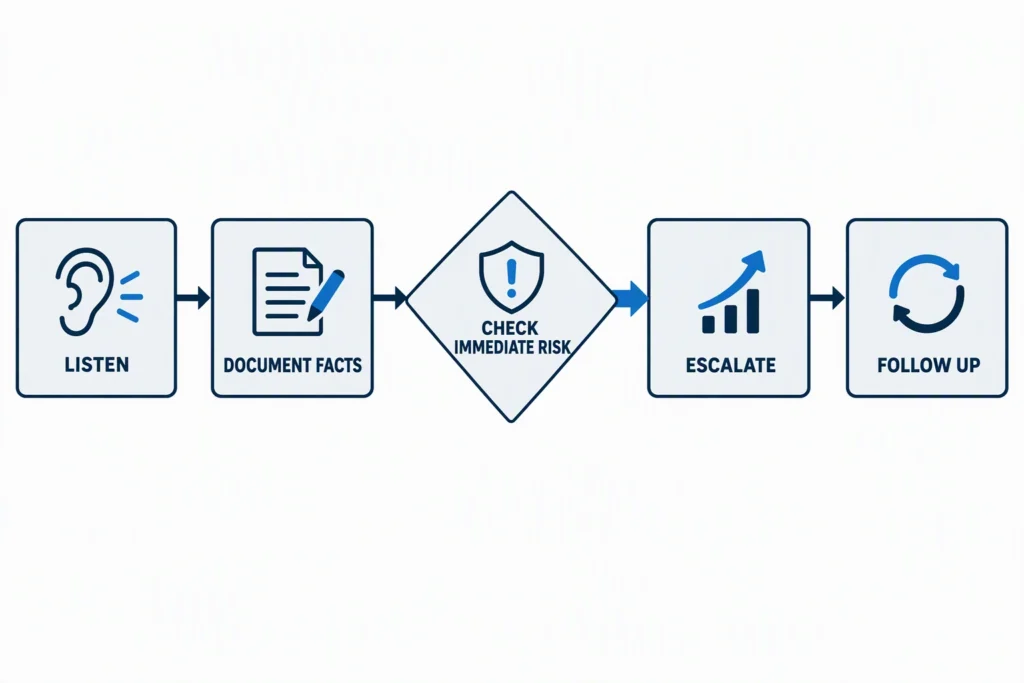
Picture this: an employee stops by your desk and says a coworker has made harsh remarks to her three times this week. Her hands are shaking.
“A retail employee came to my desk and said a coworker had spoken to her harshly three times that week. I asked her to sit down, listened without cutting in, and wrote down what she said in her own words. I told her what would happen next: I would speak with the other person privately and keep her name out of it as much as possible. I spoke with both of them separately, checked their accounts of what happened, and arranged a short sit-down where each one could speak. The remarks stopped. She later told me that being heard calmly was what gave her the nerve to report it. I now treat every complaint the same way: listen, write, follow through, and check back.”
Prepare for your next conversation with these questions to ask a hiring manager.
4. How have you made recruiting fair and consistent?
The interviewer wants to know if your hiring process treats every candidate alike.
Picture this: two candidates look equal on paper, and the hiring team wants to pick the one they found more likable. No scores were recorded.
“I noticed our hiring team was picking candidates mostly by gut feeling. I set up one simple score sheet with the five skills each role needed, and every interviewer had to rate each skill from one to five before we met to talk. I also had everyone use the same set of core questions, and I reminded the team to fill in scores before sharing opinions. At first a few people grumbled, but our later hires settled in faster and managers stopped second-guessing their own choices. New interviewers get the sheet before meeting a candidate, so they know what good answers sound like. I still use score sheets in every hiring round, because equal questions and written scores give every candidate the same chance.”
Discover what can help you secure a job offer after your application earns an interview.
5. Tell me about an onboarding process you improved.
The interviewer wants to know what you change to help new hires settle in.
Picture this: it is a new hire’s first morning, and he is sitting at an empty desk with no laptop, no logins, and no one to ask.
“New hires at my last company often arrived to find no laptop and no logins ready. I built a checklist that started three days before day one: the hiring manager ordered the laptop, IT set up the accounts, and I prepared the paperwork and the first-day plan. I sent the manager a reminder each day so nothing slipped. On day one the new hire had a working laptop, a mentor assigned, and a short meeting with me to answer questions. First-week confusion dropped, and managers stopped chasing IT. At the end of week one I met each new hire for ten minutes to hear what had confused them, and I folded those fixes into the checklist for the next batch. I keep the same habit now: prepare before the person arrives, and the rest of onboarding takes care of itself.”
Practice explaining your approach to deadlines, budgets, and teamwork with these project manager interview questions.
6. Give an example of how you maintained accurate HR system data.
The interviewer wants to know how careful you are with people’s records.
Picture this: you find two different start dates for the same employee in the system, and payroll runs tomorrow.
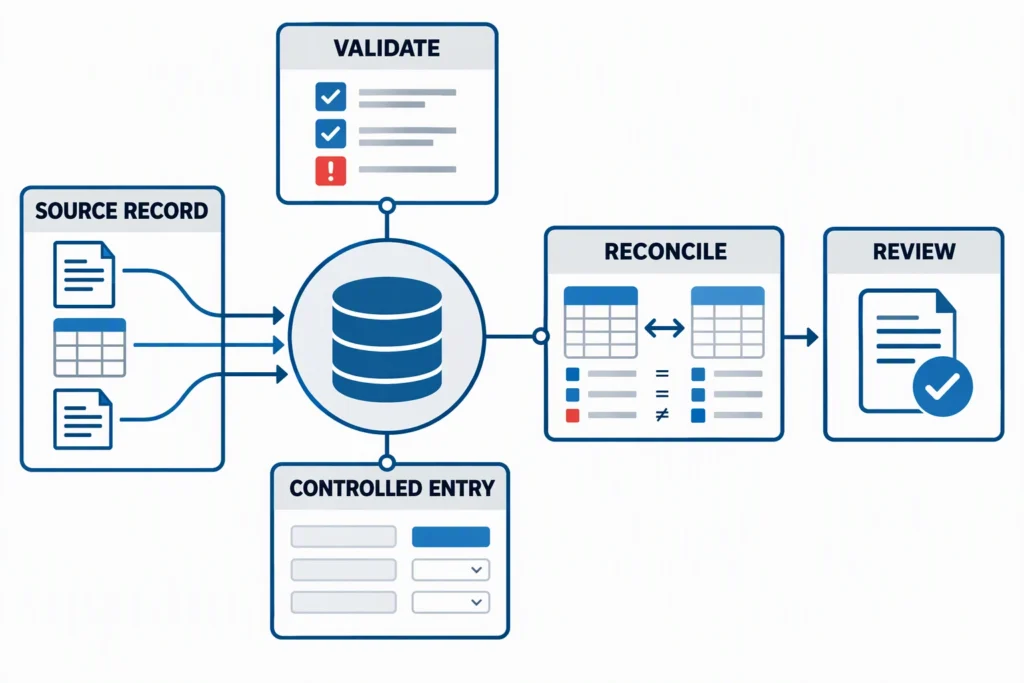
“I was preparing for payroll when I saw two different start dates for the same employee in our system. I did not guess which one was right. I pulled the signed offer letter and the first-day attendance record, and I found the letter had the correct date. I fixed the system, wrote a short note about where the error came from, and told payroll so they could double-check that pay period. After that, I made the system ask for the signed offer letter before anyone could enter a start date, which stopped the same mistake at its source. I also kept a monthly habit of pulling ten random employee records and checking names, dates, and pay details against the original papers. Wrong dates stopped showing up. I still do that check, because clean data is what every HR decision stands on.”
Learn how to list freelance, contract, and gig work on a resume to make independent experience easy to understand.
7. Tell me about a compliance question you researched.
The interviewer wants to know how you find a correct answer when you are unsure.
Picture this: an employee asks if she can carry unused sick days into the new year. The handbook paragraph is vague, and she needs an answer today.
“An employee asked whether she could carry unused sick days into the new year. Our handbook was vague, and I did not want to give her a wrong answer. I read the full sick-leave section again, then checked the state labor website for the current rule on carryover. The two disagreed, so I called our outside employment lawyer to confirm which one we had to follow. I then wrote a one-page note with the correct answer and had our handbook updated so the rule was clear for everyone. The employee got her answer the same day. I keep a small file of these research notes now, so the next time the same question comes up, the answer is already there.”
8. How do you prioritize when every request seems urgent?
The interviewer wants to know how you choose what comes first.
Picture this: three messages land at once — a paycheck error, an interview to schedule, and a benefits question from someone leaving next week.
“On a typical Monday I can have a paycheck error, an interview to schedule, and a benefits question from someone leaving soon, all at once. I sort them by how much harm they cause and by date. The paycheck error affects money the person needs, so it goes first. The interview goes next because the candidate and the hiring manager both have calendars to keep. The benefits question is still important, so I reply within the hour and give a clear time when I will have the full answer. Then I work through the list and close each item the same day. I keep this as my daily habit: fix what hurts most first, and never leave anyone waiting without a time.”
9. Describe an HR process you improved and measured.
The interviewer wants to know how you prove a change worked.
Picture this: the leave-request form moves through four people by email, and approvals take five days on average. Managers keep asking you for the status.
“Our leave requests used to travel by email through four people, and approvals took about five days on average. Employees kept asking me for updates, and I could not blame them. I asked the four approvers what slowed them down: requests buried in crowded inboxes. I moved the request into a single online form that sent approvals in order and showed each person the status. Before the change I counted the average days from request to approval, and after two months I counted again. The average fell to two days. Managers stopped emailing me for status, because they could see it themselves. I still keep that habit of counting before and after, since numbers show whether a fix worked better than opinions ever can.”
10. Tell me about a difficult ethical decision.
The interviewer wants to know where you draw the line.
Picture this: a manager asks you to write a warm reference for an employee who was let go for misconduct, saying it will help him land on his feet.
“A manager once asked me to write a warm reference for an employee who had been let go for misconduct. He said it would help the man land on his feet. I understood his kind feeling, but I could not write a false reference. I told the manager I could confirm job title and dates, which is all our policy allows, and I explained that a warm line that was not true could hurt both of us and the next employer. He was unhappy, but he accepted it. I then made sure our reference policy was written down and shared with every manager, so no one had to make that call alone. I keep this standard today: kindness never asks me to bend the truth.”
Run a Practice Round That Feels Real
Pick the three hardest questions and answer them out loud, as if a real person sat across from you. Time yourself; if an answer runs past two minutes, trim it. Then have a friend read the questions in random order, so you answer from the story and not from the page order.
Show Care and Good Process Together
Good HR work is never one or the other. Care without process becomes favoritism, and process without care becomes cold paperwork. In every answer, show that you noticed the human part first and then used a clear, fair method to handle it.
Questions People Still Ask Me
Can I reuse one story for several questions?
Yes, if it truly fits. Change the details you highlight so each answer stays on its own question.
How long should each answer be?
About a minute and a half of speaking. That covers the situation, your steps, the result, and one habit you keep now.
What if I have never faced a question’s situation?
Use a close moment from any job, study, or volunteer work, then say what you would do. Honesty beats a story that falls apart.