

A project manager interview tests how you think when a plan meets real life. Below are the ten questions that come up most. Each one gives you what the hiring team is really asking, a short focus device, and a full sample answer to reshape with your own experience.
They are not quizzing you on terms. They are picturing you on their hardest project. Answer from a time you actually made the call.
Key Takeaways
- Decisions beat definitions in these interviews. Say what call you made and why, not what term you can define.
- Reuse one real story across several questions.
- A tough call can answer the risk, clash, and rescue questions if you shift the focus.
- Say what you did, not what the team did. “We decided” hides your part. “I chose” shows it.Close every answer with what you changed. A habit you still keep turns a rough story into proof.
Line Up Your Stories Before the Interview
Pick four or five true stories: one where you planned well, one where you fixed a schedule, one where you settled a clash, one where you rescued slipping work.
For each, note the goal, your part, the hardest moment, and how it ended. Short notes beat full scripts.
Planning the Work Before It Starts
These four questions cover the setup: running the work, defining done, timing each part, and spotting what could go wrong.
1. How Do You Choose the Right Way to Manage a Project?
The interviewer wants to know how you choose between a set plan and short build-and-check rounds.
Lay it out in this order: 1. What was fixed, what could shift. 2. The way you picked for each part. 3. Why the mix fit.
“I ran a website rebuild where some pages were fixed and some would shift as the work went on. I started by asking the client two questions: what is fixed, and what might shift. The homepage design was fixed; the signup flow was a guess. The fixed pages followed a step-by-step plan with set dates. The signup flow ran in short build-and-check rounds, where I showed a working version every two weeks and changed it from user behavior. One shared list showed the client both tracks side by side. The fixed pages shipped on the promised date. The signup flow took one extra round, but it worked better because I tested it early. Now I always ask what is fixed and what is a guess before I pick a way to run a project.”
Present your technical expertise, delivery planning, and project achievements with our technical project manager resume guide.
2. Tell Me About a Time You Defined and Protected Project Scope
The interviewer wants to know how you set the borders of the work — and keep them.
Three beats: the drift, the line, the hold. Name what kept growing, how you drew the line, and what happened when you held it.
“A client once kept adding pages to a website rebuild after the plan was agreed. Each new page felt small, but together they threatened our date. I wrote a one-page note listing what the plan covered and, just as clearly, what was out. I read it aloud with the client and got a yes on every line. The next time a new page came up, I opened the note and said: this is outside the plan. I offered two choices: swap it for a planned page, or add it to a later round. They picked the later round. I shipped on the agreed date. Since then I start every project with that one-page list, because a clear no needs a written yes behind it.”
Give your practical achievements a clear structure by learning how to list projects on a resume.
3. How Do You Build or Fix a Realistic Project Schedule?
The interviewer wants to know how you turn a rough date into a schedule people can trust.
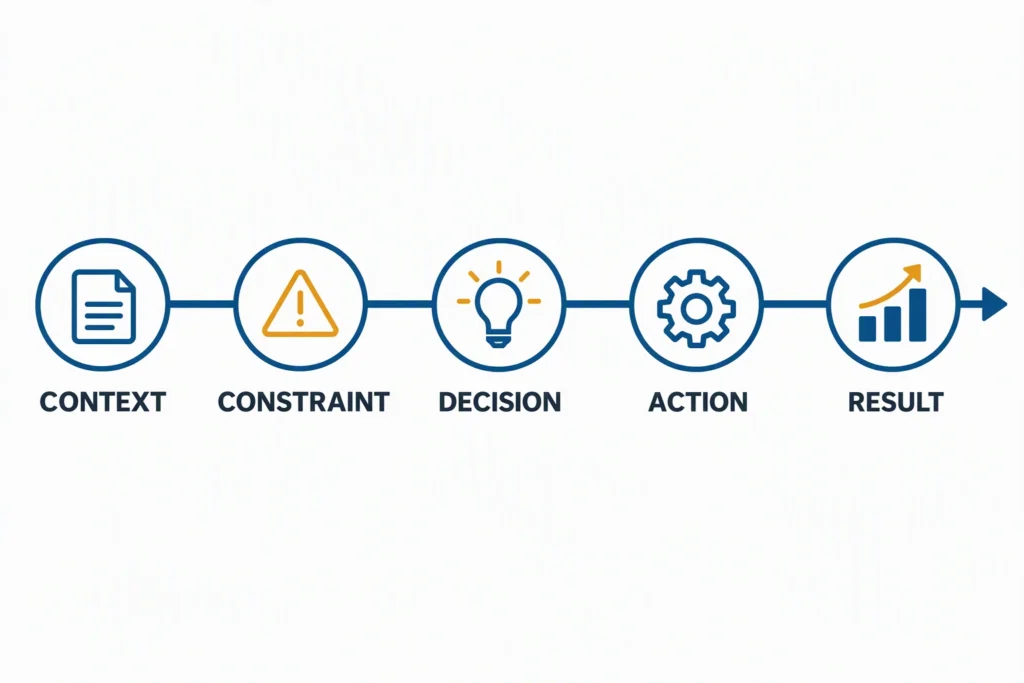
Open with the problem, close with the habit. The middle is your steps in plain order.
“I was asked to run a fundraiser with eight weeks to go. My first plan was a guess. I listed every task and asked each person how long their part really took last time. Almost every answer beat my guess. I then found the tasks that had to happen in order and saw the true length of the chain. I added one spare week and showed the team the full picture. They finished three days early. When one task slipped mid-way, I moved a later task forward so no week sat empty. I also sent one short update each Friday, so nobody had to guess where things stood. Now I never trust a date I made alone. I build the schedule from real past times and check it weekly with the people doing the work.”
Learn more about the position and team with these questions to ask a hiring manager during an interview.
4. Describe a Project Risk You Spotted Early
The interviewer wants to know whether you spot trouble early, not just react to it.
Lay it out in this order: 1. The trouble you saw coming. 2. What you did before it hit. 3. What you still check weekly.
“Before a product launch event, I learned our main supplier had missed dates for other clients that month. That was not yet a problem for us, but it could become one. I wrote it on our risk list with two marks: how likely it felt, and how much harm it would do. It scored high on both. I called a second supplier, checked their timing, and kept them on standby. I also moved our order date one week earlier, so I had room if the first supplier slipped. The first supplier did slip by four days, but the spare week covered it. Now I keep a short risk list on every project and review it weekly, because trouble is cheap to handle when you see it coming.”
Highlight your chairside assistance, dental software knowledge, and clinical qualifications with our dental assistant resume guide.
Leading People and Handling Disagreements
Project managers rarely have direct reports. These two questions ask how you settle clashes and move people who answer to someone else.
5. Tell Me About a Conflict Between Key People
The interviewer wants to know how you settle a clash between two key people.
Three beats: the clash, the fears, the fix. Say what they fought about, what each side feared, and the middle path you found.
“Two leads on a software project clashed hard. The designer wanted more time to polish each screen. The developer wanted to lock the designs and start building. Standups turned tense, and both started messaging me separately instead of talking to each other. I spoke to each one alone first. The designer feared shipping ugly work. The developer feared missing the date. I brought them together and named both fears out loud, then asked: what is the smallest set of screens that must look great? The three main screens got extra polish time; the rest locked on Friday. I wrote the decision down and shared it. The tension dropped, and the date held. Now I treat clashes as unspoken fears, and I get each side to say theirs before I propose anything.”
Showcase sensitive work without revealing restricted details by learning how to describe confidential projects on a resume.
8. How Do You Lead People Who Do Not Report to You?
The interviewer wants to know how you get work from people who do not report to you.
Open with the slide, close with the trust. The middle is the shift — what you changed and why it worked.
“I ran a project with people from three departments, and none of them reported to me. Their own managers’ work always came first, so my tasks kept sliding. I stopped sending reminder emails and started talking to people. I asked each person what their week looked like and what part of my project felt hardest. Then I made my asks smaller and tied them to their goals. My short weekly updates named who had done what, so good work got seen. When someone slipped twice, I asked their manager for help openly. The project landed on its date. Now I make my work useful to each person first, because trust moves people faster than any title.”
Make your application easier to read with our guide to cover letter font size and style.
Keeping Delivery on Track
Once work starts, plans meet reality. These four questions cover ranking work, handling late changes, rescuing a struggling project, and judging the result.
6. How Do You Prioritize Competing Work?
The interviewer wants to know how you pick what gets done first when everything feels urgent.
Open with the pile, close with the rule. The middle is your sort.
“I once had six tasks and only three weeks before a launch, with no way to do all six well. I wrote each task down with one question answered: what breaks if this waits? Two protected the launch date itself. One protected a promise made to our biggest client. The other three were nice to have. I did the three that protected the date and the promise first, told the team plainly which three I was dropping, and set a date to revisit them after launch. Two people pushed back, so I walked them through the list and asked which protected task they would drop. Neither could name one. The launch hit its date. These days I rank work by what breaks if it waits, and I say each no with its reason attached.”
7. Tell Me About a Major Change Requested After Approval
The interviewer wants to know how you handle a big new ask after the plan was approved.
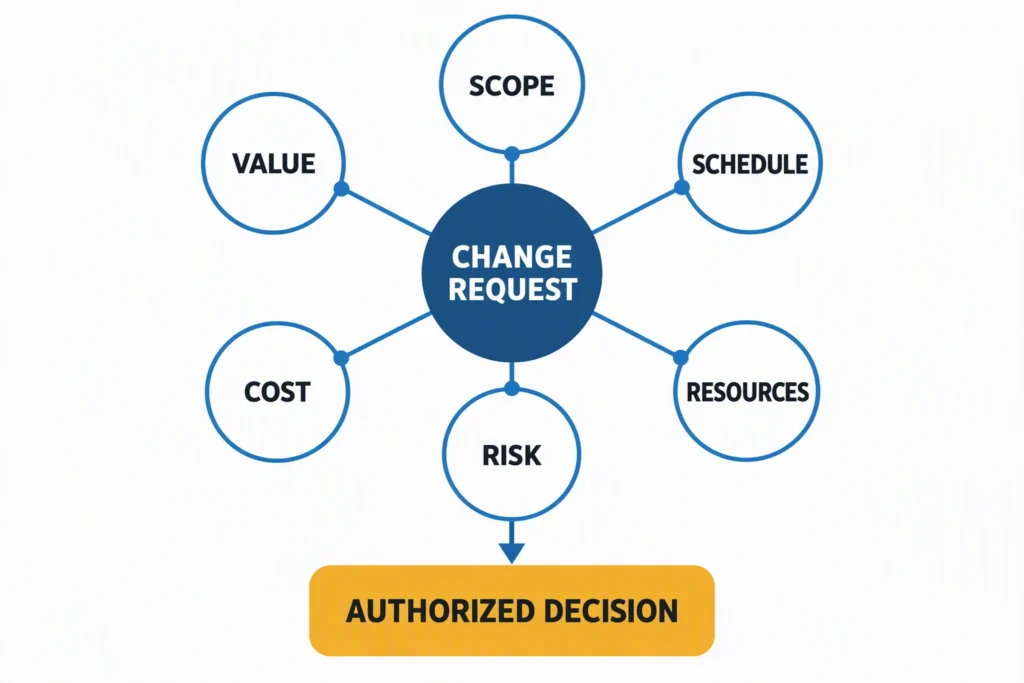
Lay it out in this order: 1. The change and its cost in time. 2. The options you offered. 3. How the new plan got signed.
“Halfway through a website build, the client asked for a customer login area — a big new piece after the plan was locked. I did not say yes or no on the call. I worked out the cost: about three extra weeks and a later launch. I returned with two clear options. Option one: swap the login area for a planned piece of equal size. Option two: keep everything and move the launch to a new date, signed by us both. I also showed what each option meant for the budget. The client picked option two, and I got the new plan signed. The launch landed on the new agreed date, with no bad feeling. I have kept that rule ever since: never take a big late change on a call. I price it and get the new plan signed.”
9. Tell Me About a Project That Did Not Go as Planned
The interviewer wants to know how you act when a project is clearly off track.
Open with the mess, close with the lesson. The middle is the rescue.
“I took over an office move that was two weeks behind with one month left. Boxes were half-packed, the new space was not ready, and the team had stopped believing in the date. I listed what was done, what was left, and what mattered most: the move date could not shift. I cut the least important piece — re-labeling every box — and used simple color stickers instead. I set a new honest date with the team and told our manager what had slipped and why. The move happened on the new date. That week-one check is now my habit, because bad news is only fatal when it arrives late.”
10. How Do You Define and Measure Project Success?
The interviewer wants to know what “done well” means to you — and how you check it.
Lay it out in this order: 1. How you set the tests up front. 2. How you checked each one. 3. Why setting them early mattered.
“At the start of a website rebuild, I asked the client to agree on three clear tests for success: the site launches by the agreed date, it stays within budget, and visitors can finish the main task — booking a visit — without calling us. I kept those three visible throughout. At the end, I checked each one. We launched on time and on budget. I watched real visitors try the booking flow, and most finished alone. The few who struggled showed me one confusing button, which I fixed in a day. The client called it a success. That is why I never end a project without checking it against the tests from the start.”
Make These Answers Yours
Pick the three questions you fear most and adapt those first. Take each sample as a shape, not a script: keep the order of problem, steps, result, and lasting change, but fill it with your own true story.
Say every answer out loud and keep it near two minutes. Then ask a friend to quiz you in random order. The goal is not a perfect speech. It is ten answers that sound like you on a good day.
Let Them Hear Your Reasoning
When you describe a choice, spell out the options you weighed and why you picked one. The reasons set you apart more than the steps.
Questions People Ask While Preparing
Short answers to questions candidates ask about preparing.
How Long Should Each Answer Run?
Aim for about two minutes. If you run long, cut the background, not the steps. The steps are the proof.
Can I Use the Same Story for Two Questions?
Yes, if it truly fits both. Shift the focus: tell it for the choice in one answer and the clash in another. Say it fresh each time.
What If They Ask About Something I Have Never Done?
Say what you would do, step by step, and name who you would ask for help. An honest plan beats a borrowed story every time.