
Walking out of a job interview, most people ask themselves the same question: “Did that go well?”
You replay every answer in your head, second-guess that one joke you made, and wonder if the hiring manager’s smile meant anything at all.
Here’s the good news; interviews rarely lie.
Hiring managers give off signals, whether they mean to or not.
Some are obvious, like being asked for your references.
Others are subtle, like a shift in tone halfway through the conversation.
If you know what to look for, you can walk out with a fairly good idea of where you stand, instead of sitting by your phone in total suspense
📌Key Takeaways
- Interviewers often give verbal and non-verbal clues about your chances.
- Positive body language usually indicates genuine interest.
- Discussions about salary, benefits, or start dates are encouraging signs.
- Multiple positive signals together are more meaningful than just one.
- A job offer is only confirmed once you receive it in writing.
“By failing to prepare, you are preparing to fail.”
— Benjamin Franklin
15 Positive Signs You May Get the Job
Below are 15 signs that usually point to a strong interview. Recognizing those signs helps you plan your next move, follow up confidently, and keep momentum in your search. None of them are a guarantee; only a signed offer letter is that, but the more of these you notice, the better your odds probably are.
| Sign | What it usually means |
|---|---|
| ⏰ Interview runs longer than expected | The interviewer is genuinely interested and wants to learn more about you. |
| 😊 Positive body language | They feel engaged and comfortable during the conversation. |
| 💬 Conversation becomes casual | They’re picturing how you’d fit into the team. |
| 🗣️ They say “when” instead of “if” | They’re subconsciously imagining you in the role. |
| 👏 Positive feedback | Your skills and experience match what they’re looking for. |
| 💰 They ask about salary expectations | You’re seriously considered for the position. |
| 🎁 They discuss benefits and perks | They’re trying to make the role appealing to you. |
| 🤔 They ask what you think of the role | They want to know whether you’d accept an offer. |
| 📅 They discuss your start date | They’re planning for a potential hire. |
| 👥 You’re introduced to the team | They want to see how you’d fit with existing employees. |
| 🏢 You receive an office tour | They’re helping you visualize yourself working there. |
| 🔄 You’re invited to another interview | You’ve successfully moved to the next hiring stage. |
| 📞 They ask for your references | You’re likely among the final candidates. |
| 📧 They share their contact information | They want to keep communication open after the interview. |
| ✅ They explain the next steps | They have a clear plan for moving your application forward. |
1.The Interview Runs Longer Than Expected
- If your thirty-minute interview lasts an hour, it isn’t by coincidence.
- Interviewers are quite punctual with time.
- In case they happen to prolong their time over a discussion, it means they enjoy talking or want to know more about you.
- Sometimes a short and quick interview indicates the opposite, that they don’t see you as a potential candidate.
2. They Show Positive Body Language
- Humans communicate without words too.
- Pay attention to constant eye contact, nodding while talking, leaning forward even a bit, or being open (both arms hanging down) instead of crossed arms.
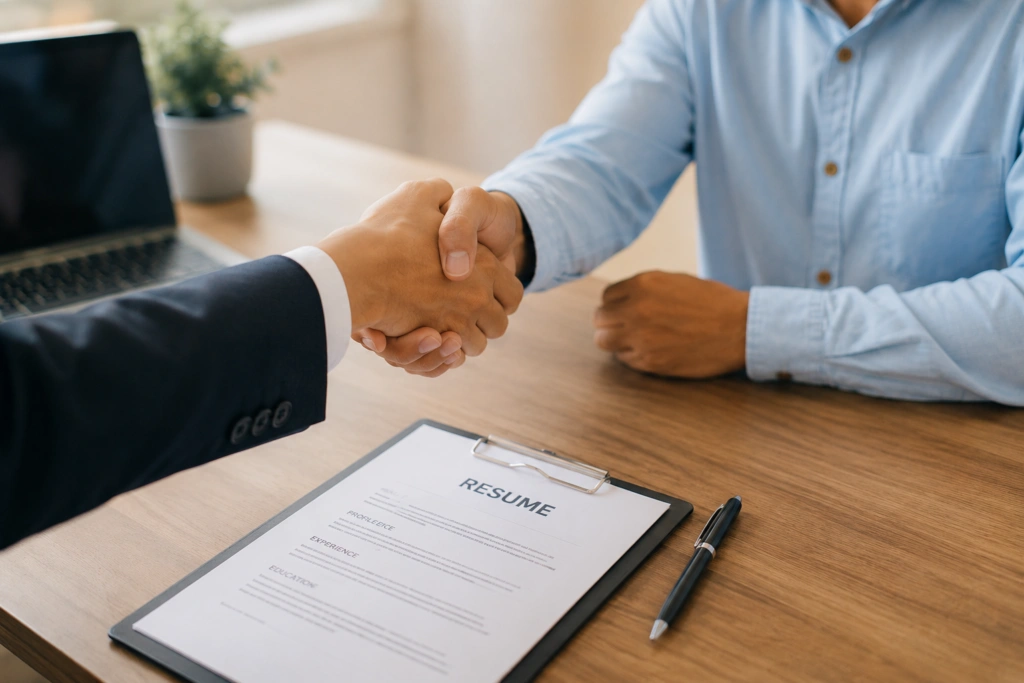
- A gentle smile or a warm handshake at the end can also be a good evidence of a successful meeting.
- On the contrary, if the interviewer constantly looks at the clock or seems to be distracted, that’s not a good sign.
| Recruiter Action | What It May Suggest |
|---|---|
| 😊 Maintains eye contact and active engagement | They are interested in your responses and want to learn more. |
| 📝 Takes detailed notes throughout the interview | Your answers are carefully evaluated for the role. |
| ⏰ Explains the hiring timeline | They want to keep you informed about the next steps. |
| 👥 Introduces you to team members | They are assessing how well you’d fit into the team. |
| 📧 Shares their contact details | They are open to further communication after the interview. |
| 💼 Discusses the role in greater detail | They see potential and want to help you understand the position better. |
3. The Conversation Becomes More Casual
- Observe how the tone changes during the interview.
- In the initial stages, most interviewers tend to stick to a formal pattern of asking questions and getting answers.
- However, when the interviewer starts talking more liberally, cracking jokes, or asking about your hobbies, this is good news.
- It implies that he has dropped the formality and has started thinking about how it would be to work with you.
💡Interview Tip- After every interview, send a brief thank-you email within 24 hours. It reinforces your interest in the role, highlights your professionalism, and helps you stay memorable to the hiring team.
4. They Say “When,” Not “If”
- Be mindful of use of words.
- Phrases such as “When you become part of the team” or “When you are involved in this assignment” convey a different meaning compared to “If we choose to recruit you.”
- The use of the word “when” instead of “if” implies that the interviewer is subconsciously envisioning you in that position.
5. They Give You Positive Feedback
- If you find that your interviewer praises your work history, such as when he or she states that your past experiences match the expectations of what the organization needs, pay attention to this indicator.
- Interviewers who do not believe that the applicant is a good match will tend to remain neutral and cautious in the interview setting.
- Thus, sincere praise during the interview is usually a good sign that your performance is successful.

6. They Ask About Your Salary Expectations
- While this inquiry might be intimidating at first, it is a good sign because most of the time, companies are reluctant to discuss financials unless they are considering a candidate.
- If the company is asking you how much you wish to earn, it is probably because it is trying to ascertain whether they can afford your projected salary, which shows they are considering you as a serious contender.
7. They Discuss Benefits and Perks
- You should pay attention if the interviewer introduces the discussion of health insurance, benefits and paid time off or the advantages of remote working without you asking about those things.
- This means that the company is trying to make the role sound very attractive, which would not happen in a situation with a candidate the company is not interested in.
8. They Ask What You Think of the Role
- Statements such as “What is your opinion, as of now?” or “Will you pursue this career considering your talents?” are good indicators of your likelihood of getting selected for a job.
- An interviewer would generally say this when he/she is confident enough that he/she wants to offer the job to you and predict how likely you are to accept it.
9. They Discuss Your Start Date
- When the discussion turns to logistics such as when you could actually start, or if you’re serving a notice period, or when you’d be able to start your new role, this is a great indicator.
- Employers typically do not ask about start dates unless they intend to employ someone soon.
📌 Quick Tip- Even if the interviewer discusses your start date or salary, avoid assuming you’ve secured the position. Continue interviewing and applying until you receive a formal written offer.
10. You’re introduced to the team
- Even a brief introduction to employees is an important step.
- Firms frequently favor meeting potential hires with their existing teams before taking the final decision, as much as it is essential to have certain abilities on paper.
👇 Qualifications are not the Only Issue
When hiring, managers look at more than your experience and qualifications. They want to know how well you will cooperate with colleagues, fit into the corporate culture, and communicate professionally. Sometimes, such characteristics might be more important than work experience.
11. Get an Office Tour
- As with meeting fellow employees, taking a tour of the office is minor yet revealing.
- Rarely will interviewers take time out of their schedules to show candidates around the premises unless they feel convinced that he’ll fit in and become a proper employee.
- If a person is shown where the office desk will probably be and the break room that he will likely use during his work, the person is on the right track.
12. You’re Invited to a Second Interview
- The situation is rather clear in this case.
- Companies do not bother holding their second or third interviews with candidates they are not impressed with.
- Getting invited means you have gone through the initial vetting stage and are being now considered for the position in question.
13. They Ask for Your References
- Checking references takes place in the final stages of interviewing.
- When an organization requires references from you, it typically means they are almost ready to make a decision about you and confirm the information you have provided.
- Employers generally reach out only to references of those applicants who are likely to be offered a job.
14. They Share Their Contact Information
- If the person that interviewed you gives you their email address or phone number stating that you can contact them if you have any questions, this is a good sign.
- This is an indication of their interest and willingness to remain in touch with you in the future.
- It also allows you to be in contact with them if you have any follow-up questions after the interview.
15. They Follow Up or Outline the Next Steps
- Lastly, note what happens at the end of the interview.
- When the interviewer ends on a clear note providing information on what the next step is — be it “we will contact you by the end of the week” or something more confirming like “our team will assess and provide feedback within the next few days” — it is an excellent indication of the process taking place.
- On the contrary, a vague end, such as “we will keep you updated,” is sometimes indicative of low interest, but this approach is not always bad.

📈 Look Past This Interview
Regardless of whether you get hired or not, a job interview contributes to your growth as a professional. Each interview experience enhances your self-esteem, capacity to communicate fluently, and the comprehension of employers’ demands, making you better prepared for the next occasion!
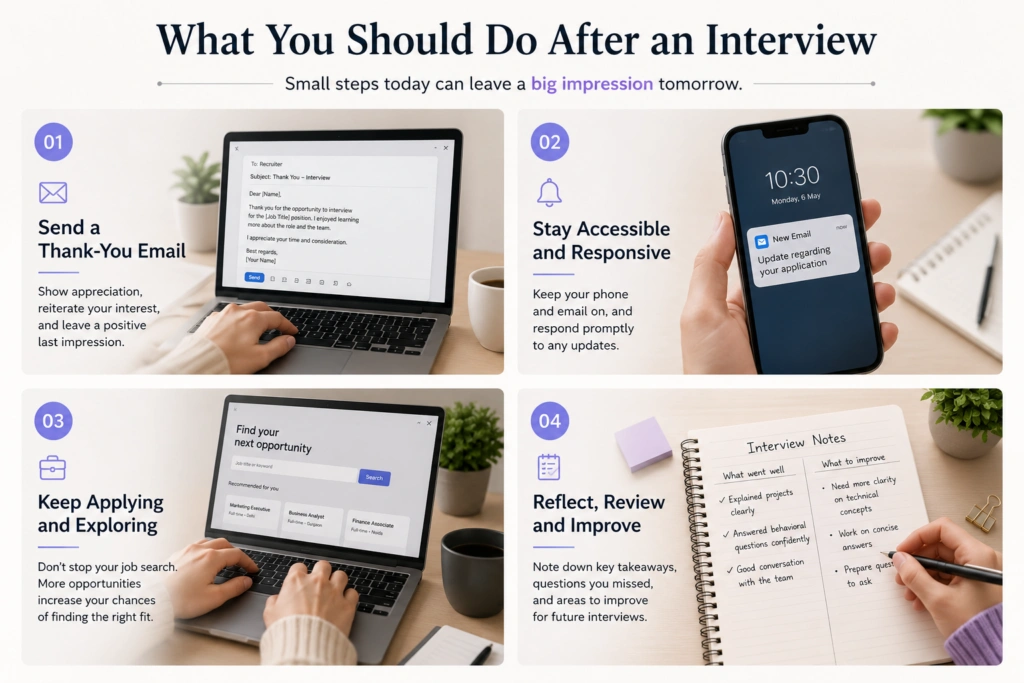
🚀 What Should You Do After an Interview?
Even if your interview went exceptionally well, your actions afterward still matter. Following up professionally and staying proactive can leave a positive impression while keeping your job search on track.
| What You Should Do | Why It Matters |
|---|---|
| 📧 Send a thank-you email within 24 hours | Shows appreciation and professionalism. |
| 📱 Keep your phone and email accessible | Allows you to respond quickly if contacted. |
| 📂 Save notes from your interview | Helps you prepare for future interview rounds. |
| 💼 Continue applying for other jobs | Prevents you from relying on a single opportunity. |
| ⏳ Be patient and respect the timeline | Recruiters often need time to complete the hiring process. |
⏳ When Can You Expect a Job Offer
The duration of getting a job offer differs from company to company. For certain organizations, hiring decisions could be made in just a couple of days, while for certain others, the decision pays take about one to three weeks in case there are multiple interviews involved, internal approvals needed, or background checks to perform.
In case the interviewer has told you about a date by which you could expect to hear from the company, be sure to wait for that date before trying to get in touch with the company. A delayed response doesn’t mean you have been rejected—it could simply mean that the company is still in the process of recruiting.
| Factor | How It Can Affect the Timeline |
|---|---|
| Number of interview rounds | More interview stages usually mean a longer decision process. |
| Company size | Larger organizations often require multiple approvals before making an offer. |
| Number of candidates | Comparing several finalists can delay the final decision. |
| Background or reference checks | Verification processes may add several days to the hiring timeline. |
| Urgency of the role | Positions that need to be filled quickly often have faster hiring decisions. |
🚀 Make the Waiting Period Count
When waiting for a reply, why not take this opportunity to work on yourself? You can enhance your resume, up your skill set, pursue online courses, or practice for interviews. Keeping busy will boost your confidence and prepare you for your next steps accordingly.
“Opportunities don’t happen. You create them.”
— Chris Grosser
Conclusion
Once you leave the interview room, it’s only human to want some signs about how it all went; interviews can be nerve-wracking experiences.
You never know for sure until you get an offer of course, but these 15 signs can give a good idea that you’re getting there!
If you had a longer conversation, they used open body language, spoke about salary or start dates and introduced people around the team then this is real interest and signs that you are viable.
Still, one sign alone won’t ensure you get the job. Each firm has a unique hiring process, and many times there are multiple suitable candidates for the recruitment at hand.
Rather than holding on a singular moment, think about what you experienced throughout the entire interview and seek signals that tell both sides are clicking together.
Once the interview finishes, send a short thank you email to show your appreciation for being interviewed and wait patiently whilst they select from amongst those who apply.
So, keep looking until you get a written job offer.
Frequently Asked Questions (FAQs)
While there are no guarantees to receiving an offer, keeping an eye on such things as longer interviews, positive body language, discussions about compensation and starting dates, or meeting the team may indicate that the interviewers are taking you seriously.
Not necessarily, but if the interview goes longer than planned, it is a sign that interviewers want to know more about you and your application seems promising to them.
Yes, many times. Employers will talk about salary expectations only when they are considering hiring someone.
Yes, sending a polite email stating your gratitude within 24 hours shows that you are an accomplished professional who cares for the job you are applying for and leaves a positive impression on the interviewer.
Yes. Interview positive signals can affect the decision to a certain extent, yet they do not guarantee an offer of employment. There can be many other factors such as the other candidates, company policy, etc. Each candidate must keep applying for positions until they get the written job offer.