

Five years is far enough away that an exact prediction can sound invented. Yet “I have no idea” makes it hard for an interviewer to see why this job belongs in your plans.
Aim for a credible direction, not a guaranteed destination. In about 30–60 seconds, explain what you want to learn, how you hope your responsibilities will grow, and why this position is a sensible next step. Then leave room for the role, organization, and field to change.
Key Takeaways
- Direction matters more than an exact title. Name the expertise, scope, or responsibility you want to build instead of promising a promotion on a deadline.
- A good response works for both sides. Connect your development to useful work for the team, customers, or organization.
- Specificity should stop short of rigidity. A clear professional theme sounds prepared; a fixed five-year script can sound unrealistic.
- Honesty still needs a job-related focus. You can acknowledge uncertainty or keep personal plans private while giving a substantive professional answer.
What the interviewer is trying to learn
The question is usually less about forecasting than fit. MIT career guidance frames career-goal questions as a way to understand motivation, development needs, and likely longevity. The U.S. Office of Personnel Management likewise describes structured interviews as tools for assessing job-related competencies.
Your response should therefore help the listener answer three practical questions: Does this person want the kind of growth the role can support? Have they thought realistically about development? Will their progress create value here? You do not need to promise permanent employment or pretend the company controls every future opportunity.
Replace broad duty statements with more precise wording using these synonyms for “responsible for” on a resume.
Build the response in four moves
The strongest answers move from the immediate opportunity to a believable longer-term direction. This order keeps ambition grounded in the work you are actually interviewing to do.
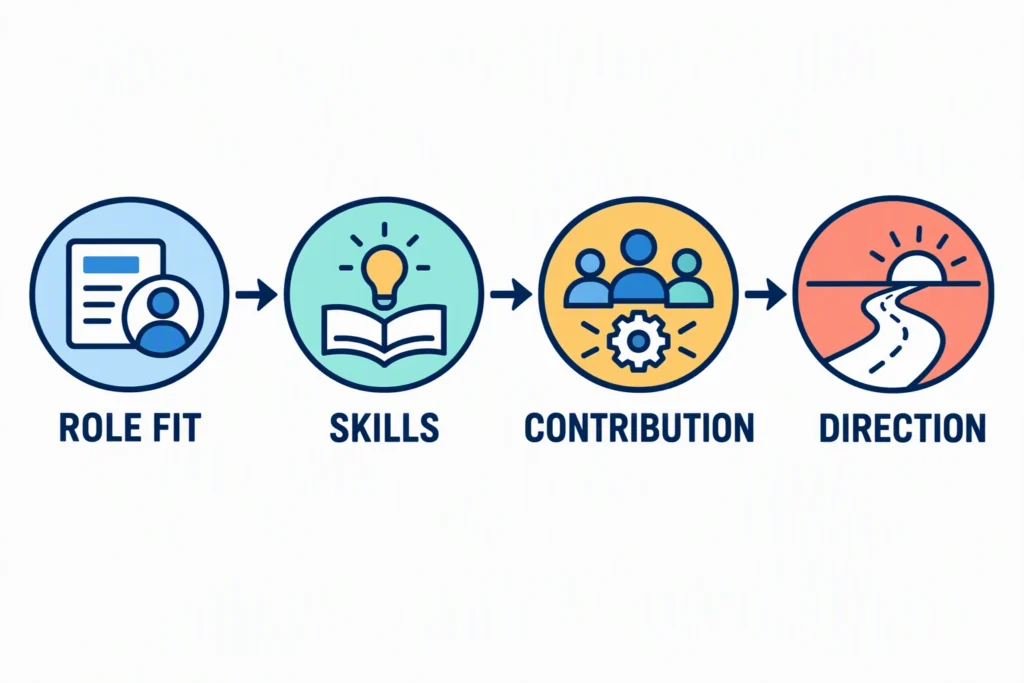
1. Start with role fit. Name what attracts you to the work itself: the customer problems, technical challenges, team scope, or operating environment.
2. Choose one or two capabilities to build. Focus on expertise, judgment, project ownership, communication, or another development area the position can reasonably support.
3. Show the contribution. Explain what your growth would let you do better for the organization, such as handling more complex accounts, improving analysis, or mentoring new teammates.
4. Close with direction, not a demand. Describe the broader responsibility or reputation you hope to earn while staying open to how opportunities evolve.
A flexible template is: “Over the next several years, I want to deepen my ability to [skill or area], take on more responsibility for [scope], and become someone the team can rely on for [contribution]. This role stands out because [specific connection]. I’m open to the exact path, but that is the direction I want to pursue.”
Present your technology expertise and delivery achievements with our technical project manager resume guide.
Find the credible level of detail
Vague answers make the job feel interchangeable. Overly precise answers can depend on promotions, openings, or business conditions no candidate can control. The useful middle names a field of growth and the evidence that makes it plausible.
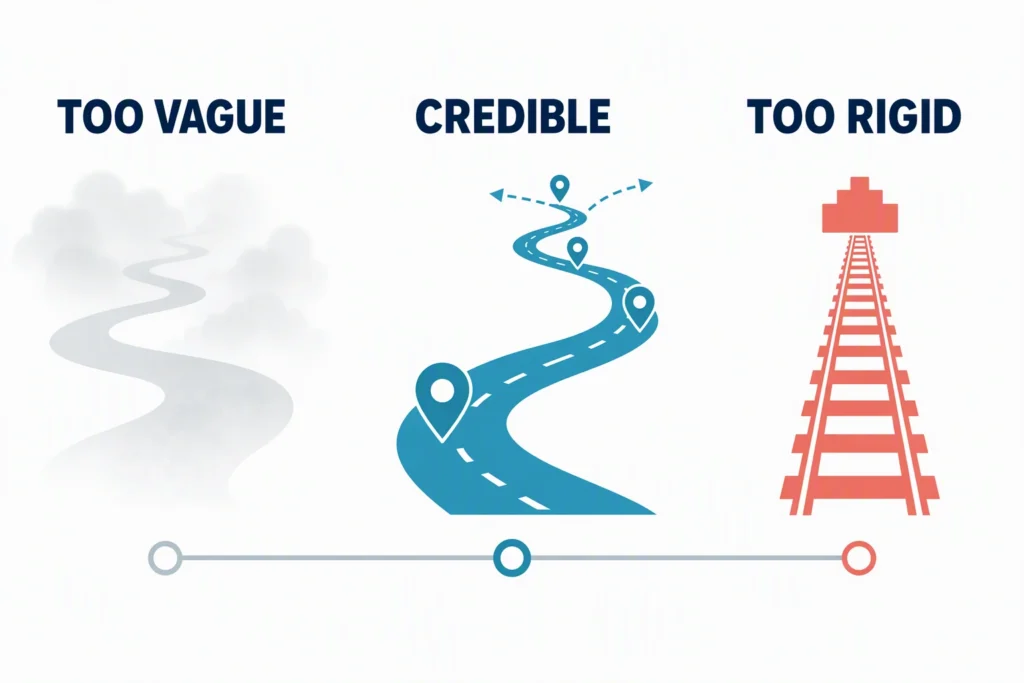
“I just want to grow” is too broad. “I will be a vice president here within five years” is too fixed. A stronger middle sounds like this: “I want to become highly capable in enterprise implementation, lead more complex launches, and eventually mentor teammates who are learning the process.”
Company research makes that middle more convincing. Before the interview, check the job description for recurring responsibilities, read how the organization describes its customers and work, and look for realistic next layers of scope. Do not invent a formal promotion path if the employer has not published one.
Show how you evaluate information and draw useful conclusions with these analytical skills examples for a resume.
Adapt the idea to your situation
The language should match what you can reasonably know at your career stage. These examples are starting points, not scripts to memorize.
Recent graduate
“I want to build a strong foundation in financial analysis and forecasting, then take ownership of increasingly complex planning work. This analyst role would let me learn the company’s process while contributing careful, useful analysis. Over time, I’d also like to help newer analysts get up to speed.”
Experienced individual contributor
“I’d like to deepen my expertise in enterprise implementation and become the person teammates trust with high-risk launches. The mix of customer coordination and technical problem-solving here is a strong fit. As I grow, I hope to improve repeatable processes and coach colleagues on difficult projects.”
Organize your clerical qualifications and recordkeeping experience with these office clerk resume templates.
Career changer
“My direction is customer success, especially onboarding and retention. Project management has already taught me to coordinate stakeholders and resolve blockers. This position would help me develop deeper product and account knowledge, with the longer-term goal of managing more complex customer relationships.”
Leadership-track candidate
“I want to master the operation first, then earn opportunities to lead projects and mentor teammates. In several years, I’d like to be trusted with broader team responsibility. I’m interested in this role because it offers hands-on ownership, which is the experience I need before managing other people.”
Showcase your account relationships, product adoption, and renewal achievements with our customer success manager resume guide.
Candidate who is still exploring
“I do not want to force an exact title before I have done the work. I do know that I want to become stronger in data-informed marketing, work across several campaign types, and take on more ownership as my judgment develops. The analysis and cross-functional exposure in this position fit that direction.”
Repair answers that create doubt
Small changes can preserve the truth while removing an unintended signal.
| Instead of | Try | Why it works |
|---|---|---|
| “I want your job.” | “I’d like to develop the judgment to lead projects and mentor others.” | It expresses leadership interest without treating someone else’s position as an entitlement. |
| “I have no idea.” | “I’m open on the title, but I know which skills and responsibilities I want to build.” | It separates healthy flexibility from a lack of thought. |
| “I’ll use this job before graduate school.” | “My current priority is building practical experience in this field through this role.” | It answers the employer’s question without making an unrelated exit plan the focus. |
| “I expect two promotions.” | “I hope to earn broader scope as my results and judgment grow.” | It recognizes that advancement depends on performance and opportunity. |
Do not make salary, status, or benefits the whole answer. Those factors matter in a career decision, but they do not explain why the work is a fit or what you intend to contribute.
Explore practical ways to develop your abilities through projects and volunteering in our guide to getting experience without a job.
Prepare without sounding rehearsed
Write four short notes: why this role fits now, one capability to build, one larger responsibility you could earn, and one result that growth would help the team produce. Turn the notes into a spoken response, then practice it aloud once or twice.
Keep the ideas stable but let the wording change. If you can say the answer naturally in under a minute, explain each claim, and adapt it to a follow-up question, you are prepared without sounding memorized.
Keep private plans outside the answer
You do not need to volunteer plans about marriage, pregnancy, children, disability, or medical matters. The EEOC advises employers generally not to ask non-job-related questions about marital status, children, or dependents because those inquiries can be evidence of discriminatory intent.
If a conversation moves in that direction, redirect to the work: “My personal plans will not prevent me from meeting the position’s requirements. Professionally, I’m focused on deepening my expertise and taking on greater responsibility in this field.” Laws vary by jurisdiction, so seek qualified advice if you need guidance about a specific situation.
Demonstrate your ability to oversee budgets, teams, and daily operations with these office manager resume examples.
Give the interviewer a believable direction
You are not signing a contract with your future self. You are showing that this role connects to work you want to learn, responsibility you are ready to earn, and value you can create. Choose a direction you can support, then discuss it with enough flexibility to sound human.
Frequently Asked Questions
These questions cover uncertainty, employer research, and plans that may change.
What if I genuinely do not know my exact career goal?
Name what you know. You may be uncertain about title or industry niche while still knowing that you want deeper analytical skill, more customer responsibility, project leadership, or another kind of growth. Explain why this role offers useful experience in that direction.
Should I name a specific position I want?
Only when the title is realistic, relevant, and not the entire answer. Skills, scope, and contribution usually travel better across organizations because titles differ and openings cannot be guaranteed.
What if my plans change later?
That is normal. An interview answer describes your considered direction now; it is not a binding promise. Be truthful about your current goals, avoid invented loyalty, and leave room for new information and opportunities.