

“Tell me about yourself” is not an invitation to recite your life story. “What is your greatest weakness?” is not a request for a fake flaw. Each familiar prompt asks for a different kind of evidence.
Before you practice wording, identify the job behind the question. Some answers need a focused career narrative; others need employer research, proof of a skill, self-awareness, or a specific behavioral example. Choose the structure first, then make the content your own.
Key Takeaways
- Relevance beats completeness. Select the experience, strength, or story that best helps the interviewer evaluate you for this position.
- Claims need brief proof. A result, decision, or concrete example makes “organized,” “collaborative,” and “adaptable” credible.
- Behavioral prompts need your actions. Set the scene quickly, use “I” to clarify your contribution, and finish with the result or lesson.
- Preparation should create flexibility. Practice key points and reusable stories aloud instead of memorizing ten polished scripts.
Match the structure to the prompt
MIT career guidance explains that interviews help employers assess skills, fit, and genuine interest. One formula cannot demonstrate all three. Use present–past–future for a career summary, research–connection–contribution for employer interest, claim–evidence–fit for strengths, and issue–action–progress for a development area.
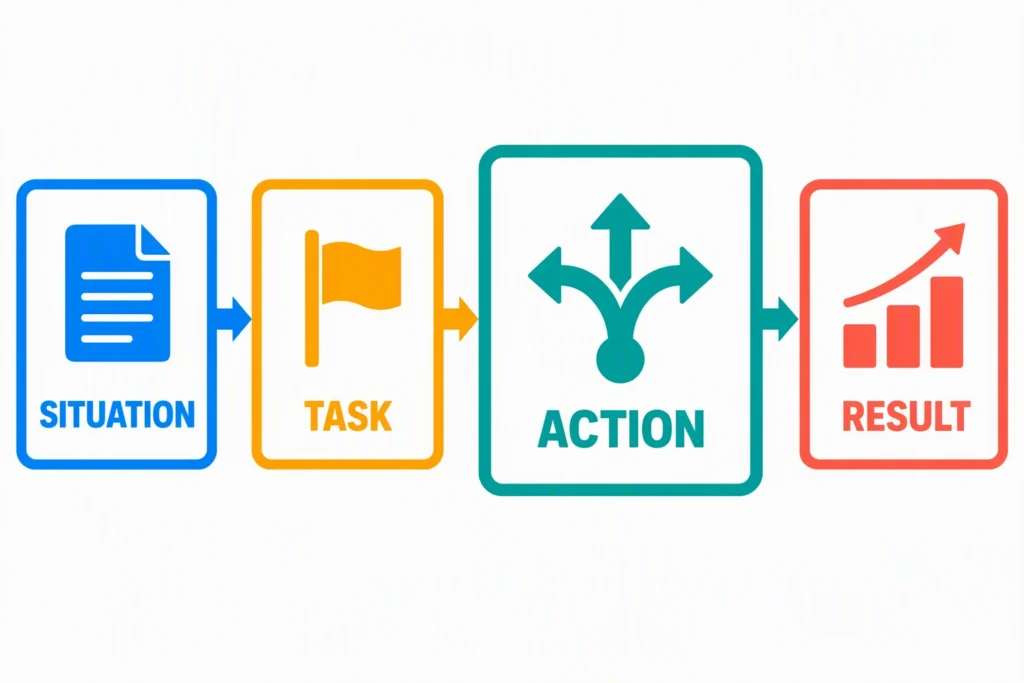
For a question that begins “Tell me about a time,” use STAR: Situation, Task, Action, and Result. Keep the setup lean and give the most space to what you personally did. A result may be a measurable outcome, an observable change, or a specific lesson you applied later.
Present your client relationships, account growth, and renewal achievements with our customer success manager resume guide.
Ten questions worth preparing
These exact wordings vary, but the hiring decisions behind them are consistent. This is a practical selection, not a statistical ranking. Adapt the examples to your experience, the posting, and the organization; all sample people, employers, and figures are fictional.
Give your artistic expertise and classroom achievements a clear layout with these art teacher resume templates.
1. “Tell Me About Yourself”
What they assess: Relevance, communication, and the logic of your career story.
How to answer: Give a short present–past–future summary: what you do now, the experience that prepared you, and why this move makes sense. Skip personal history that does not support the role.
Sample answer: “I’m a customer success specialist with four years of experience supporting business software accounts. I recently redesigned our onboarding checklist, which reduced time to first value by 18%. I’m ready to bring that mix of client communication and process improvement to a larger implementation team.”
2. “Why Do You Want to Work Here?”
What they assess: Genuine motivation, research, and alignment with the work.
How to answer: Name one specific fact about the employer or role, explain why it matters to you, and connect it to a contribution you can make. Generic praise could fit any company.
Sample answer: “This role combines supplier analysis and cross-functional planning, the areas where I’ve delivered my strongest work. I was also drawn to your stated goal of reducing delivery times. I’d like to apply my forecasting experience to that effort.”
Make your academic preparation count by learning how to list relevant coursework on a resume.
3. “Why Are You Leaving Your Current Job?”
What they assess: Professionalism, judgment, and what you are moving toward.
How to answer: Give the relevant fact briefly, keep the tone neutral, and shift to the opportunity ahead. Do not turn the interview into a complaint about a manager or employer.
Sample answer: “I’ve learned a great deal coordinating complex launches. My current role has gradually shifted toward maintenance work, and I’m ready to own projects from planning through measurement. I’m leaving on good terms and looking for broader responsibility.”
Write a concise introduction that highlights your strongest qualifications with these resume summary examples.
4. “What Is Your Greatest Strength?”
What they assess: A role-relevant advantage and your ability to support it.
How to answer: Choose one strength the posting values, add a compact proof point, and explain how it would help in this job. A list of adjectives is weaker than one demonstrated capability.
Sample answer: “My strongest skill is turning complex data into clear recommendations. Last quarter, I consolidated five dashboards into one weekly summary that helped leaders spot spending risks earlier. That approach would support the decision-making required in this analyst role.”
Show how you listen, explain ideas, and collaborate with our guide to communication skills on a resume.
5. “What Is Your Greatest Weakness?”
What they assess: Self-awareness, coachability, and active improvement.
How to answer: Name a genuine, manageable issue that is not a core requirement, then describe the system you use and the progress you can see. Avoid a disguised strength such as “I care too much.”
Sample answer: “Earlier in my career, I sometimes waited too long to flag a slipping deadline. I now set midpoint checks and raise risks as soon as I can quantify them. On my last two projects, stakeholders had time to adjust scope without delaying launch.”
6. “Tell Me About a Time You Managed Conflict”
What they assess: Judgment, communication, and behavior under pressure.
How to answer: Use STAR. Describe the disagreement neutrally, show how you listened and made decisions, and close with a resolution or useful lesson. Do not make the other person the villain.
Sample answer: “Product and sales disagreed about a launch date. I met with each lead to identify constraints, mapped the dependencies, and facilitated a discussion around three options. We agreed on a phased release that protected the schedule while delivering the feature our largest client needed.”
7. “What Is Your Greatest Professional Accomplishment?”
What they assess: How you define success and create value.
How to answer: Pick a relevant achievement, explain the difficulty, specify your actions, and quantify the outcome only when the figure is defensible. Credit collaborators without hiding your contribution.
Sample answer: “I’m most proud of reducing our service backlog without adding staff. I analyzed routing data, introduced priority rules, and created templates for recurring issues. Within four months, the backlog fell by 35%, while customer satisfaction remained above its target.”
8. “Where Do You Want to Be in Five Years?”
What they assess: Career direction, realistic development, and connection to the role.
How to answer: Describe skills to build, responsibility to earn, and value to create. A credible direction is stronger than an exact title or promotion deadline.
Sample answer: “I hope to become a trusted analyst who can lead forecasting projects and mentor newer teammates. This role would deepen my modeling and stakeholder-management skills. I’m flexible about the title, but I want to grow toward greater responsibility in operations planning.”
9. “Why Should We Hire You?”
What they assess: Your clearest case that the employer’s needs match your evidence.
How to answer: Select two or three requirements, attach proof, and state the contribution you could make. Do not compare yourself with applicants you do not know.
Sample answer: “You need someone who can stabilize daily operations and improve inefficient processes. I’ve managed a 15-person team, raised on-time completion from 86% to 96%, and trained new supervisors. I can bring immediate operating discipline and a record of sustainable improvement.”
10. “Do You Have Any Questions for Us?”
What they assess: Preparation, curiosity, and whether you are evaluating the opportunity thoughtfully.
How to answer: Prepare several open-ended questions about priorities, success measures, the team, and immediate challenges. Ask what the interviewer has not already answered rather than reading a fixed list.
Sample answer: “What outcomes would show that the person in this role is succeeding after six months? And what is the most important challenge you expect that person to address first?”
Build a reusable story bank
You do not need a separate experience for every possible prompt. Prepare five or six truthful stories that show different competencies, then choose the one that fits the question. Sources can include paid work, internships, coursework, volunteering, military service, or student leadership.
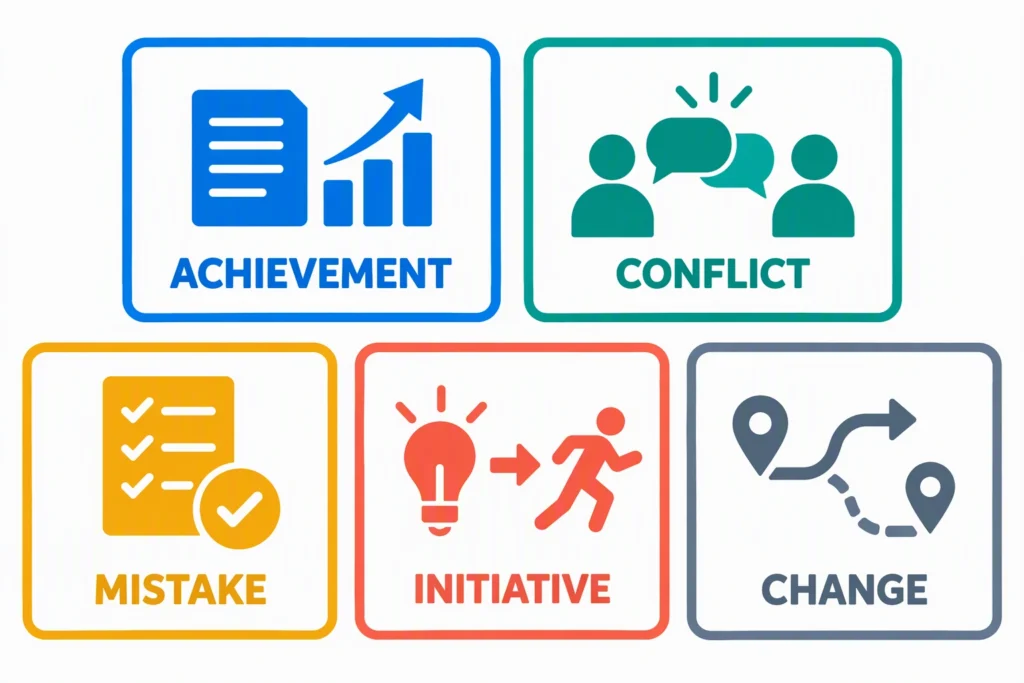
For each story, note the problem, your responsibility, two or three actions, the outcome, and the competency it demonstrates. Remove confidential names, client details, proprietary figures, and information you are not authorized to share.
Redirect personal questions to the work
You do not need to volunteer marital, pregnancy, family-planning, disability, or medical information. The EEOC advises employers generally not to ask non-job-related questions about marital status or children, and employers generally cannot ask disability-related questions before a conditional offer.
If needed, identify the job requirement and answer that instead: “I prefer to keep my personal plans private, but I can confirm that I can meet the position’s travel and scheduling requirements.” Rules vary by jurisdiction, so seek qualified advice about a specific situation.
Practice key points, not a performance
Annotate the posting, choose two specific reasons for your interest, and say each answer aloud. Record one practice round if hearing your pace will help, then try again with different wording. You should sound prepared because the evidence is clear, not because every sentence is fixed.
Make every answer earn its place
An interviewer does not need your whole history. Give the most relevant fact, enough evidence to make it credible, and a clear connection to the work ahead. That discipline keeps familiar questions from producing generic answers.
Frequently Asked Questions
These questions address timing, early-career examples, and unexpected prompts.
How long should an answer be?
Use the shortest answer that is complete. A focused opener or motivational answer often fits within roughly a minute, while a behavioral story may need longer. Watch the interviewer’s cues, stop when the evidence is clear, and leave room for follow-up questions.
What if I do not have much paid experience?
Use a relevant example from an internship, class project, volunteer role, student organization, military service, or personal project. State the context accurately and focus on the skill, decision, and result rather than apologizing for the source.
What should I do if I did not prepare for a question?
Pause, identify what the question is testing, and choose the closest relevant evidence. It is reasonable to say, “Let me think about the best example for a moment.” A brief pause is better than forcing an unrelated story.